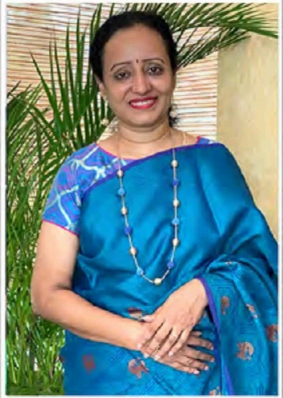
A Harvest of Inspiring Tales
A Harvest of Inspiring Tales
It was in 1984 that television sets first came to my house and Rupavahini, a television channel from Sri Lanka, was all we had access to then. All in our extended family were attracted to movies and cinema songs. But my interest had always been in quiz programs and interviews. An "interview" was also the subject that interested me in any newspaper or magazine.
Now, when I go through these interviews, I realize that this e-book - a compilation of my interviews for Online Voice at http://www.onlinevoice.info and Sing-Ind at http://www.thesingind.com since 2001 is not a surprising outcome, given my curiosity since young to know about people and their achievements.
The interviews are with people from different fields, mostly from Singapore and India. Some are concentrating on a particular subject but most are generic. Events attended by prominent people are also part of this e-book.
When reading these interviews and events, it is important to keep the original date in mind to connect to them.
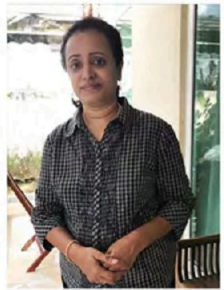
I did these interviews with much interest and learnt something new each time. I always believe that interviews do inspire people and if this e-book can share some interesting information and inspire readers, then I will be happy that my objectives are being achieved.
Soundara Nayaki Vairavan
31.3.2021
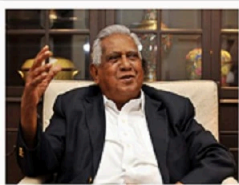
Mr. SR Nathan
Former President, Republic of Singapore
October 2014
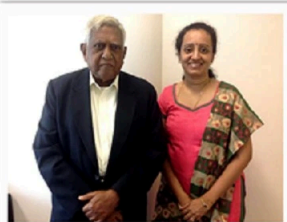
I met Mr. SR Nathan for this interview at Singapore Management University. I gave him the Centenary book on my husband's grandfather late Justices of Peace Thiru: VE: Shanmumgam Chettiar. When he saw that, he recalled him and some of his friends like late Thiru: RajaManickam.
He also enquired about my father-in-law Dr S.Vairavan. I was quite astonished when he asked me, 'whathappened to his clinic at Serangoon Road'? When Iunderstood that he knew my family well, I reallyfelt happy.
Mr. Sellapan Ramanathan served as the sixth president of the Republic of Singapore. He was the President of Singapore from 1.9.1999 to 31.8.2011. It is my privilege to present his interview.
1. The life time value that your difficult formative years has taught you
The most important value is to remember that life does not go on as you expect. Unexpected things can come your way. Good people can become evil and evil people can become good. You will never know from which quarter you will get help or hindrance. My mother always says in Tamil that 'avan illamal ellum asaithu' meaning without God even a minute thing can also not move. Only in later life I realized the value of those words. When I left home, I repudiated all religion. Then, the war came. Then my life changed unexpectedly. That is when I realized the meaning of those words. So in misfortune, my mum would always say, God is testing us. Don't be angry about it. You prove right. So you must remember two things in life - in your interaction with people do not take everything for granted. There are all kinds of people in this world - Some with sweet words, but with evil intentions. Others may look crude, but they will be with noble intentions. These are the values I learnt. Do not take the words with face value.
2. From your experience, what is your suggestion, advice for being a good human in this complex world?
It is difficult for me to give advice to people. We all are differently made up. We move in different circles. We are in different levels of society. So each one will have different values. One should have self confidence and put in a lot of personal efforts in whatever you do. I learnta message from my mother and the Japanese Lieutenant. Both told me the same. That is 'Do your duty and do not look for rewards'.
3. Can we then take this as your 'one principle' that has carried you this far?
Yes. In my career, I do not have much of education. Just by doing my duty, I moved on and on. I never looked at the benefits.
4. The character traits of yours, that you admire the most
I never admire myself. People have to admire. It is difficult to make your own judgment, as one is very subjective about themselves. Somebody can talk about your strength, weakness and so on...
5. Your top two principles while trying to encounter a problem...
First you must try to understand the problem and how formidable it is that you have to overcome. One must understand the easier part of addressing the problem. Then determine your priority as which one you are going to tackle first. If you have to address the serious problem first, it may consume your whole life. So you may want to deal with the simpler problem first and clear them and deal with the serious one later, if time permits.
6. This is globalized world. What is your advice on the globalization and the technology that influences this younger generation?
You cannot change this. This is only going to get worse. Technology is going to be moving faster and faster. And young people will be adapting to it equally faster. Due to the speed, their action, reaction, judgment will also be instantaneous and fellable as there is no depth. Because of technology, we have lost the sense of wisdom from reading and thinking.
7. You have been having a very glorious career. Which position have you cherished the most? For what reason?
I cherished the 'Labor Movement'. It is a place, where small man can rise. Without education and by sheerability, one can rise to lead people. You can do a lot of good for community. At the same time, you also encounter a lot of unreasonable demands and expectations, which you will have to balance between and make sure that you have not been mislead in doing things at the spur of the moment.
8. Is there anything that you feel unaccomplished as the President of Singapore?
No. Because the constitution lay down what the President can do and cannot do. Hence, there is nothing much the President can do beyond the constitution. As I say, I always do my duty and be contented. I am a constitutional president and not the executive president. Hence, I need to abide by the constitution.
9. Your connection with India and its people...
When there is an Indian blood in you, always there is a sentiment towards India and its rich heritage. But it is sadden to see the decay that has taken place in the Indian society, the loss of values all in the name of Democracy, so much of unethical things are done.
Mr. S. Iswaran
Minister in the Prime Minister's office and Second Minister for Home Affairs & Trade and Industry
April 2015
Mr.S. Iswaran speaks his ideas on the Tamil Language Festival in Singapore
Singapore, a multi-racial country in South East Asia is currently celebrating 'Tamil Language Festival'. The Tamil Language Council has to be lauded for its efforts in spearheading the Festival with its partners for the ninth year that can create more avenues for all sections of the Tamil Society to celebrate and enrich the language and to 'Love Tamil and Speak Tamil'.
1. Singapore is the only country where a month long festival is being organized for the Tamil language. How do you see the following stakeholder's role in making this possible ?
a. Singapore Government
Tamil is one of the 4 official languages in Singapore. The Government is committed to allocating the necessary resources to ensure the language continues to thrive in Singapore. The Tamil Language Council(TLC) was formed in 2000 under the auspices of the then Ministry of Information, Communication and Arts (MICA). The Councilcomprises representatives from the education sector, major community organisations, arts groups and the media who provide valuable inputs on matters pertaining to the language. Today, the National Heritage Board (NHB), under Ministry of Community, Culture and Youth (MCCY) provides secretariat support for TLC.
b. Various Tamil Organisations
Since 2007, TLC has organised the Tamil Language Festival together with Indian organizations, marking it a major event in their organizational calendar. This year, more than 35 community and government agencies, including MOE's Tamil Language and Learning Promotion Committee (TLLPC) will partner TLC for the Festival.
2. Do you see more innovation and relevance in the programs that is being organized each year?
The Festival is now in its ninth year. Each passing year has seen more activities which are varied and able to reach out to a wide cross section of the Tamil speaking population. This year's Festival will comprise 40 exciting programs and activities, all of which provide excellent opportunities to speak the language. Photo Courtesy: TLC
These opportunities created by the various community organisations play a vital role in ensuring the language stays relevant and vibrant in Singapore. Additionally, it helps us become a dynamic and resilient community with the right attitude and values. This is important and relevant in the present, modern world as they were in the past.
3. What are your suggestions to enhance in the coming years?
Activities that promote the language must be creative, fun-filled and enjoyable. They will serve to build the confidence of the students to use the language beyond their school years. Going forward, it is important for us to target our efforts at the youths in a manner that is innovative and exciting. It is the attitude of the youths that will determine the relevance and importance of the language in future years.
Ms. Indranee Rajah
Member of Parliament for Tanjong Pagar and President, Singapore Indian Development Association, (SINDA)
October 2012
I got to meet Ms. Indranee Rajah, a graceful woman in person, when I was a member in the IPAC (Indian Program Advisory Committee). She was the chair of IPAC then. I requested her to share her experience in singing and she readily accepted to do this interview
Tanglin-Cairnhill Constituency Citizens' Consultative Community Development and Welfare Fund and SINDA had jointly organized the Bollywood Cutting Edge - The Trilogy on 25 August at Hotel Mandarin Orchard. This event, a fund-raising charity dinner, was organized to raise funds for SINDA (Singapore Indian Development Association), as well as for the under-privileged families living in the Tanglin-Cairnhill constituency.
Singapore's Deputy Prime Minister Mr: Tharman Shanmugaratnam was the Guest of Honor.
Ms. Indranee Rajah surprised the audience with her singing two songs, one in Tamil and another in Hindi.
1. How did this idea of performance rise?
Maniza Jhumaboy agreed to organize a dinner and fashion show for the Tanglin-Cairnhill Community Development and Welfare Fund (that's the charity fund for my constituency division) and SINDA as joint beneficiaries. I was thinking about how we could raise funds in addition to those from the ticket sales. So I approached a group of Chinese businessmen who regularly support our community and asked, if I sang two songs, whether they would agree to donate 100,000 for the event. They readily and generously agreed.
I decided to sing one Tamil song and one Hindi song because I think they are both beautiful languages, and precisely because I do not speak either language. I feel that if one is asking for donations one should also put in some effort. I have sung in Mandarin and Cantonese with the Singapore Chinese Orchestra before and in English with the SSO. In this case, learning to sing in Tamil and Hindi would be a new challenge, and would be meaningful having regard to my role as President of SINDA. The message I wanted to convey, especially to SINDA students, was that you must not be afraid to learn something new even if it is difficult, and you must always try. Also, that you can learn new things at any stage in life. Some friends were concerned that people might laugh at me if I could not do it well enough. But I figured that if I hold back from learning something just because I am afraid I might fail, or that people might laugh at me, then I will never learn anything new. So I decided I would go for it.
2. Why did you choose this song?
I first heard the Tamil Song "Who's a Hero" at the Official opening of the vasantham channel a few years ago. I remember thinking back then that it was a fun and a catchy song, and that if I ever had a chance to learn it I would. So when this cropped up, that was the first Tamil song that came to my mind. It has a nice rhythm, and I thought people would enjoy it. The Hindi song, Ye Samaar was the suggestion of Mdm Maheshwaree, the wife of Mohammed Raffee, who was my singing coach for the two songs. The two songs also present a nice contrastYe Samaar has a very 1960s feel to it, whilst "Who's a Hero" is modern, but with jazz roots.
3. Do you have any prior singing experience? If yes, can you share that with us, please?
No professional singing experience, if that's what you mean. However, I did sing with the church choir from the time I was very young untilmy teens. The choir master (who was also the pastor) taught us singing techniques like how to control your breathing when singing, how to reach and hold high notes etc. Also, at my alma mater, Marymount convent, we had regular singing once a week after assembly. We also had a drama teacher at Marymount, Mrs. Elma Thwaites, who used to produce musicals. I performed in a couple of them, and she taught us how to sing properly for stage performances. And then of course, much later in life, I became an MP, and as everyone knows, as an MP, chances are that sooner or later you will have to sing at one community function or another. No escape, so you have to sing whether you are trained or not!

4. How long did you practice for this performance?
I had 10 practice sessions over about 6 weeks.
5. Can you share the experiences/challenges of your practice session?
The practice sessions were very enjoyable because Raffee was a very good teacher. My biggest challenge was in trying to get the pronunciation right. I don't speak either language and did not learn either in school. I went to school in the days before the Mother Tongue Policy was introduced, so I did Malay. I had lots of difficulty with the "r"s and "I"s in Tamil, and with the "th" in Hindi. I could never tell the difference between when I was getting them right and when I got them wrong. Whenever Raffee corrected me I would protest because it sounded exactly the same to me, although he would insist that there was a difference! Eventually I got the hang of it, even though I do not think it can be said that my pronunciation was perfect.
6. You are a good stage speaker. Equally where you at ease, singing on stage?
I was okay with singing on stage. My biggest worry was that I might forget the words which I had to memorize, but thank goodness I did not!
7. How was the response to your performance?
No one asked for their money back, so I think it went all right! Lots of people were very encouraging, and said that they appreciated my making the effort even though I did not speak either language.
8. Who helped you in designing your costumes for the performance ?
The lengha was ready made. It was not designed specially for me. I only had to get it fitted, and to lengthen the blouse a bit as theoriginal version of the blouse was a little too revealing! I had actually bought the outfit long before the charity event. At the time I bought it, Ichose it because I thought it was an unusual design, and I liked the colour combination. The wrap-around strings of beads were also an interesting feature. I decided to wear it for the charity event because it was a traditional Indian dress with a fresh modern twist, which reflected the two songs well.
A collection of exclusive interviews with prominent leaders, statesmen, and visionaries shaping the political landscape.
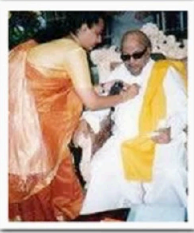
It was a hot summer in Chennai. I happened to cross a house in Gopalpuram bustling with people in white traditional Tamil attire. I asked my driver, "Whose house is this attracting these many people?" He gave a perplexed look at me and said, "This is Kalaignar's house." After some silence, I asked him, "How would it be if I go in and interview him?" This time he was totally baffled and went speechless.
Next day afternoon, I told him, "Please drive me to his house and let me try my luck." He drove me to Kalaignar's house and I just walked in. Dr. Karunanidhi's PA, Mr. Shanmugasundram, peeped out of his room from the front hall and said, "Yes Madam." I was thrilled. I expressed my wish and gave him a request letter to interview Dr. Karunanidhi.
To much of my surprise, I got a call two days later to interview Dr. Karunanidhi. Here follows that interview:
1. Can you share with us an incident that took place when you were young, which is still memorable?
When I was 16, there was an agitation against the domination of Hindi in Tamil Nadu initiated by Thanthai Periyar and Aringar Anna. My love for the Tamil language got me into that movement and subsequently paved the way for my political entry. That incident is evergreen in my memory.
2. In case God appears in front of you and says, "You will be Dr. Kalaignar Karunanidhi, but no one can recognize you; do what you wish for a day," what will you wish to do that day?
There are many without belief in God. If He appears in front of me, then I will tell Him to prove His presence to this world.
3. So you mean to say you have no belief in God...
No. Our party DMK's (Dravida Munnetra Kazhagam) principle is that there is "Only one God and one Religion." Our main belief is that the Almighty's presence is seen in a poor man's smile.
4. In spite of scientific growth, do you still think people are superstitious?
Today's technological developments like television, computers, and radio are all scientific inventions. Still, when people start to operate those, they show arathi and put a kumkum on it. I regret the existence of such belief and behavior.
5. Who is your role model?
Aringar Anna and Thanthai Periyar.
6. What do you have to say about your experience in Singapore?
I have not spent much time in Singapore, but I have spent some time in Kuala Lumpur. Those people love me immensely, and I reciprocate the same way. I am greatly impressed with the Singapore Government's strict rules and regulations.
7. Do you go to theaters and watch movies?
No, not really. The last movie I saw was Kamal Haasan's 'Hey Ram' in a private theater.
8. Your favorite television programs?
Vanakkam Tamizhagam, interviews, and news.
9. Your favorite song?
"Manidhan maarivittan, madhadhil yerivittan" (smiles).
10. Which of your children speak boldly with you?
Kanimozhi. She can argue boldly with me.
Mr. P. Chidambaram—Ex-Central Minister and leader of Congress Jananayaga Peravai—was in Singapore to address the conference "Tamil in the International Arena" organized by the National University of Singapore.
He is a well-known politician, able lawyer, outstanding economist, good writer, and an eloquent speaker. I was most impressed with the clarity of his ideas and the way he delivered them. Here are excerpts from the interview:
1. Despite abundant resources, India still remains a developing country. What is the reason?
If India has a stable government pursuing sound economic policies and implementing them with determination, it is possible to reduce the percentage of people living in poverty. Where we fail is because we do not have clarity about policies, and even if we adopt the right policies, we fail miserably in implementation. This is a problem of the quality of governance; unless governance improves in India, it is not possible to make rapid progress.
2. Where do you see India's economy in ten years' time?
If we grow only by 5% a year, then I am afraid we will be exactly where we are today. With that kind of growth, we will only be able to maintain the present economic situation. If we grow at over 7.5% to 8% a year, then I think we will see a dramatic change in India in 10 years' time. It is a function of growth. Equally, other human development indicators like literacy, life expectancy, and infant mortality rates will improve only when we have high growth.
3. When did you develop an interest in politics?
I have always been interested in politics and aware of what is happening in the country. When I came back from the US to India to practice law, I joined the Congress party, so there is nothing dramatic about my entry into politics. A large number of young people did join one or another political party at that time.
4. Whom do you attribute your success to?
I do not attribute my success to anyone. I took the opportunities that came my way. I did what I thought was right. When I found something to be wrong, I refused to be part of it. As an Internal Security Minister, Commerce Minister, and Finance Minister, I did exactly what I thought was right. Nobody could force me to do things which I did not believe in. That is perhaps why I still maintain a low profile in politics.
5. Who is your role model?
There are a number of people—Jawaharlal Nehru for his great humanity, John F. Kennedy for his drive and idealism, Lee Kuan Yew for his single-minded determination to make Singapore a great country, and Deng Xiaoping for changing China in 10 years. There are a number of people who have done remarkable things in their respective countries, and I think it is possible to learn valuable lessons from their lives.
6. Your advice to the youngsters in India...
Wherever you are, you must learn to love your country and people. In today's world, loving one's country and one's people does not mean loving only one's culture, language, or religion. Poverty is the biggest stigma, biggest stain, and biggest scar on the face of the earth. If you really love your country and people, you must resolve to wipe out poverty.
As long as there is a sea of poverty around you, one cannot pretend to be leading a life of dignity. It is poverty that diminishes everyone. If you see people answering calls of nature on the road, if you see children searching for food in dustbins, if you see street children and slums, then it is inappropriate to say that you lead a life of dignity. So one must work to remove poverty, which can only be removed by creating and sharing wealth. This is why countries open to competitive societies have succeeded, while closed, regulated, and controlled societies have not.
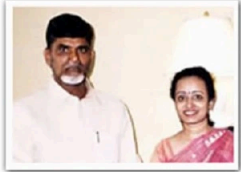
I met the Andhra Pradesh Chief Minister, Mr. Chandrababu Naidu, at the Ritz-Carlton Hotel, Singapore. He is a dynamic and vibrant leader. He was rushing to the airport, but still graciously did this interview for me.
1. What are the qualities that you admire about the Singapore government?
Singapore government's strict rules, regulations, and discipline are those that I admire. These qualities envisage effective functioning of the country, and hence other countries must try to impart these qualities from them. Though they are a small country, they are very efficient. They make the best use of technologies, maintain the country well, and make its people prosperous.
2. You have said that "Singapore is your role model." Why is it so?
When I quote Singapore as my role model, many are apprehensive: how can you quote a small-sized country as an example? When China is quoted as an example, it draws another sort of criticism that "China follows Communism; leaders are not voted to power." Hence, I think it is difficult to have just one role model. The USA, on the other hand, is well developed. Malaysia and Korea are also developed. So, all over the world, many experiments are going on. Each country is successful in one way or another.
3. India has both human and natural resources. Do you think it has developed to its potential?
Yes, India is blessed with both human and natural resources, but we lack in the implementation of reforms. If reforms are implemented carefully, India can develop well. After the economic reforms, we have achieved about a 6.5% growth rate. With abundant markets and resources, both India and China have a brighter future. I am sure India will soon adhere to the right path.
4. Can India keep pace with the fast-developing China?
China implements reforms very quickly, be it in information technology, industrial sectors, or transportation. India's strength is its resources. So, undoubtedly, India can also develop. It is just a matter of time. But I do not look that far ahead; it will happen soon.
5. How soon?
I would say we have already started to move in the right direction. Many times we have discussed that all parties must meet with an objective to discuss ways to implement reforms across all sectors. If something of that sort happens, then reforms will cascade automatically.
6. So, would you say there will be improvement in India?
Definitely, there will be improvement. The faster the reforms are implemented, the sooner the growth will be. For example, for seven years I insisted on privatizing the telecommunication sector, which finally came into action two years ago. As a result, now Reliance is doing a remarkable service throughout the country.
7. Do you think that the general public is well aware of the political situation?
Yes, people are very intelligent. They are very careful in choosing their leaders.
8. What are your future plans for developing Andhra Pradesh?
Andhra Pradesh is doing extremely well in information technology and scientific sectors. Around 30% to 35% of the medical products of India are manufactured in Andhra Pradesh, and this industry is likely to experience rapid growth. Further, I intend to capitalize on the natural gas available in the Krishna-Godavari basin. In two to three years' time, Andhra Pradesh will be potent enough to supply 50% to 60% of the natural gas needs of India.
9. Whom do you attribute your success to?
I would like to be more successful by following the lives of prominent leaders like Mahatma Gandhi, Lee Kuan Yew, and N.T. Rama Rao. I do research in many ways. I want to be involved in good politics and run a good government.
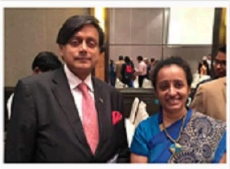
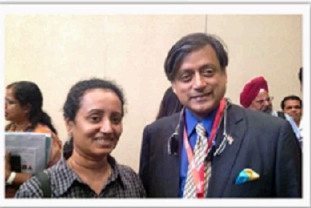
Dr. Shashi Tharoor, Member of Parliament, Lok Sabha, constituency of Thiruvananthapuram, India, was in Singapore recently to address a forum. I happened to meet him and was fascinated by his charm and ability to attend to a number of people in a minute. One was asking for his autograph, a few others for his photograph, some congratulating him, some admiring his speech—all at one time. With so much patience, he could attend to all to the best of their satisfaction!
1. Everybody knows that Mr. Shashi Tharoor is a prodigy. What sort of a boy were you? Very mischievous, stubborn, quiet, active... how would you describe yourself as a child?
I was most certainly a very active child, although not often in the outdoors manner one might expect. I loved playing cricket, but as an asthma sufferer throughout my childhood, I more often languished in bed, unable to breathe, while my friends played cricket in the streets below. But I followed the game closely from my windows, offering distant commentary from above, and to this day, if anything can compel me to delay even an urgent commitment, it is a heart-racing game of cricket on the television—my one vice!
I was not mischievous as such—was mostly content to be reading or writing, and since I was only inconveniently good at taking exams, I was one of those perennial top-rankers at school and college who always scored well and earned the universal resentment of his peers! I was also active in debate, drama, quizzing, campus journalism, and similar extracurricular activities. I must point out, though, that even then I always thought of exam marks as a very limited parameter to evaluate individuals, and I was always drawn more sincerely towards other challenging activities that offer more profound forms of fulfillment.
2. During your childhood, was there any trace of you springing as today's multi-faceted Shashi Tharoor? Any interesting examples?
I was certainly highly motivated and very determined. If I set my mind on something, I had to accomplish it no matter what. I once issued myself a challenge to read a book a day when I was 12, and to the greatest surprise of my parents (and some alarm that I was not sleeping at all), succeeded in finishing 365 books that year—something I am singularly proud of even now! Due to my illness, books were my gateway to the world outside, and I read voraciously. And when I exhausted myself reading, I picked up a pen and wrote. I owe a great deal of any self-belief in my abilities to my father, Chandran Tharoor, who unstintingly encouraged me, took my scribbling seriously, got my stories typed up, and went out of his way to submit one of my first short stories for publication in a mainstream Sunday newspaper when I was just ten years old. He was most definitely a multifaceted personality! I can only say I try to live up to his faith in my talent, which remains my greatest, abiding inspiration.
3. You were born in London; studied in many places; worked in many places and now living in India. Which place touches your heart the most and for what reason?
I was born in London, grew up in what was Bombay and Calcutta of the 1960s and 70s (minus a brief stint at boarding school in Yercaud), before going off to St. Stephen's in Delhi and then the Fletcher School of Law and Diplomacy in the United States. My career thereafter took me to Geneva, Singapore, and Geneva again, before New York became my base for UN forays into the former Yugoslavia, and all around the world really. All through this, however, it was always India that endured closest to my heart, faraway but ever-present within me. I never relinquished my passport, and throughout those decades wrote hundreds of columns consistently on our politics, culture, literature, civil society, and more, in publications across the globe. Even my fourteen books, from 1985 on, are practically all about India! My international career through the UN was one aspect of my life, but my connection with India was the overwhelming other, to which I remain devoted.
4. You got your Doctorate at a very young age. Your career at the United Nations—is it your aspiration or the UN's need for such a promising candidature?
I rushed my doctorate because I was terrified my scholarship would run out before my thesis did! I did indeed always aspire to an international career, but the UN seemed a distant dream until I actually joined it—and then my identification with it, its goals, and values, became total. My candidature for the top job of Secretary-General was always a risk, but since I had had the privilege of serving the UN in pretty much every crucial area of its work—humanitarian, political, peacekeeping, public information, the Secretary-General's office—and because as Under-Secretary-General I also had to achieve administrative and budgetary reforms, I thought I was almost uniquely qualified to succeed Kofi Annan. I came close—just two votes behind Ban Ki-moon in the first ballot, and in every ballot came a strong second of the seven contenders. But good though that was, second was not good enough. I have no regrets about trying, but once I had lost, I felt I had to leave and bring a gloriously satisfying 29-year career to an end.
5. What is the most satisfying and dissatisfying aspect of your career at the United Nations?
Satisfying: Undoubtedly my stint heading the Singapore office of the United Nations High Commissioner for Refugees at the peak of the Vietnamese boat people crisis, 1981–84. Negotiating the disembarkation of refugees, obtaining guarantees of their resettlement, persuading immigration officials to accept people who did not otherwise qualify, running the refugee camp—all these allowed me to put my head to the pillow at night knowing that things I had done during the day had made a great difference to real people's lives, indeed transformed many forever. I was also able to find creative solutions to many unprecedented problems, including handling the first Polish refugees in Asia and the first Acehnese refugees, all without ruffling political feathers. And I did it all while concealing my age, since I was only 25 when I took charge of the office, and all my interlocutors assumed I was at least a decade older!
Dissatisfying: During the Yugoslav civil war, one often found oneself frustrated that one's efforts, eighteen-hour days of unstinting work, didn't stop the blood flowing. But even then there was the intangible satisfaction of playing a small but significant role in one of the momentous events of my time, and so leaving my smudgy thumbprints on the footnotes of the pages of history.
6. How and why was the transformation from the United Nations to the Indian Parliament?
As I said before, even during my decades abroad, India was always my greatest passion, and I expressed this through literature. With the conclusion of my nearly thirty-year career of service to the world at large at the United Nations, by which time I already had a number of bestselling books to my credit, I wanted to do something more concrete for our nation; something that could make a lasting difference in the lives of as many people as possible in my own country. I first ventured into entrepreneurship to help the Malayali youth by setting up a skills development enterprise in Thiruvananthapuram.
But the idea of joining politics was more compelling than working in the private sector, partly because of the reasons mentioned above and also because all my life had been spent in the public sector, honing skills that I could most effectively apply there. I had given so many years to the UN and now, I thought, it was time to discharge my duties to my homeland and country. That is why when the Congress party offered me the Thiruvananthapuram seat during the 2009 elections, I was thrilled to accept.
7. Are you happy serving as a Member of Parliament, a Minister of India, or do you miss your role at the United Nations?
Each role has been vastly different from the last. I loved being at the UN, but I don't believe in looking back; that train has truly left the station! So for me today, it is serving as a Member of Parliament that is most compelling. In that position, I daily interact with hundreds of people from across the board: party workers with a variety of development proposals; students seeking career advice; the sick looking for medical attention; the poor wanting information on government schemes that could assist them; the middle classes wanting a vibrant, modern city and amenities; and so on. I have to deal with everything from enabling IT projects to chasing bureaucrats for clearing critical infrastructure works to working on developing ports, and so much more. I have to be on my toes all day, every day, and no one matter is less vital or pressing than the other. It challenges me constructively. There are, of course, political frustrations when, for instance, adherents of an opposition party obstruct schemes merely to satisfy narrow ideological agendas, or rivals engage in uninhibited and ruthless mudslinging. But the electric energy one feels each time a public initiative or scheme is successfully accomplished negates much of this petty political antagonism and fuels my determination to carry on with the tasks my constituents voted me to fulfill.
8. Indian Politics is a bumpy road with unwarranted criticisms. How does a man of your stature face those unwarranted criticisms? Or do you see yourself fitting in well in the scenario of today's Indian Politics?
The amusing thing about Indian politics is that where there is no room for legitimate, constructive criticism, there are always those to invent stories and scandals just to feed an incessant desire for controversy. I must admit that when I first encountered this I was somewhat stunned; I was accused of saying the wrong things in public, when for years I was the face of the UN and never once put a foot, or a word, wrong. I did misjudge the nature of politics and public discourse here, but I cannot take all the blame. Much of the criticism was plainly unwarranted and without an iota of justification, except in that I was something of an easy target. I have now learned to be more cautious, even when it should be others who ought to be fairer and acquire the bare minimum of common decency and standards. And I do not think I try to 'fit in'. I speak out somewhat more judiciously because the environment is hostile, but my working style remains the same and I think I have the courage of my convictions to stick to them no matter what others may say.
9. What are the ups and downs while leading a public life?
I think incessant scrutiny is a double-edged sword that those in public life must invariably grapple with: it offers publicity but also distortion and character assassination. In recent years it is this phenomenon of "trolling" on social media that is a considerable downer when it comes to politics. I took to Twitter to communicate with my voters and others in our country, who do not normally have channels to access politicians, only to now find anything I say drowned out by trolls. There are also unhealthy elements in the media always out sniffing for a scandal and one is compelled to be unduly careful because everything is blown out of proportion.
The ups, as I mentioned before, are not something cameras spot or reporters record (even though they should!). When a woman I helped repatriate from a hostile work environment in the Gulf comes to thank me, or when a school shelter from my MPLADS funds is complete, I find myself very happy. If I owe anything to anyone, it is not to gossipmongers and peddlers of invented scandals, but to the people of Thiruvananthapuram. And the latter job I am doing to their satisfaction, as evinced by their renewed mandate to me this year to serve again as their representative in Parliament.
11. Will you describe yourself as religious or a free thinker?
I wouldn't say I am overtly religious, but I do have faith in the Almighty. I also do not think being a free thinker and being religious are contrary to one another. One cannot be a fanatic and a free thinker, but one could certainly absorb the values of the faith one is born into, or adopts by choice, and yet maintain intellectual freedom and objectivity. I think freely but my heart has faith in God. They occupy perhaps different spheres of my life. Where society and the public is concerned, I do not impose my beliefs and faith on them, and serve as a free thinker. But in private I have the principles by which I lead my life and upon which I have based my work.
12. Finally, if I ask you to describe yourself in 'one word', how will you describe yourself?
"Overstretched" and "multivalent" come to mind, but at the risk of sounding immodest, I think 'workaholic' would be appropriate!
Dr. K. Veeramani, the President of Dravidar Kazhagam, is an ardent disciple of the late Thanthai Periyar and a staunch follower of Periyar's Self-Respect Movement. A visionary and author of about fifty books, he believes in science rather than religion. A strong critic of religious fundamentalism, he shares many things from the formation of Dravidar Kazhagam to the principles of the Self-Respect Movement.
1. How was the Dravidar Kazhagam formed?
A series of happenings took place and as a result, Dravidar Kazhagam was formed. Rather than discussing those long events, I would give a direct answer to your question. In 1944, at Salem, Dravidar Kazhagam was floated by Thanthai Periyar with a view to bring equality among the various sections of people. Periyar made Anna hammer the resolutions. Dravidar Kazhagam's prime basis was to reach people through social work and not through any formal power.
2. When did Anna meet Periyar?
Anna met Periyar during the year 1938 at the Tiruppur conference. Anna's oratory power got him closer to Periyar. He was then the editor of the daily 'Viduthalai'. A lot of youngsters got attracted to Anna's prowess. Then, with the help of Thanthai Periyar, he started the magazine Dravida Nadu. Slowly, Dravidar Kazhagam was getting popular among the people then.
3. When did you first meet Thanthai Periyar?
In 1944, I was a ten-year-old boy witnessing the formation of Dravidar Kazhagam. I was made to stand up on a chair and spoke at that meeting. The next day, it was captioned in the newspapers as a star attraction: 'Ten-year-old revolutionary kid Veeramani spoke'. Hence, since my childhood, I have been involved with Thanthai Periyar and the Movement.
4. How was DMK (Dravida Munnetra Kazhagam) formed?
As Dravidar Kazhagam was gaining its momentum, people like Aringar Anna and a few others were of a different ideology—that formal power would be a basis to reach out to people more constructively. Paradoxically, Periyar was of a strong view that formal power would lead to manipulation and might require a lot of compromise. As a revolutionist, he was not in favor of diluting the Dravidar Kazhagam's prime agenda. So, with these kinds of different ideologies, they fell out with each other. It was further deteriorated in 1949, when Periyar married Maniammai, a lady who was nearly forty years younger to him. It was then Anna separated from Periyar and started a party called Dravida Munnetra Kazhagam (DMK).
5. What kind of relationship was between Anna and Periyar then?
They had a lot of regard for each other, though they greatly varied in their ideologies. Anna and his cadres never lost their respect for Periyar. A classic example to highlight their regard would be that DMK never contested in elections from 1949 to 1957. Anna even publicly announced that the leadership position is still vacant in DMK, and he welcomed Periyar to take over that post.
6. In your view, which reaches the public easily? Social work or formal power?
In my view, to reach out to people constructively would be through Social Work.
7. Could you quote some of the Self-Respect Movement's principles?
Our primary principles are to drive away superstition; to bring about equality among all sections of people; not to believe in the caste system; to work hard and to lead a respectful life; not to believe in past and future lives; to give more importance to people than to God; to believe in oneself and to have confidence; not to be a slave, but rather to work hard and attain a state to offer jobs to others.
8. Personally, how do you look at Periyar and the Self-Respect Movement?
Periyar was ahead of his time. He did not expect people to change overnight through his principles. He is a social scientist. Legendary ideas evolve society only over a period of time. It is a fact that it has been having its effect from time to time.
9. Lots of cult groups emerge. Each cult group thrives with an increase in their followers. Still, would you say people patronize DK's principles?
Definitely yes. One has to do a qualitative analysis, and it is quality vs quantity. To put it short, an alternative to religion is science. Science has an answer to all questions. But in religion, there is no answer for many questions. The Self-Respect Movement is eighty years old. But the caste system and superstition are all about 5,000 years old. To determine its success, one cannot rely strictly on statistical records.
10. In Tamil Nadu, did the Self-Respect Movement principles change the mindset of the people?
In Tamil Nadu today, there is no child marriage or practice of sati, whereas one can still come across these practices in some areas. If we take the 33% allocation for affirmative action, in Tamil Nadu people are completely for it. So, definitely, the Self-Respect Movement principles have changed the mindset of the people in Tamil Nadu.
11. Would you appreciate the concept that anyone can become a priest and perform poojas in temples?
One becomes a doctor after attaining formal training through education. Then he is acknowledged for his prescriptions. In the same way, when one gets training in reciting the mantras and others pertaining to poojas, he would be fit to become a priest.
12. How is actor Sathyaraj as Periyar?
When he dressed up like Periyar and stood in front of us, we saw the original Periyar in him. The movie 'Periyar' would be a milestone in actor Sathyaraj's career.
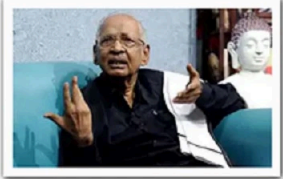
Dr. Kumari Anandhan, a staunch congressman, has worked closely with Thiru Kamarajar. He has represented the Nagercoil Constituency as a Member of Parliament once and served as a Member of the Legislative Assembly a few times. He, who has a great passion for the Tamil language, is an eloquent speaker and a good writer. He has written more than thirty books in Tamil. In this interview part one, he expresses his views on politics.
1. How do you foresee the strength of the Congress party in Tamil Nadu after the merger of a number of sub-Congress parties?
Since the period of Thiru Kamarajar and Thiru Rajaji, differences of opinion have been a norm. For the betterment of the party, people were ready to give and take. Today, there are factions in the Congress party. As a result of various shifting opinions, the strength of the party declines. If two policies are adopted collectively, then the Congress party could be strengthened. One is that there should be one clear leader; another is that there should not be lingering differences of opinion. Even if differences exist, they must try to resolve them among themselves. I am sure that such a situation will come soon.
2. Do you think today's politics in India is conducive for women?
Definitely yes. During the freedom fight, massive numbers of women did not participate initially. Some women like Sarojini Naidu entered politics, and there was a fear regarding their long-term existence then. But even they could take the lead in the salt satyagraha revolution. Vijayalakshmi Pandit, Rajkumari, and others followed her footsteps. They even represented India in the United Nations. So, I guess now a question should never even arise if politics is suitable for women. Women are respected exceptionally well. Actually, the situation is more conducive for women. The 33% allocation for women was brought considering the importance of women's role in politics. I would urge women not to shun away from politics.
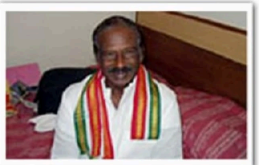
3. So do you accept that women and men are equal?
There is no doubt in it. But both men and women have their duties to perform. One should first do their duty, then get into social work. They say, the child as soon as born, immediately realizes the touch of her/his mother. A mother has a special duty to take care of her child. If a mother like a father too is very busy and if she is not able to dedicate enough time for her child, what will happen to the child? So here the stress on the mother tends to multiply when she has to do social work and also dedicate to the needs of the child. If her husband understands this and tries to share her work, then it will be easier for that woman.
4. Do you think proliferation of parties in Tamil Nadu now can be a healthier one?
No, not really. Even I had a party called 'Gandhi Kamarajar National Congress'. Later on I merged it with Congress. I have never strayed away from the basic principles laid by Kamarajar. Many times, I have claimed that there should only be two or three parties. Maybe we can think more about this.
5. Do you think ordinary people understand politics?
We must make them understand. To quote an example, in 1979, I contested and won from Nagercoil District. Again in the next election, I contested from the nearby Constituency and was opposed by an actor. I addressed the meeting comprising five hundred people. I spoke about merging the rivers in the way an ordinary man could understand. After seeing the situation over there, my daughter Mrs. Tamil Isai, who was with me, said, 'Dad, sure we will win this time". After the meeting, when we were coming back on our way, we saw the actor, my opponent, addressing a crowd of 2,000 people. So, we just stopped by and listened to his speech. He addressed the crowd, that if he is being elected, then he will shoot all his movies in his constituency itself. So my speech on the merging of rivers was in contrast to his speech. People should be able to judge as what is good for them in the first place.
6. Can you tell us about Kamarajar?
Though Kamarajar did not study beyond standard five, he was a visionary and people's well being was his foremost. He was very keen on not spending party's funds unnecessarily. I was a professor initially and later on became very close to Kamarajar. I was given a car and a driver by the party. One day when Kamarajar saw me driving the car, he terminated the driver and asked me to self drive. During the night time, before he goes to sleep, he will make sure he himself switches off the lights. One day I asked him, 'wouldn't we do all these small works?' His answer for that was 'In case if you forget to switch off the light, it is a national waste. Agriculturists work hard to earn their daily expenses. Our country is so poor. In such a situation, can we afford to waste?' It is hard to see such a great leader.
7. What are your experiences with Rajiv Gandhi?
He was a young and energetic leader, who aspired the best for India. During his tenure, there were remarkable achievements. The number of STD booths in the country today is due to his dream in promoting India to the world standards. He also wanted to uplift the standard of rural India. He has done a lot for the benefit of women through Panchayat Raj.
In this interview part two, he shares his ideas on 'Tamil' (continuation from the previous issue).
1. What would be your suggestions to make youngsters get attracted to the Tamil language?
There would be two suggestions for this. First, Tamil Nadu is the only state, where one can graduate without learning Tamil. People are not responsible for this and those who govern are responsible, and they must work towards enriching the language. To implement certain things you need law. So, laws should be enacted to make Tamil language reach youngsters. Second, there are many Television channels in Tamil Nadu than any other state. So, after traveling to many countries, one time, I wrote to the authorities of the Television channels, to have programmes for at least 15-30 minutes to teach Tamil. So, through media also, Tamil language should reach the youngsters.
2. Can you tell us about how you have nurtured Tamil?
In Chennai, on Saturdays I was conducting good Tamil programs through 'Illakiya Peravai', for close to 369 weeks. 50 to 60 people attended it. Due to lack of support from people, I am not able to continue with it. We conducted Tolkapiyam class, discussed various other literary works like Kambaramayanam and others. Hence, I have been trying my level best to enrich Tamil.
3. Would you agree that youngsters lack interest in Tamil?
For (eg), ten years back I went to London. The auditorium that had the capacity of over 400 people, exceeded that limit and was even standing outside. Now, last year I had been to London, the same auditorium was only filled 1/4th the capacity. The reason is that only the old people are interested and attending. The current youngsters are not attending Tamil programs that much. Considering that, we could assume that the youngsters lack interest in Tamil.
4. What would be your solution to this?
People should start associations and conduct more interesting Tamil programs. I started an association called "You can also become a speaker'. Due to that, 4,000 people have become eloquent speakers. In Annamalai University, they have included my book 'You can also become a speaker' in the Masters curriculum. One should create the interest and opportunity for youngsters. Tamil scholars must think more about it.
5. Do you think Tamil expatriates have passion for the Tamil language?
Definitely yes. In Canada you can see the store's names written in pure Tamil language as 'Ani Mani'. In contrast, in Chennai you can notice that they have written as 'Jewellery'. So you have got to appreciate the expatriate/s affinity towards the Tamil language, as still after migrating, they try to safeguard their mother tongue.
6. Can you quote other examples, where you have brought to the attention of public about safeguarding Tamil?
Once when I was traveling in the train, I heard an announcement in Tamil as, "Ungalin panivana kavanathirkku' (for your beloved attention)". I made an attempt to meet the higher official and brought to his attention, that it has to be announced as 'Ungalin kanivana kavanathirku" (for your kind attention). So, when you travel in the trains of Tamil Nadu, you can hear the announcement as "Ungalin kanivana kavanathirkku".
7. Can an ordinary man become a stage speaker?
Yes. Anybody can become a stage speaker. The most essential feature is that the 'message has to be conveyed in the way it has to be'. To become a speaker, one has to keep learning, but it is not that they have to keep studying. I have seen, even I can make young children talk well. At times, to our surprise, they are even better speakers - beyond our expectation.
Mr. G.K. Vasan is the president of the Tamil Nadu Congress Committee and is the son of Late Sri. G.K. Moopanar. This interview was taken in Sathya Moorthy Bhavan, Chennai.
1. How do you foresee the strength of the congress party in Tamil Nadu after the merger of sub-congress parties?
Though the Congress party in Tamil Nadu has not been in power for the last thirty seven years, it has been a pillar of strength to the party that is forming the Government. Hence, we become indispensable during the time of elections. In my view, after the merger of Tamil Manila Congress, Congress party has become stronger.
2. With so many factions in the party, do you still think it is stronger enough?
Factions are a norm in to-day's political scenario. Every party has got its own internal problems both in Tamil Nadu and in other states. You can of course see these differences of opinion in parties like BJP, Janata Dal, Shiv Sena. I must agree that our differences are basically as how to strengthen the party, under Mrs. Sonia Gandhi. At the same time, we are also trying to settle down with our differences of opinion.
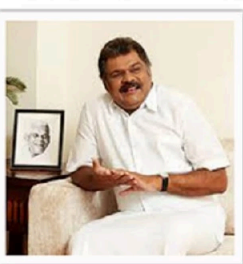
3. Why is that the Congress party not being able to be an alternative to the Dravidian parties in Tamil Nadu?
Congress is the third largest party in Tamil Nadu. All the congress leaders have the same goal of restoring Kamarajar rule in Tamil Nadu. In due course, it will materialize. Being a National party we have issues in both central and State. Hence, we will have to solve accordingly.
4. Do you think proliferation of too many parties is a healthier one?
Being a democratic country, we have no bar to start new parties. Definitely, too many parties will not give good governance to people.
5. How much are you, your father's son?
I would like to adhere to my father's principles in politics. My father's mentor was Mr. Kamarajar. I would like to inherit the principles of him too. So, I would consider Mr. Kamarajar, Mr. Rajiv Gandhi and my father as my role models.
6. If you were not a politician, what would you have been?
I would have been an agriculturist. I hail from an agricultural family. Still I do take care of our lands in our native.
7. Was agriculture your major degree in University?
No, I did Corporate Secretaryship. I did my university in Chennai.
8. How much time do you get to spend with your family?
My profession is such that, I will have to devote more time to the development of my party. So, my timings are very restricted. I have a four and a half years old son. My family understands this. The little time that I do get, I try to spend that qualitatively.
9. How do you relax?
Playing with my son is my best hobby. I do not like to go out with them, rather, I would like to spend time with them at home and relax.
Mr. Karti Chidambaram, a member of All India Congress Committee. A short and sweet interview.
1. Can you tell us about your formative years, like where did you grow, where did you do your schoolings and University?
I was born in Madras and did all my schooling in Don Bosco, Egmore. I did my undergrad at the University of Texas, Austin and after that I got my Law degree from Cambridge University, England.
2. You went to the USA at a young age. How did you cope up with the cultural change?
Yes culturally the US was different but I coped up very well, because I stayed in the hostel and had a very good set of friends.
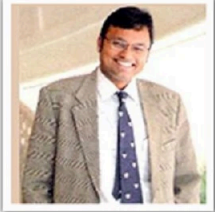
3. Politics in India is a bumpy road. Are you still keen on being in politics?
I am completely committed to a career in public life.
4. You are quite often spotted in public functions, in your father's constituency, Sivaganga. Do you have any special plans to develop the Constituency?
We have been doing a tremendous amount of developmental activities in Sivaganga.
5. I have come across rows of your cut-outs and posters in Sivaganga District. What does it signify?
It means that I am part of the political circus.
6. General public in general is cynical about politicians in India? Why is it so?
The cynicism is because our delivery of our promises is low.
7. Do you think to-day's politicians can be genuine to his role?
Yes. It is up to the individual to live up to his conscience.
8. Who is your role model in life?
In Public life, Mr Lee Kuan Yew, Mr Bill Clinton.
9. What is your piece of advice to the youngsters?
Do not accept the status quo.
10. Would you like to convey any special message to Singapore readers?
I envy your country.
1. Can you tell us about your formative years/yourself to our readers please?
I was born In Kuala Lumpur, Malaysia, on 4th November, 1936. My father Mr Krishnasamy Naidu, was a clerk in an estate and my mother's name was Andal. Ours was a big family, as we are six siblings. When I was six, I lost my mother but was fortunate to have had a caring stepmother. We then moved to Pahang where I went to school. An average student since my school days, I eventually went to Liverpool, UK to do teacher training on a scholarship and were there for two and a half years. I returned to Malaysia in 1958 and started as a teacher in Economics and English in Penang. In 1963, I married Padmini, also a teacher. The aspiration to do higher studies led me to get enrolled in University of Malaya. I graduated with a BA honors in History. In November 1967, I decided to move to Singapore and join the Admin Service here.
2. What was the catalyst that brought you to Singapore?
I was taken by the then Prime Minister Mr Lee Kuan Yew's views on Meritocracy, Equal Rights and the society that he was trying to build in. In 1967 November, I came to Singapore and joined the Ministry of Labour.
3. How and when did the interest arise to be in the Diplomatic Service?
That has always been my desire. When you study History, international relations, politics, interaction between countries, you will apparently aim to be in the Diplomatic Service. That is the primary reason, I came to Singapore for.
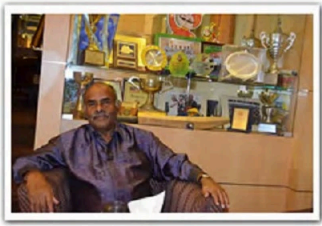
4. Then when did you join the diplomatic service?
I joined the Ministry of Foreign Service in 1972. I shall list down the years and the countries I have been posted to:
- 1973 to 1976: Indonesia
- 1979 to 1981: Moscow, Soviet Union
- 1982 to 1986: London
- 1991 to 1997: Ambassador to United Nations and Permanent Representative to World Trade Organization
- 1997 to 2002: High Commissioner of Singapore to Malaysia
In between some periods, I served in the Ministry of Foreign Affairs, Singapore.
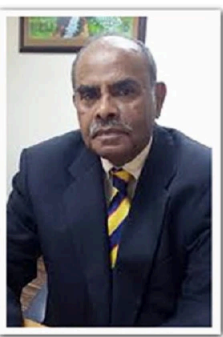
5. Can you tell us about the other positions you have held/holding?
From 2003 to 2011, I was the Director of the Institute of South East Asian Studies. I am now associated with several Organizations in various capacities. President of Singapore Indian Association; SINDA Board of Trustees; Member, Hindu Advisory Board; Governor, Singapore International Foundation; Vice Chairman - Indian Heritage Centre, Cultural and Content Committee; Distinguished Fellow, Asian Research Institute, NUS.
6. So, how do you see the change from the Diplomatic Service to head ISEAS?
As research is predominant in both ISEAS and in the Diplomatic Service, it was very natural for me to make the shift.
7. Going back to your diplomatic service, which posting was the most challenging?
The most challenging one was my posting in Malaysia between 1997 and 2002. There were some issues like Immigration, water and railway. I am happy that most of the issues have now been resolved and bilateral relations are cordial.
8. Which of the posting was the most satisfying?
The United Kingdom was the most satisfying. Apart from my diplomatic work, my wife and sons profited from the educational opportunities. I did my Masters in London University that further honed my skills in English Language; my wife did her Diploma in Special Education; my sons went to school there. Apart from these, culturally too we were comfortable!
9. You have been holding crucial, rather say stressful positions where you have had to balance between various constraints. Still you look very young for your age. What is the secret?
I live by the motto, "Why worry worry until worry worries you?" In office, I do my work and once I am at home, I forget about my work. I never brood over anything. I can sleep well, even during a flight, well before the plane takes off! Also one must have a variety of interests. I love to walk, play golf; I am interested in music and dance. So, it is simple and there is no any secret as such.
10. Do you believe in Karma?
Yes. I do strongly believe in Karma. I got to know of Karma through reading 'Sufi Literature'. I am sure Karma much determines our lives. Take my own life for instance - a child who grew up in a small town in Malaysia and returned as Singapore's High Commissioner to that country. I always remember this:
Eluthuchelum Vithiin kai,
Eluthi,eluthi maath chelum
Aluthalum,tholuthalum
Orr eluthum maarathae
Hence, there is some power higher than us. We don't know what will happen. We must be ready to accept whatever comes.
11. Are you Religious?
I am not that religious and we don't perform rituals at home. However, I like to go to temple. I have 30 plus Ganesha Idols with me and I have been to Sabarimala thrice. But I believe in serving God through serving Man. I have been advocating this principle since my days as a youth leader in Penang, where, I led the move to form the Hindu Youth Organization. Sixty years on, the HYO continues to be a vibrant organization.
12. Can you tell us about your Inclination to Music / Dance?
When I was six years old, in Kuala Lipis, Pahang, Malaysia, my neighbor was a 'Sattam Pillai' (Music Teacher), who was from Sri Lanka and conducted Music Class daily. Hence growing up listening to music led to a life-long appreciation for Classical Music. I support several Arts Groups including Bhaskar's Arts Academy, Apsaras arts, Samarpana.
13. Can you comment on your 40 years of experience in the Diplomatic Service of Singapore?
Diplomacy is the first line of a country's defence and a principal tool of the Government to secure/advise a country's interest. In this context, I am proud and privileged to have been a member of Singapore's Diplomatic Service. For many services, I was awarded the Public Service Star medal in 2014. On the lighter side, I was able to travel widely and gather enriching experiences. As our first Foreign Minister Mr S. Rajaratnam, put it, 'As a diplomat, you can live like a millionaire.'
Mr. Kumaran Periasamy, High Commissioner of India to Singapore, is optimistic about enhancing India - Singapore relations, as he says both countries are well-connected and there are many areas that have abundant opportunities for mutual benefit.
1. Could you please tell our readers about your childhood days?
I was born and brought up in Madurai, a medium sized city in central Tamil Nadu, and did my schoolings at the Central School (Kendriya Vidyalaya) there. I have two sisters. My parents were government employees and we had a modest, middle-class upbringing. They constantly emphasised the importance of hard work and a good education. I went to Chennai to do my Engineering at IIT, Madras (Chennai). I then moved to New Delhi to join the Indian Foreign Service.
2. What was the inspiration for you to take on to the Foreign Service?
To be frank, there was no particular inspiration. The Civil Services have always been an attractive career option, given the vast range of experiences they offer. My parents were keen that one of their children join the Civil Services. They were able to persuade me to give it a try. They were very happy that I was able to get into the Foreign Service. To add to their happiness, my first sister got into the Indian Administrative Service (IAS) two years later.
3. To enter IIT one needs high calibre. So you should have been a very good student in school and college...
Yes, I was a promising student at school and I got good support from my parents and teachers. I also had the good fortune of having friends whom I could consult and get advice from, during the course of my preparation. In India, competitive exams such as the IIT-JEE and the Civil Services Examination attract a large number of aspirants and you can never be sure how well you will perform. I was fortunate to get into the Foreign Service.
4. How was your training experience in the Foreign Service?
I had no clear idea of the kind of work the Foreign Service was involved in, until I joined Service in 1992. I had never travelled abroad earlier, nor had any of my family members. When I was asked to travel to Egypt for my first posting in 1994, it was an entirely new experience. I was fortunate to have had my training and initial years under extremely capable and supportive Ambassadors. Thanks to them, I was able to get a good foundation and do well in subsequent years. Looking back at the last 28 years, I would consider myself extremely lucky to have had the opportunity to join the Foreign Service. Incidentally, the IFS was created as a result of a cabinet decision in 1946 and we now celebrate IFS Day on 9 October every year.
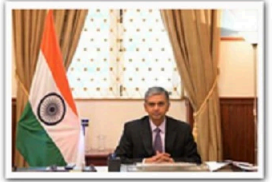
5. Please share about your initial experiences as a diplomat...
As I mentioned earlier, my first posting was at our Embassy in Cairo (Egypt). It is a large Embassy which gets several young IFS officers for training every year. A supportive environment with good bosses and like-minded peers gave me an enjoyable and productive start. I spent three and a half years in Egypt. We are confirmed in the Foreign Service only after we learn the allotted foreign language and clear the designated examination, which is of a particular standard. I was allotted Arabic, a language that is considered difficult for most Indian diplomats. After a two-year course at the American University in Cairo, I could speak, read and write Arabic. My next posting was Libya, where I continued to use my Arabic skills for the next three years. I got married during the course of this posting and my wife joined me in Tripoli. We have warm memories of our stay there and it pains us to see the turmoil in that country today.
6. What are the other countries that you have been posted to?
After Egypt and Libya, I served in Brussels (Belgium). After that, we went back to India for four years, out of which two years were at the Ministry of External Affairs in New Delhi and the other two were as the Regional Passport Officer in Bangalore. Our next three postings were Islamabad (Pakistan), Washington DC (USA), Colombo (Sri Lanka). I was then posted to New Delhi, where we stayed for three years. Following this, I was posted to Qatar as India's Ambassador and we were at Doha for nearly four years. We arrived in Singapore in mid-July 2020.
7. What were your impressions about Singapore before you came here?
I have visited Singapore earlier as part of delegations for official dialogues during my posting in Delhi. Although these were short visits, it was clear that Singapore is a well-organised country and a well-connected regional hub with all systems delivering efficiently for the people. Singapore has indeed been an amazing success story - a small country with virtually no natural resources, and the per-capita income and the economic and social success it has been able to achieve is awesome. We are still cautious about going out to crowded places, although Singapore's success in containing the Covid-19 pandemic has been impressive. We hope to be able to visit more places and explore the country, and the broader ASEAN region, in the coming months.
8. How do you think Singapore and India can be connected?
Singapore and India have had a remarkable historical connection and continue to be closely linked in many areas. Our political leadership is closely aligned in its thinking, as we strongly believe in a rules-based international order. We believe in stability and security for all in the region, with due emphasis on maritime security and unimpeded trade flows through international waterways. We see Singapore as a springboard for our ASEAN strategy and work closely to enhance our trade and investment partnership. A number of emerging areas such as start-ups, fintech, data science, artificial intelligence and machine-learning offer exciting opportunities for cooperation. We also have a growing defence partnership underpinned by regular dialogue at high levels, covering a number of areas including training, joint exercises, ship visits etc. As you know, cultural and people-to-people links are one of our biggest strengths, but we have to develop these further and engage the younger generation on both sides in the coming years.
9. What are your plans to further the strong Singapore-India cultural relations?
There is an active cultural agenda in my mind. We celebrated the India-Qatar Year of Culture in 2019 in Doha, where I was posted before coming to Singapore. The Embassy worked closely with the Indian community there and were able to organise over 40 events during the course of the year. Based on the ideas and experience gained from our work in Qatar, I hope to work with the Indian community in Singapore and create opportunities to host quality cultural events here. I visited the Singapore Indian Fine Arts Society (SIFAS) a few days ago and met the members of the Management Committee. I am also meeting representatives from a number of other Indian community associations to explore various options. I am sure that, once the Covid-19 pandemic recedes, we will be able to put together a busy cultural calendar.
10. You have assumed office during a pandemic situation, with limited movement between Singapore and India. Do you have any plans to enhance the current situation?
India and Singapore have enjoyed excellent connectivity in pre-Covid times, with 16 Indian cities having direct flights to Singapore and over 225 flights in each direction. It is indeed a difficult situation for the whole world now. The situation in India is challenging, given the large number of daily new cases. But the recovery rate and the mortality rate are much better compared to most other countries with a large number of cases. We are also seeing some early signs of economic revival. So I do see a silver lining. Since the outbreak of the Covid-19 pandemic, our focus has been on taking care of the needs of our migrant workers and to organize repatriation flights for those interested in returning to India. We work closely with the Ministry of Manpower (MoM) and other agencies in the Government of Singapore and appreciate the support we receive from them. As on date, about 22,000 people have gone to India. The reasons for their return range from visiting ailing relatives, attending funerals of loved ones, loss of jobs etc. We still have over 12,000 registrations with the High Commission for people wishing to travel to India. So we will continue to direct a significant portion of the resources of the High Commission towards repatriation work. In addition, there are people who wish to return to Singapore from India and are unable to do get entry permits. We take up deserving cases with the Government of Singapore and request them to consider such cases on humanitarian grounds. As Singapore looks at restarting limited numbers of flights to various destinations and reclaim its status as a travel hub, we are hopeful that some flights from India can also be included, of course, with the necessary safeguards and testing protocols.
11. Apart from these what are your other plans?
There are a number of areas that offer opportunities for India and Singapore to work together. We had a meeting a few days ago at the Singapore Manufacturing Federation and discussed the potential for a manufacturing partnership. Singapore's financial hub status, high levels of success in developing vocational skills and knowledge of the ASEAN market, combined with India's long term-term growth prospects, land availability, and a large and young workforce willing to work at affordable wages offers complementarity that can be exploited for mutual benefit. In addition, as I mentioned earlier, there are a number of areas such as research and innovation, start-ups, fintech, artificial intelligence, logistics, pharmaceuticals and vaccines, etc. that offer huge opportunities for partnership. I recall a comment by Dr. Vivian Balakrishnan, Singapore's Foreign Minister, that the world is moving from a 'just in time' logistics model to a 'just in case' logistics model that increasingly emphasises reliability and resilience to unexpected disturbances. India, as a country with shared values and a significant land area and geographical spread, can be a useful partner in this regard. So, overall I see a lot of opportunities for cooperation between India and Singapore. We hope to pursue as many of these as possible in the coming months and years.
Mr. Satya Narayanan known as Sam Pitroda is a true visionary. India's Telecommunication's success owes a lot to him, as he was instrumental in introducing the STD/ISD, PCO facilities throughout India.
It was during India's Prime Minister, Late Rajiv Gandhi's period, Sam Pitroda revolutionized India's Telecom Industry, as he says, ‘Rajiv Gandhi in a sense, gave meaning to my life'. He is a man of his own perception.
Excerpts from his interview
1. How was your working experience with Mr Rajiv Gandhi?
Until Rajiv Gandhi gave me the political will, I never knew I could do my wish and make such an impact in telecommunication sector in India. He gave me freedom and flexibility and support to build organisations. Over a period of time, we became good friends, as we are of same age. Also all the other officials supported and there was no major conflict for me with anyone. So working under Rajiv Gandhi was a great opportunity.
2. What were the Challenges and innovations in the Telecom Industry during the 1980s?
We had to start from the scratch then, as we had no base. India was then focused on decentralization and privatization and we wanted to build industries based on the Indian model, like rural development, local production, digital network using young Indian talents. So we hired a lot of engineers from IITs and other institutions. Everything then was a challenge.
3. Do you think the Telecom Industry in India has developed to its full potential today?
Yes. It has actually surpassed our expectations. With the limited expertise that we had then, no one expected billion phones in 2015. The cost wise also it has come down a lot cheaper. So there is no doubt that, it has made a remarkable development.
4. To compete with the world class countries, what do you think should India do now?
First time in history, now India is connected well with the billions of its people. So India should capitalize on this connectivity and build a better country. So, they should take the broadband connectivity to improve the education, agriculture, health, governance sectors and create jobs.
5. What do you think is the most challenging in the policy making for India?
The most challenging would be to convince people that the change is inevitable and good and not to be afraid of the change. People of India are so much afraid to face the changes.
6. If you could go back and change something in your career, what would you change?
Actually nothing, except that, I could have paid some attention to my health as I had heart attack and cancer. Though I have come out of it, I wish I had taken care of it.
7. Do you think the infrastructure in India is competent to support the rapid growth of information technology?
Each initiative needs a champion. The political will, the correct domain expertise, resource mobilisation, right management structure etc..should come together for the improvement and implementation of projects. If one thing does not support, then there tend to be a backlog of the project. So, it is a combination of things.
8. How do you see the entrance of Facebook focusing on rural areas. Who is the beneficiary? India or the Facebook?
Of course it is for Facebook and not for India. It is not Facebook that brings the Internet to India. So, the Facebook will be the beneficiary.
9. You talk of innovations in the existing University model. What will be that?
Instead of a fixed period of education, it has to be free learning. universities should be a place of learning for whatever you want to. So a parallel system outside universities should be created and give students, hands on experience and provide a vast amount of information and they will learn based on those information. Instead of someone come and give lecture, they should motivate them.
10. What do you think is the key for one to be successful?
It has to come from one self. One has to self analyse and see which is suitable for them. It is not for society to do anything about it. When society does not accept something, one has to fight for it and should try to prove. The success/failure is not there outside. It is within oneself. One has to be self-driven.
11. You were in a Gandhian Boarding School. Could you tell us the important things that you had learnt there?
Yes. What matters in life is one has to be disciplined first. Next comes the analytical ability, creativity, respectful mind, ethics, global outlook, love for all, truth and simplicity. These are the things that I consider important in life.
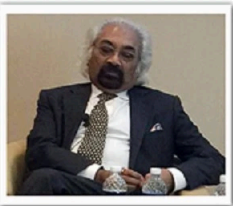
12. Do you practice these things in life?
I try to do to the extent that I can! Most of the things should be instinctive and one must do on their own and not everything can be taught.
13. You say you do not take success or failure to your mind. How do you attain this mental balance?
Because, the things that go up comes down and the things that go down comes up. So there is no reason to bother about anything. You must just do what your mind and heart says. I am not religious, I do not do yoga nor meditate, follow any rituals, nor even shop. I just wear what my wife buys. I eat the food that my wife gives when at home and when at office, I eat what my secretary gives. I am not part of any political party nor a member of any association. This how I am. That is Sam Pitroda!
Duvvuri Subbarao, an Indian Economist, Central Banker and Civil Servant was the 22nd Governor of Reserve Bank of India.
He served under the Prime Minister Dr. Manmohan Singh. Here is an exclusive interview with him.
1. Is Indian Prime Minister Mr. Modi with his ambitious plans for the country, running ahead of the ground reality (i.e.) the political nature and the legislations to be passed?
On the contrary, I believe Prime Minister Modi is very much rooted in reality. His programmes reflect a deep understanding of India's problems and priorities. The legislative initiatives of the Government too reflect priority reform agenda. The Prime Minister brings the rich grass root experience from his successful stint in Gujarat to bear on his policy making at the national level. In evaluating him, we should understand that India is far more complex and diverse than Gujarat. Besides, given the size and the democratic structure of India, Chief Ministers are better positioned to implement the economic and governance reform agenda than the Prime Minister. In order to push his reform agenda, I believe, the PM should build partnerships with state Chief Ministers cutting across party lines.
2. There is a perception that the country is headed towards more saffronism. Is the secular order under threat now?
I am not sufficiently informed to comment on this. I must say though that I was heartened by the fact that during the campaign last year, candidate Modi focused almost exclusively on economic growth and steered clear of divisive issues. I hope he maintains that discipline not only at a personal level but across his government and his party.
3. What is your take on the new economic order ushered in by the China-led AIIB?
It is interesting that you call this a 'new economic order'. Whether or not the AIIB ushers in a new economic order will depend on how its policies and lending priorities evolve over time. It is too early to pass judgement on that. The AIIB has been conceived in reaction to the lending policies and procedures of the World Bank and the regional development banks like the ADB. The AIIB needs to demonstrate that it can build a more efficient business model without compromising on credit quality and governance standards. Besides, the focus of AIIB is on lending for infrastructure for which there is enormous demand across emerging and developing economies. The AIIB has to be nimble and innovative in meeting this demand. How it accomplishes this task will determine whether or not AIIB is ushering in a new economic order.
4. Do you think in the formation of the China-led AIIB, is it more beneficiary for Asia or for China?
If AIIB, in fact, delivers on its promise, it can be mutually beneficial. From the supply side, there is China with surplus resources looking for investment opportunities. From the demand side, there are the developing and emerging economies with huge need for infrastructure investment. AIIB is a mechanism for matching that supply and demand, and that arrangement can be a win-win opportunity for both sides. China has for many years been investing its surplus resources in African and Asian economies. AIIB, in fact, implies China's shift away from bilateral lending towards multilateral financing. I think such a shift will certainly involve greater lending discipline and higher quality of governance which is good both for the lender and the borrower.
5. What role do you see India playing in this shift of economic power to the East?
Thinking about what role India can play in the ongoing global economic shift, in my view, amounts to inversing priorities. Instead, we should focus on raising our growth rate and reducing our poverty rate. That and that alone will raise our global clout, and in turn determine the role India can play in the global economy. Just look at how China is respected in the global power play today. China did not go about first deciding what role it should play in the global shift of economic centre of gravity. Instead, it focused on its own priorities, and global clout came as a byproduct. In that respect, China should be a role model for us.
6. Do you think Indian economic growth is up to the mark?
Growth is certainly picking up, notwithstanding the controversy surrounding the numbers and the methodology. In thinking about growth, two things are important. First, we need to accelerate our growth rate even further. China clocked double digit growth for over 15 years on a trot, and demonstrated that such a 'miracle' is within the realm of possibility. Second, we should note that India has more poor people than the entire continent of Africa. Ensuring that growth translates into poverty reduction is therefore an imperative. Experience shows that this is not as automatic as we once thought. While on the pace of growth, China should be our role model, on the quality of growth, we should aim to do far better than China.
7. What do you think are the achievements in your working stints with Dr. Manmohan Singh and Mr. P. Chidambaram?
Both Dr. Manmohan Singh and Mr. Chidambaram had rich experience in public life; both were highly educated, mature and intelligent. Working closely with them was a rewarding learning experience for me.
8. What difference do you see between the economy savvy Manmohan Singh - P. Chidambaram and Narendra Modi - Arun Jaitley pairs?
Not having been exposed to the Modi-Jaitley pair, I am not in a position to make a comparative evaluation. One thing, I can say though is that in a democracy, a minister need not necessarily have deep domain knowledge. He should be intelligent enough to appreciate the advice given to him and take a decision based on that advice in the larger public interest.
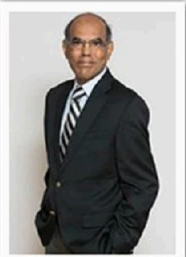
9. Do you think politicians in India succumb to bureaucracy? How much difficult is it for an IAS officer to work in such a situation?
In a democracy, the prerogative of final decision vests with the political executive. The task of the bureaucracy is to process policy issues, argue the pros and cons and present advice candidly. There are of course challenges, but I don't believe that the political executive in India can be gamed by the bureaucracy.
10. Do you think in India the Government is able to communicate its policies to people?
The nature of communication by the government is definitely improving. The challenge is to reduce complex issues to a level where people can understand and relate to. It is only when people are able to understand issues that they can influence government decision making and extract accountability from the elected executive.
11. What are the areas of business do you think can people take up between Singapore and India?
Singapore is a major financial hub in Asia. India is in need of enormous financing for its infrastructure development. There is a clear match there.
12. What are your priorities in the current stage of your retired life?
In the one and a half years since I stepped down from the Governorship of the Reserve Bank, I have been attending conferences, giving speeches and am currently a Visiting Fellow in National University of Singapore with concurrent appointment with the Business School, ISAS and the Monetary Authority of Singapore. I am also writing on issues in central banking.
13. How do you keep yourself fit?
Well, I try to maintain an active lifestyle but do give in to temptations when it comes to food.
Raj Chetty is a Professor in the Economics Department at Harvard University, Co-Director of the Public Economics group at the National Bureau of Economic Research, and Editor of the Journal of Public Economics.
1. You are the youngest professor at the age of 29 in the Harvard University's history. What made it possible?
I was lucky to have a family where I was exposed to a lot of things about the world and motivated to seek knowledge since a young age. I started programming computers when I was 4 when my father brought an Atari computer to India. We travelled all over the world when I was young so I was quickly exposed to many cultures and ways of doing things. As I grew older, I was lucky to attend great schools and learn from excellent teachers and professors. All those great opportunities coupled with hard work made it possible for me to get to Harvard and succeed here, but I want to emphasize that I attribute most of my success to the generosity of others rather than my own efforts.
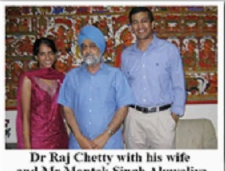
His research on topics such as taxation, unemployment, and education has been widely cited in media outlets and Congressional testimony. Chetty has been named one of the top young economists in the world by the New York Times and the Economist magazine. Chetty received his Ph.D. from Harvard in 2003 at the age of 23 and is one of the youngest tenured professors in the university's history.
2. Can you tell us about your research on the kindergarten students with Dr. John Friedman, please?
We have written a series of papers tracking students from elementary school to adulthood. We find that students who were lucky to be assigned to high quality teachers - as measured by their value-added on standardized tests - are more likely to attend college, attend higher-ranked colleges, earn higher salaries, live in higher SES neighborhoods, and save more for retirement. They are also less likely to have children as teenagers. On average, replacing a teacher in the bottom 5% of value-added with an average teacher would increase the present value of students' lifetime income by more than $250,000. We conclude that good elementary school teachers can create substantial economic value and that investments in improving the quality of elementary education are likely to have large returns.
3. Can you tell us of your experiences with Harvard University or how would you rate the students and their prospective to that of other Universities?
Harvard is an incredible environment in which to study, learn, and do research that has a big impact on the world. There are a handful of great research universities in the world, and there is no doubt that Harvard is one of them. It is an honor and a privilege to be at a university where so many critical discoveries that have influenced humanity have been made, ranging from the discovery of DNA to the basic theories of economics that shape free market economies.
4. How much does Harvard economists influence US Economic policy?
Harvard economists have had a profound influence on economic policy in the U.S. For example, as the President's chief economic adviser, my colleague Larry Summers together with other Harvard economists played a key role in designing the policies that rescued the U.S. from the financial crisis. Harvard and other leading economists' research continues to influence policy debates throughout the year.
5. Where do you see yourself in the above context?
I would like to continue to contribute to the policy debate by writing papers that bring scientific evidence to bear on key policy questions.
6. In your general view, can you just explain or give some idea for the general public as what and how should USA prioritize to stable its Economy?
This is a difficult question; it is hard to point to any one factor and I think the recovery will simply take time, as has been the case with most financial crises in the past. What the U.S. can do is safeguard itself against such a severe recession in the future by investing in more careful monitoring and regulation of banks and, more importantly, invest heavily in education and the other basic infrastructure that will make the economy grow in the long run.
7. Can you give your idea as what should India do to stabilize its current economic position?
Likewise, I think the best thing India can do is take a long-term view and invest especially heavily in elementary education, as poverty and a lack of skilled labor continues to be a serious problem in rural India.
8. Can you tell us on your awards and accolades and which do you think touches your heart the most and for what?
I think what matters most to me is seeing the impact that our work is having on the world and hearing from the people whose lives have been touched by it - e.g. teachers who are happy to see their work recognized or individuals fighting for better government policies who can cite our evidence.
9. Whom do you attribute your success to?
Primarily my parents, family, and the teachers and professors I had.
10. What is your advice to the youngsters who want to achieve in life or enter the renowned Harvard University?
To set your mind to a specific goal and work very hard at it, and mainly to be confident in your own abilities even if others question your ability to reach the top. If someone questions whether I can achieve a goal, I try to draw motivation from that rather than being discouraged. And to learn to draw upon the help of the many people around us who are more than willing to help someone trying to achieve an important goal.
August 2018
Mr. Anbarasu Rajendran is the Acting CEO of SINDA (Singapore Indian Development Association). He spoke to Online Voice about how SINDA serves families and individuals in the Singaporean Indian community and caters to their education, enrichment and financial guidance needs. These are the excerpts from his interview.
1. Could you tell us about the various educational initiatives of SINDA please?
SINDA's wide array of programmes and services are designed to target the various demographics in the Indian community. We are striving to not just uplift the educational performance of Indian students, but also promote family harmony and uplift the socio-economic status of Indians. For example, the SINDA Tutorials for Enhanced Performance (STEP), SINDA's flagship tuition programme, is a holistic after-school programme that provides affordable and accessible tuition for primary and secondary students. The programme helps students strengthen their understanding of concepts and improves their confidence in their core subjects.
2. Apart from education, what are the other areas of the community that SINDA runs programmes for?
SINDA has many programmes to engage the other areas of the Indian community. Our youth programmes are specially tailored to enable our Indian youth to learn positive values and boost their self-esteem, so they will be inspired towards greater achievements. One such programme is the Guidance and Mentorship Programme (GAME), a group-based mentoring programme for Indian youth aged 13 to 17. These youth participants gain opportunities to empower themselves, develop their talents and gain experiences through activities and workshops. They are guided by professional trainers to develop skills such as photography, videography, public speaking and outdoor adventure activities.
Youth aged 17 to 35 can explore the SINDA Youth Club, which organises a range of programmes that are catered towards those who wish to develop their leadership potential. For example, the SINDA Young Leaders Programme (SYLP) is a sustained five-month programme that nurtures youths' leadership capabilities and encourages them to actively contribute to the community through leadership and service. The SINDA Youth Club also hosts the annual SINDA Youth Leaders Seminar (SYLS), an event that brings together youth from diverse academic backgrounds and grooms them into youth leaders who strive to be agents of change in the community.
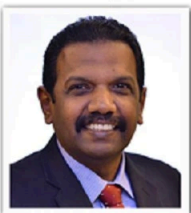
3. Could you highlight some of SINDA's initiatives that are directed towards family welfare?
SINDA is the only self-help group with a Family Service Centre located within its premises. When elderly and/or people with disabilities and special needs skip their medical appointments due to financial constraints, SINDA will provide them with transport vouchers to ease the burden of transport costs and make it more accessible for them to attend medical appointments.
SINDA runs talks and workshops for parents to encourage them to establish stronger bonds with their children through positive approaches. There are talks to help parents prepare their children for various stages in life, such as primary school, secondary school and national examination periods. Other topics include cyber wellness, health and wellness, positive reinforcement and early intervention skills.
In May, we launched the Hello Baby Gift Hamper to reach out to Indian families with new-borns. The gift hamper, worth $160, contains a baby play-mat, colourful toys and other learning materials that will see the infant through their early years. Through this, we ensure that we are providing holistic assistance for the family as well as identifying their needs and directing them to our various programmes and services if necessary.
4. What was the catalyst that made SINDA implement these new initiatives?
Over the last two years, we analysed the evolving landscape and demographics of the Indian community and we identified the key areas through which we could help the community progress. At the beginning of 2018, we introduced initiatives that catered to Indian families, youth and the community as a whole. We have invested more in the areas of pre-school, youth and family through these upstream initiatives that combat the challenges facing our community currently. Moving forward, SINDA and our network of community partners, schools and volunteers will continue to work on providing avenues for everyone in the community to better themselves and realise their full potential.
5. Is there any shift in the approach of SINDA in engaging people in its activities?
We have now adopted a flip-model approach, whereby we take the initiative to reach out to the community first and work from the ground up. These outreach efforts are a cumulative effort of SINDA, our community partners, schools and volunteers. For example, our SINDA Bus is deployed at neighbourhoods with a high concentration of Indians. This bus extends our reach to the Indian community in the heartlands, by bringing our programmes and services to the residents directly to serve them better. Through our Door Knocking Exercises, our trained volunteers visit Indian residents at their homes and listen to their concerns. From their responses, we derive solutions about how to address those concerns on a larger scale.
6. Could you please tell us about SINDA's Engagement and Volunteer Management division?
SINDA's Engagement and Volunteer Management (EVM) division works towards establishing strong partnerships with grassroots, corporate and Indian organisations. These partnerships are key to ensuring that SINDA's programmes and services reach as many children and families as possible. The EVM division also works with SINDA's committed pool of volunteers - these volunteers play a crucial role in the running of various programmes and in connecting those who need help to the right avenues.
7. Is there any strategy to reach out to those who are not well-informed?
In today's day and age, most people are aware of their surroundings and are connected to information through broadcast and social media. However, there still are individuals who are not tuned in. In this situation, our community partners help us with ensuring there are outreach efforts made for this group.
8. How much has the awareness level of the activities of SINDA increased over the years?
We engage the community closely through our continued collaborations with schools, government agencies, Indian community groups and grassroots. In 2017, we collaborated with 300 partner organisations. Those collaborations have been instrumental in reaching out to more Indians of all ethnicities. There are instances where families and individuals who needed help urgently, did not know where to seek assistance or were hesitant to do so. In those instances, our partner organisations have helped to look out for these families and individuals, and have referred them to us for assistance.
9. So with all these initiatives, do you think all sections/demographics have been reached out to?
Reaching out to the Indian community is an ongoing process. We reach 20,000 individuals each year on average. Our new programmes and initiatives should allow us to reach out to a lot more in the Indian community. We are excited to explore more opportunities through which we can enhance our current initiatives and bring about more significant benefits to the Indian community.
March 2016
Mr. Ameerali Abdeali is currently the President of the Muslim Kidney Action Association. He also serves as a Council Member of the Inter-Religious Organisation, Singapore (IRO), as a Trustee of the Tabung Amal Aidilfitri Trust and as President of the National Safety Council of Singapore. He also has several other positions to his credit. This multi-faceted personality's exclusive interview in detail.
1. Could you tell us about yourself and your family to our readers please?
I was born on 27 April 1951. I had a very enjoyable and carefree childhood living in a kampong known as Siang Lim Park at 40 Geylang. Those days, our fathers were too busy trying to survive and did not have much "quality time" to spend with their children. We, the children together with other kids would meet in the courtyard or the nearby park. With no TV for entertainment we had to be creative and invented games such as "kelengtong", "bola lobang" and "keledek" that only kampong boys could think.
These games were not only enjoyable but they imbued in us leadership and social interaction skills which would prove invaluable in our adult lives. I attended Primary and secondary school in Singapore and did my tertiary education in London England qualifying with a Bachelor of Science (Engineering) Hons in 1973.
My immediate family comprises of my wife Lulua and son Husain. I have a large extended family that includes 5 sisters and one brother and members of their families.
2. Throughout your career you have served with the Ministry of Manpower. Could you share your experiences?
I joined the Ministry of Manpower (MOM) (then known as the Ministry of Labour) in 1974 upon my return from England. My career spanned 32 years at MOM where I served in many capacities rising from factory Inspector to Head of General Factories Branch and in 1990 to General Manager of the Ministry's OSH Training and Promotion Centre. In 2006, I was appointed as Deputy Director of the Ministry's Occupational Safety and Health Division.
4. What are the challenges in implementing the safety guidelines in the work place?
There is no room for complacency as far as safety is concerned. The challenge for safety professionals is keep abreast with the fast pace of change taking place in industry and to ensure that new hazards arising from such changes are quickly anticipated with the appropriate safety measures put in place proactively. Also efforts to promote safety awareness must never stop so that new entrants to the industry are made to understand the importance of a safe working culture right from the start. We must never forget that victims of workplace accidents are human beings with hopes and aspirations who, as a result of accidents in the workplace, tragically lost their lives or ended up being permanently crippled or psychologically damaged.
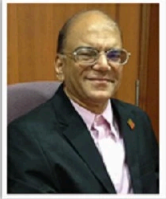
5. Could you tell us about you promoting inter-faith and inter-religious harmony?
I am a strong believer and activist of inter-faith and community engagement. This is because I have lived through the traumatic period when Singapore saw racial riots in the 60s. Thankfully we enjoy today a high level of racial and religious harmony. There is goodwill and trust amongst people of different faiths more so here than in any part of the world. It is the result of hard work and dedicated efforts on the part of the Government, the grassroots organisations, the NGOs and the religious institutions. I was invited to join the Inter-Religious organisation as a Council Member in 1996. This was a turning point in my life. So many doors opened to me. I learned so much from religious leaders who were such a rich source of inspiration for me.
I realised that in as much as we are from different backgrounds we are also very much the same in many respects. We are all part of the larger family of human beings. Our traditions and belief systems may vary but the basic value systems which underpin the established religions are essentially the same. This is because certain values and principles are universal values which are self-evident. These include concepts such as integrity, justice, compassion, fairness and respect.
6. Could you also share with us your mission in imparting self-confidence and motivation in children and youth?
I think every generation has a duty to motivate and inspire the next generation. I have been blessed to have many mentors in my life who helped me gain confidence and to serve our community to the best of my ability. I took several training courses to be a motivational speaker and upon qualification, I have been assigned to train new staff of MOM on the course for "7 Habits of Highly Effective People". After leaving MOM I continued to deliver talks on confidence building and developing self esteem especially to students and parents. I presented such talks at workshops organised by MENDAKI, SINDA, Tanjong Katong Primary School, Opera Estate Primary School, Loyang Secondary School and at various other sessions organised by private groups and organisations. In keeping with this interest in developing and conducting self-improvement programmes for students and young people, I currently serve as the Vice President of the Opera Estate School Advisory Committee and as a Director with Hope Villages Fund Pte Ltd which extends assistance to the people and children of Phum Tria in Thailand and other villages in the region.
7. What made you start the Muslim Kidney Action Association?
MKAC had its genesis in 1990 when Islamic Religious Council of Singapore (MUIS) invited representatives from 10 Malay Muslim organizations to form the Muslim Kidney Action Committee. I was appointed to chair this committee by the President of MUIS. We were given the charter to promote awareness on matters relating to kidney pledging and organ transplantation and to encourage more Muslims to pledge their kidneys. Convincing the Muslim community about organ donation was an uphill task due to the prevailing mindsets at that time coupled with the lack of reliable information. Nevertheless, to increase public awareness, MKAC worked in close collaboration with MUIS and the National Kidney Foundation (NKF) to reach out to the community through public education programmes such as conferences, seminars and workshops, road shows, public forums, and through conducting of dialogue sessions with all Malay/Muslim organizations and with individuals from all walks of life.
In April 2004, MKAC was registered as an NGO with the Registry of Societies as the Muslim Kidney Action Association so that it could operate independently and raise and manage its own funds. I was elected as the President. Within one year it was given a Charity status by the Commissioner of Charities. MKAC's vision is to see kidney patients realize their full potential and live happy and meaningful lives. MKAC believes that it is much better to invest efforts in empowering individuals to take charge of their own lives rather than to provide a crutch for people to lean on.
As of now, there are more than 435 Muslim kidney patients registered with MKAC. Taking into account the number of family members the total number of beneficiaries exceeds 1200 persons. Each of them face multiple challenges in life. They need to undergo costly dialysis sessions, take expensive medications and make regular visits to the doctor to monitor their condition. We at MKAC do our best to serve their needs. These include the provision of financial assistance to kidney patients for dialysis and medical fees, free monthly general medical examinations and medications, one-to-one counseling sessions, skills training courses in sewing, cake making and food preparation, health talks, zakat disbursement and regular bonding sessions with kidney patients and their family members. All our programmes are aimed to uplift the lives of our beneficiaries and in doing so we place great emphasis on the values of dignity, compassion, mutual respect, tolerance and understanding.
8. Are you involved in any other organisations?
Yes. I serve as a Trustee with the Tabung Amal Aidilfitri Trust. Each year we raise about S$1.4 million during the month of Ramadan. We disburse between $200-$400 each to about 4,000 beneficiaries so that they are not deprived of funds to enjoy Hari Raya with their families. I also serve as a member of Mendaki's Community Leader's Forum (CLF) and as an Advisor to the United Indian Muslim Association.
9. Please also share your experiences in Community Mediation?
I am very honoured to be a volunteer CMC mediator with the Ministry of Law. I joined as a Mediator in the year 2000. I am also a Mediator with the Family Court of the State Courts since 2008. I believe that most inter-personal conflicts and grievances arise from misunderstandings and poor communication and can be resolved without going to court. Mediation provides the best opportunity for such an outcome. To date I have mediated more than a hundred sessions. In the early days I did the mediations under the guidance Master Mediators from whom I learnt much the art of mediation. I also attended many training courses conducted by the respected Professor Dr. Lee Lan Yuan. I was honoured to be promoted to Master Mediator in 2012.
I also learnt that as mediators we should be sensitive to the feelings of all parties. We must win their respect. When they get respect, they would appreciate it and give it back in return. Above all, we have to remain calm and patient all the time. As mediators, we do not take sides. Our duty is to do our best to settle the conflict and do it without fear or favour. Our goal is to help the parties build understanding and trust and view matters from new perspectives.
While I had given my inputs to resolve these cases we were trained not to offer solutions but to encourage the parties resolve the issues they have between themselves. Many times I encountered difficult cases with emotions running high. At times I had to separate the feuding parties and discuss privately with each party and this helped to restore calm. I learnt that each party feels that he or she is in the right and the other person is wrong. The challenge is to make the person put himself or herself in the shoes of the other person, suspend judgment and see things from a different angle. It was most satisfying when a conflict was resolved amicably with parties smiling and shaking hands.
10. Could you tell us about the 'Abdeali Tayebali Family Trust'?
I established the Abdeali Tayebali Family in 2012 in the memory of my father, the late Mr. Abdeali Hj. Tayebali. I wanted to honour my father's memory by doing something meaningful as I owe to him an unrepayable debt for ensuring that I received my education. My father emigrated from India to Singapore in the 1940s. Despite finding himself in a new environment he struggled to learn English and Malay and was able to found a business called Singapore Rattan and Cane Mart Pte Ltd. He was a devoted family man and noted for his philanthropy. He was an honourable gentlemen who had contributed much to the community and nation and to worthy charitable causes. He was also active in promoting of inter faith harmony and understanding and served as the Honorary Treasurer of the Inter-Religious Organisation (IRO) for many years.
The Trust support initiatives that Advance education, Support deserving persons in financial distress, Promote safety and health in communities, Advance inter-faith activities and programmes.
The Abdeali Tayebali Family Trust sponsors The Abdeali Tayebali Lifetime Achievement Award and the Courage Award. These Awards were set up in 2012 and is presented to individuals who best encapsulate the following ideals: Demonstration of courage and endurance in the face of great challenge and adversity; Being a source of inspiration for others and a role model in the promotion of the spirit of adventure and sportsmanship in particular amongst the young in our society; Respect and consideration and sensitivity for the beliefs, cultural practices and traditions of people of all faiths and ethnicity; Concern for the general welfare of the community and an exemplification of dedication, compassion and empathy in the service of society. The Award recipients are decided by a Panel which includes the Advisors of the Trust who are Mr. K. Kesavapany and Dr H M Saleem. To date 4 persons have received the Abdeali Tayebali Lifetime Achievement Award. They are: Dr. Kumaran Rasappan, Mr. KV Veloo, Hj Wan Hussin Zoohri and Dr. William Wan.
11. What are your other interests in life?
In the year 2000, while investigating an accident I was fascinated by the wide variety of plants in the rainforest of Temburong in Brunei. Upon my return to Singapore I was determined to learn more about our local plants and trees. I armed myself with many books about tropical plants and soon memorised the names of 2000 local plants and trees. I began to make regular visits to the Singapore Botanic Gardens (SBG). There I met Mr Keith Hiller who invited me to join the pioneer group of guides for the SBG rainforest. After undergoing the requisite training I was appointed as a Volunteer Guide. For the next 5 years I conducted guiding every Saturday for the public. I enjoyed this activity and learned much about the rainforest. My other interests include keeping up with current events, poetry recitation, gardening and brisk walking.
12. You have received many awards and accolades. Which touches your heart the most and for what reason?
While I sincerely believe that there are many more deserving people for each award I have received, nevertheless I feel truly humbled to have been the recipient of a number of appointments and awards both at the national level, from various government ministries and from local NGOs. It was a truly humbling moment in my life when I was appointed to be a Justice of the Peace in 2008. I was re appointed as a Justice of peace for a further 5-year term starting from 2013. Awards are gratifying because they validate and recognise our contributions. More importantly, they serve as reminder to continue to work even harder and put in our best efforts in everything we do. But it is important that whether we are recognised or not we continue to serve our community wholeheartedly because we believe in doing our best for the upliftment of the lives of the less fortunate members of our community. What touches my heart most is to see our beneficiaries stand on their own and become self-reliant. The quiet satisfaction we feel in helping others is the best reward there is.
October 2017
There are number of Indian Organisations that serve to the needs of the people in Singapore in various fields. Here is a series that highlights their objectives, aims, focus which begins with Sree Narayana Mission (Singapore). An interview with Mr. S. Devendran, CEO, Sree Narayana Mission (Singapore).
1. An introduction on the Sree Narayana Mission (Singapore) to our readers please
The Sree Narayana Mission (Singapore), established in 1948, is one of the Nation's leading charitable organisations and has been providing social and community services to the less privileged in Singapore regardless of race, language or religion in line with the philosophy and teachings of Sree Narayana Guru. Specifically, the Mission runs a nursing home, a welfare home, 2 senior care centres and several community welfare programmes for the less privileged.
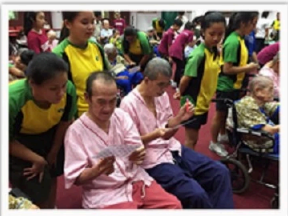
2. As the CEO, what special plans that You have for its development?
We are determined to play a leading role in the eldercare and social service sectors. To do this we want to grow and are actively seeking new opportunities to run more programmes and services.
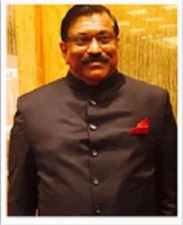
3. What are the challenges?
To be able to institute necessary organisational changes as quickly as possible is what I consider as the challenge.
4. What kind of support is needed from public, Government for its enhancement?
We get excellent support from the Government and the Ministries. The public offers us a potential pool of volunteers and we are grateful for all those people who step forward as volunteers. We need more people and organisations to come on board as volunteers. Donations are also always welcome in particular to drive our community programme to help people stay healthy and active and welfare initiatives to help the less privileged.
In this regard Mission is an IPC status charity which means all donations attract 2.5 times tax deductibles.
5. How much has Sree Narayana Mission(Singapore) impacted society now?
We run a first rate 224 Bed nursing home and 2 senior care centres for the less privileged and are an integral part of the Government's eldercare ecosystem. We also run a 200 bed welfare home for destitute. Our community and welfare programmes benefit the less privileged in our society. We do our part to ensure a more inclusive society.
6. What immediate changes that you would like to see now?
If you ask me as the immediate change that I would see will be to Create a system which allows all our staffs to be the best that they can be. We also want to put the systems and processes in place to build a first class organisation.
7. In these troubled times Guru Narayana's message of inter-religious harmony should be heard loud and clear. How can SNM (Singapore) help to spread the Guru's message.?
Narayana Guru's timeless messages include:
- 'In essence all religions are the same'
- 'whichever the religion it suffices if it makes a better man'
- 'One in kind, one in faith, one in God is man'
- 'Devoid of dividing walls of caste or race or hatred of rival faith this is the model foundation where we all live in brotherhood'
SNM, Singapore is a charity of Indian Origin. Regardless, it's services and interventions are accessible to all race, language or religion in line with the above messages of Guru Narayana. Two thirds of its Nursing Home and welfare home residents are Chinese.
8. The IRO is planning to spread the message of inter-racial harmony to the Heartland. How can SNM, Singapore help IRO in this mission?
Our racial harmony and religious tolerance are Singapore's national treasures. SNM(Singapore) by embracing the less privileged, regardless of race or religion can help safeguard these. The Inter Religious Organisation is expanding its reach to the heartland to spread its message of peace and inter-religious solidarity, In keeping with the teaching of its Guru, Sree Narayana Mission, (Singapore) can explore active collaboration with IRO. I understand that IRO would like to hold an event at the Mission, to bring together all the religious institutions in the Yishun and the surrounding areas. IRO plans to have similar outreach events in different parts of our country and thus help all Singaporeans live as 'One People, One Nation - regardless of Race and Religion. SNM, Singapore will aspire to be part of this important task and duty of safeguarding our Nation's, national treasure-our racial harmony and religious tolerance.
1st September 2012
Singapore PM Lee Hsien Loong Reopens Malay Heritage Centre (MHC)
Are you historically inclined? Socially inclined? Would you like to explore different cultures? Or are you all of the above? Then a one stop venue for you is the Malay Heritage Centre. After one year's renovation, the revamped Malay Heritage Centre showcasing the rich Malay heritage is now open to the public.
The National Heritage Board says that "The Malay Heritage Centre includes new permanent galleries focusing on the significance of Kampong Gelam in Singapore's history, two new temporary exhibition spaces, a multi-purpose auditorium, a new visitor services centre, and a new landscaped garden featuring herbs and spices of the Malay world. Beyond the physical facelift, the revamped permanent galleries will also feature artefacts contributed by members of the community, alongside those drawn from the national collection. These include a portrait bust of composer Zubir Said, coins issued by various empires that were recovered from archaeological digs in MHC, and household objects that depict the lifestyle in early Kampong Gelam such as a traditional Gerengseng (cooking pot)".
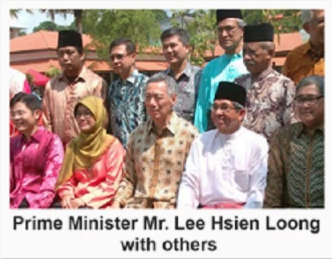
The month of September is going to be full of activities for visitors to explore the combination of traditional and contemporary arts, culture and heritage of the Malays through the MHC's inaugural Malay CultureFest. This Fest will showcase local and overseas performers, and will include Malay games, a variety of workshops, lectures, concerts and more.
Singapore's Prime Minister, Lee Hsien Loong, re-opened the MHC on the 1st of September 2012. He expressed his happiness to re-open the MHC at this time and also to have opened the original MHC in 2005. He noted that it has since then become a national attraction. PM Lee said that the Centre will better showcase Malay culture to the community, other ethnic groups and foreign visitors. He praised the Malay Heritage Foundation for working closely with the National Heritage Board (NHB) to develop strategic directions for the new Centre, including the storyline and content for new permanent galleries.
He also asked the Malay Heritage Centre to continue to reach out to the community, to remain relevant and to promote a sense of ownership.
He said that the MHC must reach the young, not just the Malay children but also other ethnic groups, to teach them to appreciate Singapore's multi-cultural heritage from an early age, so they understand the shared cultures and the importance of ethnic cohesion.
He also said that the Government will continue to support such heritage institutions throughout Singapore to preserve the rich cultures of the ethnic groups and strengthen the sense of belonging to Singapore.
After the re-opening and speech, PM Lee, along with other dignitaries, visited the different galleries of the MHC.
For more information on the activities at the MHC, please visit: www.malayheritage.org.sg
16th November 2019
The 4th South Asian Diaspora Convention (SADC)
The 4th South Asian Diaspora Convention (SADC) was hosted in Singapore by the Institute of South Asian Studies (ISAS) from 15th to 17th November 2019. The first day began with a gala dinner on Friday 15th November at the Shangri-La Hotel. Mr. Tharman Shanmugaratnam, Senior Minister and co-ordinating Minister for Social Policies, Singapore, was the Guest of Honour. Sir Fazle Hasan Abed from Bangladesh and Mr JY Pillay from Singapore were recognized for their contributions to society and public service at the gala dinner.
The second day of the convention took place at the National University of Singapore Cultural Centre. Mr. Teo Chee Hean, Senior Minister and the Co-ordinating Minister for National Security, Singapore, was the Guest of Honour and he delivered the keynote address and the interactive session with him was moderated by Professor Wang Gungwu, University Professor, National University of Singapore. In his speech, Mr Teo Chee Hean said that South Asia itself has emerged as one of the most dynamic regions in the world with tremendous growth potential.
Ambassador Gopinath Pillai said in his opening remarks that SADC provides an ideal stage for the South Asian Diaspora to build relationships and engage with the rest of Asia and other parts of the world. He also said that SADC contributes significantly to social development, education, technological assistance and poverty alleviation in the region. To further develop the relationship, SADC serves as a significant platform for the South Asian Diaspora to come together with leading policy makers, business leaders, academics and civil society leaders.
Ms. Indranee Rajah, Minister in the Prime Minister's Office, and second Minister for Finance and Education, delivered the keynote address in the plenary session 'Women Empowerment in South Asia'. In her speech, she said that, from the outset of Singapore's independence in 1965, Singapore has taken a very definitive stand with regard to gender equality and the status of women and has addressed these issues in Singapore's laws and policies in relation to education, labour participation, women's leadership and the protection of women.
Mr. Lawrence Wong, Singapore's Minister for National Development and Second Minister for Finance, delivered a keynote address and participated in an interactive session on 'Infrastructure and Smart Cities'.
On 17th November 2019, the ISAS CUP cricket tournament took place at the Singapore Indian Association. The three-day convention came to an end with members of ISAS in conversation with former Indian cricketers Sourav Ganguly and Rahul Dravid, at the Pan Pacific Hotel.
6th September 2019
Annual Hindustan Times Mint Asia Leadership Summit
The annual Hindustan Times Mint Asia Leadership Summit took place at the Shangri-La Hotel, Singapore on 6th September. Celebrities and top leaders from India and other countries took part in the summit and discussed the rise of Asia and the East, amidst the current political and economic movements.
Celebrities who took part included Katrina Kaif, actor, and Mr. Virendra Sehwag, former Indian cricketer. The inaugural address was given by Dr. Paul Krugman, Professor of Economics and distinguished scholar at the Graduate Centres Luxembourg income study centre at the City University of New York.
The special address was given by Mr Heng Swee Keat, Deputy Prime Minister and Minister for Finance, Singapore, and there was also a conversation with Dr S Jaishankar, Minister of External Affairs, India. Both the sessions were chaired by Mr R Sukumar, Editor-in-chief, Hindustan Times. Mr. Heng Swee Keat said that the relationship between Singapore and India has been deepening and broadening, particularly in the last twenty years and both countries can do more for their people as both the economies are progressing well.
India's Minister for Foreign Affairs spoke on the relations between China and India, Pakistan and India. He said that India has always been happy to talk to Pakistan, but it must be done "without having the gun of terrorism pointed at our heads".
Bollywood actor Hrithik Roshan said that Katrina Kaif is a beautiful actress and through her sheer hard work she has made good progress in her career.
The summit which was the second HT MintAsia Leadership Summit, brought together politicians, intellectuals, policy makers in the fields of arts, politics, science and technology and many dialogues unravelled interesting facts.
6th August 2017
Sugathara Vizha 2017
Jointly organised by the Hindu Endowments Board and Mediacorp Oli 96.8FM
Sugathara Vizha 2017, a health fair jointly organised by the Hindu Endowments Board (HEB) and Mediacorp Oli 96.8 FM, was held on Sunday, 6th August 2017 from 8.00 am to 1.00 pm at the PGP Hall, Serangoon Road, Singapore. It aimed to create awareness about common chronic illnesses, promote a healthy lifestyle amongst the Indian community and inculcate the importance of regular medical screening.
Mr. Tharman Shanmugaratnam, Deputy Prime Minister & Coordinating Minister for Economic and Social Policies, was the Guest-of-Honour. Mr Tharman said, "What is most impressive is the large number of health professionals, from both the public and private sectors, volunteering to serve and help people take care of their health".
Sugathara Vizha had more than 20 free health screening booths including those for colorectal and cervical cancer screening, dental screening, diabetic foot screening, and vision screening. A total of 1,131 people benefitted through this. Women benefitted from the convenience of booking on-site appointments for mammograms.
The health fair also featured educational booths to create awareness on CPR, eldercare, first aid, mind wellness and the harmful effects of smoking. Visitors to the fair got hands-on experience administering AED equipment, which is critical in managing sudden heart failures.
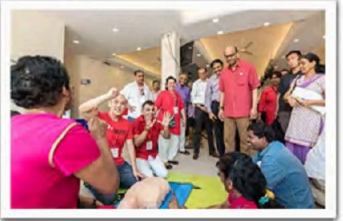
About 150 medical professionals from various government and private hospitals, who serve as volunteers with HEB's Medical Support Services, conceptualised and ran the various screening stations at the health fair.
HEB says it is glad to partner Mediacorp Oli 96.8 FM for the third year running in this community initiative. Dr L Jayaram, Leading Cardiologist and Chairman of HEB's Medical Support Services Committee, said, "Our efforts to reach out to the community to create awareness on the importance of a healthy lifestyle has been far more effective through this partnership with Mediacorp. Over the last two years, we have seen increased participation. We have reached out to almost every segment of the community - the elderly, children, women, men and even youths - bringing to light health issues that are common to each of these segments and how to manage them".
Dr. Chitra Rajaram, Head of Mediacorp Community Segment, added, "Advocating an active lifestyle and taking preventive measures to lead a healthy life has always been an integral part of Oli 96.8FM's community outreach and corporate social responsibility. We are glad that this collaboration with HEB has grown stronger over the years and has become an event that the Indian Community look forward to".
Mediacorp Vasantham, which is the official television channel for Sugathara Vizha 2017, hosted a special 2-hour entertainment show with Vasantham artistes and DJs from Oli and Vasantham at the PGP Hall auditorium from 10.30am. Stars from Vasantham's popular long-running drama series Kalyanam 2 and Thallipogathey made special appearances, along with pulsating dance performances by Rameshwara. A highlight of the stage performances was a skit directed by veteran ex-Oli DJ and actor, Mr Re Somasundaram. There was also a segment by celebrity Chef Ariffin on healthy cooking and eating.
The HEB-Oli Health Fair was supported by the following agencies:
- Singapore General Hospital
- Singapore National Eye Centre
- Singapore Dental Health Foundation
- KK Women's and Children's Hospital
- SingHealth
- National Cancer Centre, Singapore
- Institute of Mental Health
- Singapore Cancer Society & Diabetic Society
Their future plans are to reach out to many in the community to create an awareness of chronic illnesses and fight against diabetes which is a national concern that was mentioned by PM Lee Hsien Loong during this year's National Day speech.
20th November 2011
Unveiling the Bust of the first Indian Prime Minister, Mr Jawaharlal Nehru
On the 20th November 2011, Dr Manmohan Singh and Singapore's Emeritus Senior Minister, Mr. Goh Chok Tong, unveiled a Bust and Commemorative Marker dedicated to the first Indian Prime Minister, Mr Jawaharlal Nehru, at the Asian Civilisations Museum Green.
The marker joins four other such markers in the Friends to our Shores series of Markers by the National Heritage Board (NHB). This series commemorates those eminent personalities from abroad who had a connection with Singapore. The event reaffirmed the historic ties between India and Singapore.
Jawaharlal Nehru, a visionary, who made a difference in millions of lives had visited Singapore thrice between 1937 and 1950. The Marker, apart from giving the information of these three visits, also talks about his achievements and his praise for Singapore as "a great cosmopolitan city where the various peoples of Asia are all represented".
The marker is a joint effort of the Indian High Commission of India in Singapore and the National Heritage Board (NHB). The National Heritage Board's Chairman, Mr. Ong Hew Yuat, said in his address, "It gives the National Heritage Board great pleasure to name Pandit Jawaharlal Nehru as a 'friend to our shores' with this commemorative marker. The marker consists of a bronze bust of Nehru, created by noted sculptor and painter, Professor Biman Bihari Das from India and a panel that tells us about Nehru's achievements and links to Singapore. At this juncture, we would like to thank the High Commissioner of India, His Excellency Dr. T.C.A. Ragavan, and his dedicated colleagues at the High Commission of India for their support in this highly significant project and in many other areas of the National Heritage Board's works. We hope that this Marker will herald a deepening of the longstanding friendship between our two nations and our heritage institutions".
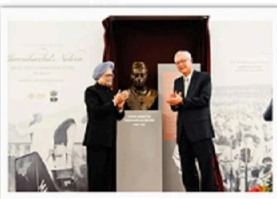
Mr. Goh Chok Tong in his speech said that seven years ago India had honoured him with the Jawaharlal Nehru Award for International Understanding and in his acceptance speech he had paid tribute to Panditji's contributions to the birth of an independent and modern Asia. Mr. Goh also lauded Nehruji's contribution, along with Mahatma Gandhi, to the freedom of India.
Mr. Goh also said that in addition to his contribution to making India a modern success as a great nation, he also played a vital role on the international stage by promoting the ideals of equality, peace and respect among nations and that legacy still continues to inspire world leaders.
Dr. Singh in his speech said, "Singapore today is an embodiment of human progress and the spirit of internationalism. Jawaharlal Nehru was prescient when he said in 1946 that Singapore will become the city where Asian unity is forged. We are witnessing such unity being forged. Singapore's great cultural and intellectual institutions are playing a vital role in this process. I therefore must warmly congratulate the National Heritage Board on this initiative and wish it all success in its future activities."
23rd and 24th November 2015
Official Visit to Singapore
During his official visit to Singapore, Indian Prime Minister, Shree Narendra Modi, delivered the 37th Singapore Lecture on 23rd November 2015, organised by the ISEAS-Yusof Ishak Institute under the distinguished chairmanship of Deputy Prime Minister and Co-ordinating Minister for Economic and Social Politics, Mr Tharman Shanmugaratnam. The title of the lecture was "India's Singapore Story".
The Lecture was also attended by Prime Minister Mr. Lee Hsien Loong; Mr. Vivian Balakrishnan, Minister for Foreign Affairs; Mr S. Iswaran, Minister for Trade and Industry (Industry); and Mr Ong Ye Kung, Acting Minister for Education (Higher Education and Skills) & Senior Minister of State, Ministry of Defence.
The Indian delegation included Mr. Shri Ajit Doval, National Security Advisor of India; Dr. S Jaishankar, Foreign Secretary of India; Mr Shri Anil Wadhwa, Secretary (East), Ministry of External Affairs; and Smt. Vijay Thakur Singh, High Commissioner of India to Singapore. Ambassadors based in Singapore, senior government officials, business leaders, academics, students and members of the media attended the conference which had 1,000 participants.
Mr. Tharman Shanmugaratnam in his opening remarks said, "This year as we celebrate 50 years of Nationhood, we also celebrate the friends who have stood by Singapore since its earliest days. India was the 2nd country to establish diplomatic relations with Singapore... Through this deep friendship, we have developed a vibrant and multifaceted relationship over the five decades. Our economic relations are strong, with Singapore being one of the top investors in India today. Our companies are active in sectors relevant to India's development and Prime Minister Modi's priorities, such as urban solutions, infrastructure, aviation, energy, as well as port and logistics. Similarly, many Indian companies have established regional and global operations in Singapore. Our people to people relationship runs deep. Even as we celebrate the past 50 years, we want to build a partnership for the next 50 years".
Prime Minister of India Shree Narendra Modi in his lecture, began with the homage to one of the greatest leaders of our times and the architect of modern Singapore Mr. Lee Kuan Yew. He said, "From Singapore stories, I drew many lessons. The most profound is from the simple idea that a transformation of a Nation begins with a change in the way we are. It is important to keep your city and surroundings clean, build modern infrastructure. For me too, 'Swachh Bharat Campaign' is just not a program just to clean our environment but to transform the way we think, live and work". He further said, "The size of a nation is no barrier to the scale of its achievements. The lack of resources is no constraint for inspiration, imagination and innovation".
On 23rd November, once the lecture was over, Mr Modi and Singapore Prime Minister Mr. Lee Hsien Loong had dinner at the renowned Indian Vegetarian Restaurant 'Komala Vilas' in Serangoon Road. There was a crowd of people on both sides of the entrance of the restaurant, all with their hands raised- holding their hand phones to capture the picture of the two Prime Ministers.
Among his other schedule, Mr Modi paid homage at the Indian National Army memorial marker on 24th November evening, organised by the Indian High Commission with Singapore Indian Association as partner. Veterans of the INA and others participated in the event. Ambassador Tommy Koh was also present among the many other distinguished VIPs. Photo Courtesy: Indian High Commission
On 24th November Evening, at the Singapore expo hall, Mr Modi addressed a crowd of 18,000 organised by the Singapore NRI Forum.
Indian Prime Minister Shree Narendra Modi's visit has helped to transform the Singapore-India relationship into a strategic partnership.
Content Coming Soon
5th April 2008
Inauguration of the L.C.T.L. Palaniappa Chettiar Auditorium
On the 5th of April, 2008, Karaikudi, a town in Deep South Tamil Nadu, was preparing itself for a Mega Grand Function and people there were eagerly waiting to greet Mrs. Sonia Gandhi, All India Congress President. She was to inaugurate the L.C.T.L. Palaniappa Chettiar Auditorium at Alagappa University.
Authoritative sources report that Alagappa University was accredited with grade "A" by the National Assessment and Accreditation Council (NAAC) in 2005 and has its own colleges, while 35 other colleges are also affiliated to the University. The University Grants Commission (UGC) had formerly granted it recognition in 1987. However, this world-class university was lacking an Auditorium and this had hampered the university in conducting lectures, conferences, seminars, convocations and cultural programmes. Thus, an idea emerged in the mind of the Honourable Finance Minister of India, Mr. P. Chidambaram, to donate an auditorium to the University, which would be of great value for such a reputed university situated in his constituency.
According to sources, it was decided that the auditorium should be named L.C.T.L. Palaniappa Chettiar Memorial Auditorium as Mrs. Lakshmi Aacchi, mother of our Honourable Finance Minister, felt that there was nothing in the memory of her late husband Mr. Palaniappa Chettiar and since her son was donating the auditorium to the university, it would be ideal to name it after her late husband.
The auditorium is built with all modern facilities keeping in mind the kind of programmes that would come up in the university. Moreover, the auditorium is shortly going to have a world-class library in the basement which will be very beneficial for the students.
The kind of programmes expected to take place in the auditorium are convocations, lectures, cultural programmes, science exhibitions, and symposiums.
19th & 20th November 2019
Two-day Bilateral Visit & 4th Annual India-Singapore Defence Ministers' Dialogue
Shri Rajnath Singh, Honourable Defence Minister of India, arrived in Singapore on the 18th Nov 2019 for a two-day bilateral visit and to attend the fourth Annual India-Singapore Defence Ministers' Dialogue. During the visit, the Indian Defence Minister held bilateral deliberations with Dr Ng Eng Hen, Singapore's Minister for Defence, to review the progress of bilateral defence engagements and also discuss future areas of defence and security cooperation. The two Ministers were also expected to discuss several multilateral defence cooperation issues and exchange views on regional security.
As part of the visit, the Indian Defence Minister visited various units of the Singapore Armed Forces including the Sembawang Air Base and the Changi Naval Base. Shri Rajnath Singh paid his respects at the Indian National Army Monument at the Esplanade Park, the Mahatma Gandhi Plaque at Clifford Pier and the Kranji War Memorial. As part of community engagements, he visited Little India including Sri Srinivasa Perumal Temple and addressed a gathering of the Indian community in a separate event.
According to the High Commission of India, Singapore: "India-Singapore bilateral dialogue architecture in the sphere of defence and security collaboration spans across the full spectrum from the annual dialogue at the Defence Ministers' level and an annual Defence Policy Dialogue at the level of Permanent Secretaries and flows down to the functional levels through annual meetings of the Defence Working Group."
Staff Talks between functional counterparts of Army, Navy and Air Force as well as amongst the Defence Industry Working Group and Defence Technology Steering Committee occur regularly. The Armed Forces of both countries have developed a very high level of interoperability through annual bilateral exercises between all three Services as well as their interactions in various multilateral military exercises.
Over a period of time, formal bilateral agreements have evolved amongst multiple stakeholders such as the three Armed Forces and other agencies of the defence ecosystem, such as Industry and R&D agencies, as well as maritime information sharing and mutual logistics support.
This first visit of Shri Rajnath Singh to Singapore, in his capacity as Defence Minister, would contribute significantly towards further bolstering the strong and mature India-Singapore defence cooperation. With a very high level of mutual trust and confidence shared over several decades, both countries are eager to explore further engagement in newer areas of defence and security collaboration. The quantum and scale of defence engagements between India and Singapore also augur well for the peace, stability and security in the wider Indo-Pacific region, and this interaction at the Ministerial level would be helpful in broadening these shared interests.
15th September 2011
Dialogue Session with Leader of the Opposition in the Lok Sabha
While many Indian women are still struggling for their basic rights, Ms Sushma Swaraj should be lauded, as she was a Minister when she was barely 25. She was in Singapore from 13th to 16th September 2011. As a member of the Global Organization of People of Indian Origin (GOPIO), I had a chance to meet the flamboyant lady, epitomizing the trademark of an Indian woman - a neatly combed bun, a big tilak on her forehead, in a traditional saree, during a dialogue session. The event was organised by GOPIO together with the Singapore Indian Chamber of Commerce and Industries (SICCI) and Global Indian International School (GIIS) at the Holiday Inn Hotel, on the evening of 15th September.
The gorgeous yet simple woman was even touted as the future Prime Minister of India by the audience, if the BJP is elected to power. But in person, she was more like a next-door aunt to many—such was her smile and interaction with the people there!
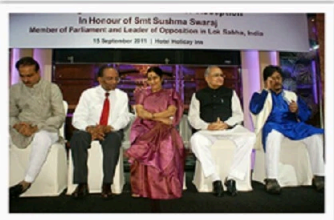
Ms Sushma Swaraj said that India can remain stable in spite of the unstable economies of the U.S. and Europe. She attributed this to two reasons: one is the size of the country and another is its population. Others who joined her in the dialogue session were the Member of Parliament Mr Anand Kumar, Mr Chandan Mitra, and Mr Balbir Punj. The dialogue session was fruitful for everyone present as it envisaged a closer link between India and Singapore. The topics discussed ranged from India being a place for medical tourism, agriculture, and the state of Multi-National Companies, to the voting rights of Non-Resident Indians. Her experience and ability were evident in her answers to the questions.
Spotting that she was the only woman on the dais, a lady from the audience asked her if she had experienced any male chauvinism in her life? An apt question to a woman who has proven herself throughout her career and has reached such heights in this male bastion society. Ms Swaraj said that she has absolutely not experienced any male chauvinism right from her young days—be it in her family, school, her Party, her Ministerial positions, or other assignments. She has been recognized for what she is.
She considers Gujarat as a role model among other states in India, as Gujarat registers 12% growth in the agricultural sector. Hence, she urged the other states to follow Gujarat and implement similar reforms in the agricultural sector.
One person in the audience expressed his view that soon the day would come when Indian leaders would seek medical treatment in India rather than opting to go overseas. Ms Swaraj was quick to agree and brought up the fact that the ex-Prime Minister, Mr Atal Bihari Vajpayee, was treated in India and now India is emerging as a strong medical tourism centre.
The event was very successful and was attended by over 250 people.
Orchid Naming Ceremony at Singapore Botanic Gardens
In a ceremony amid the lush greenery at the Singapore Botanic Gardens, the Singapore Tourism Board and the National Parks Board presented Indian film icon Amitabh Bachchan with his very own unique orchid, the Dendrobium Amitabh Bachchan.
In town to promote the International Indian Film Academy (IIFA) Weekend, Mr Bachchan attended the ceremony with Deputy Chairman and Chief Executive of the Singapore Tourism Board, Mr Lim Neo Chian, as well as the Director of the Singapore Botanic Gardens, Dr Chin See Chung.
"I thank Mr Lim for his kind words on my approachability, friendliness, warmth and that I'm always smiling. I'd like to say that I've picked this up from the Singaporeans I have met during my visit here. Singaporeans are always willing to help and are always smiling," said Mr Bachchan during the naming ceremony.
Singapore fans and tourists were also gathered at the iconic Burkhill Hall, a beautiful model of tropical colonial architecture at the National Orchid Garden, to get a glimpse of their idol at this very special orchid-naming ceremony.
This robust and free-flowering orchid will grow alongside others named after Princess Diana, Queen Elizabeth, Gloria Arroyo, and Kofi Annan.
After the naming ceremony, Mr Bachchan was whisked off for a shopping trip at Singapore's favourite shopping boulevard, Orchard Road, before catching his flight back to India.
11th & 12th September 2004
"Tamil in an International Arena" Conference at NUS
"Tamil in an International Arena" was organized for the second time by the Centre for the Arts, National University of Singapore, on the 11th and 12th of September 2004. It was an effort to bring together outstanding academics, entrepreneurs, and leading figures of the Tamil community from around the world to address various topics of interest relating to Tamil Art, Literature, and Culture.
Tamil cinema's one and only Mr Kamal Haasan graced the occasion by delivering a speech on "The impact of Tamil movies on the Tamil Diaspora". Padmashri Kamal Haasan's speech was followed by a lively question-answer session from the enthusiastic audience, and the programme came to an end by screening shots from Mr Kamal Haasan's hit movies.
There was an overwhelming response from the audience, and the hall was fully packed, which provoked a junior college student to ask Mr. Kamal Haasan, "Is this conference organized for 'Kamal' or 'Tamil'?" Mr Kamal Haasan answered in his own inimitable way, "As Kamal I am happy, and as a Tamilian I am sad." That session's chairperson was the cartoonist Mr Madhan.
Mr Kamal Haasan expressed his dismay over the commercialization of the Tamil movie field, as a result of which the standard of the movies has drastically reduced.
He also greatly condemned naming Tamil movies in English. He reminded the audience of the fact that none of his movies are named in English and said that he always has the habit to thank people in Tamil with 'Nanri'.
The object was to create a forum where Singaporeans and luminaries from around the world could exchange ideas and share their views on issues that are important to both individuals and the community at large. The conference was relevant to every participant and proved to be an effective bridge between the University and the Tamil speaking community in Singapore.
The speakers, who had been invited from around the world, pursue a wide range of professional interests. They ranged from captains of industry and academics to leading film personalities, renowned musicians, and professionals. However, all of them shared a common passion for Tamil culture, art, and literature and are working for the uplift of the Indian community in the countries they come from.
1st July 2002
In the days of yore, women were confined to home and their duty was only to take care of the household chores. But today it is a different situation. Women are well educated, and are as capable as men. So, today's women have the privilege to don the dual roles of a housewife and a career woman. Here comes a question: How does this pool of women balance family and career?
Dr. Chitra Sankaran, Associate Professor, National University of Singapore, shares her experience as to how she balances her family and career.
Her parents (Dr. Kameshwaran and Dr. Lalitha Kameshwaran), brother and husband are doctors. Her grandfather is the late Somasundara Barathiyar. Dr. Chitra Sankaran's husband Dr. Sivasankaran is a paediatrician. They have two children, a daughter Lavanya and a son Divyan. She hails from a highly educated family. Hence, her aspirations to learn more and to secure the highest degree were very apparent, even when her children were very young.
Here she recalls the past that has led her to become what she is today. "Our wedding took place when my husband and I were studying. My daughter was born once I completed my Master's degree. My husband left for the U.K. to pursue his higher education and I opted to do my M.Phil back in India. Once my husband had settled in the U.K., my two-year-old daughter and I joined him there. Soon my son was born. I wanted to do my Doctorate. Luckily, I got a place in the University of London. It was a chance of a lifetime."
"We were all set to do our work. It was then that my husband got an irresistible offer in Saudi Arabia. There came a big dilemma. At that time, my children were relatively young. My daughter was five and my son was two. The offer that my husband received was very rare. I had to make a very difficult decision, whether to continue my Doctorate in London or to refuse the offer and go along with my husband to Saudi Arabia."
"So, we sought our parents' help in this regard. My mum advised both of us to accept our offers. She reminded us of the fact that she herself continued her education in London during those days. Of course, both our offers were very precious and to forego those offers could cause both of us a great setback in our future careers. So, my husband took my daughter and went to Saudi Arabia. My son and I stayed back in London."
"In Saudi Arabia, my husband woke my daughter, got her ready, made her breakfast and put her in the school bus. Even today, my daughter says that she looked like a boy and it is indeed true that when a father dresses his daughter there is not much room to do anything fancy. In London, I found it difficult to concentrate on my studies while taking care of my son. So, I had to leave him in my mum's place in India."
"At that time, my family was in three different places. Further, my friends panicked me by saying it would take five years to complete my doctorate. So, I was very determined to finish it at the earliest. I completely dedicated every second and minute of the day to my studies. I would go to the library early, even before they could open it. I just took a break for half an hour. I would come back home only when they closed the library for that day. The whole day I was there studying."
"We used to meet as a family only once a year. Though my son was very young still, when I went for my holidays, he just used to hold me very tightly and refused to let go of me when it was time for me to return to London after my holidays. I used to feel so guilty. This made me all the more determined to finish my PhD in the shortest possible time. So, I managed to complete my doctorate in two and a half years."
"After that, I was contemplating to join my husband in Saudi Arabia with my children. It was during 1990 and that was the time the Iraq war broke out. So, we decided to stay back in India. My children were also enrolled in school. My husband joined a hospital in India. Subsequently, he got an offer in Singapore. We moved here in 1992 and have been living here since. My daughter was 12 years and my son was 9 years then."
"With the support from my husband and maid, I have no problem taking care of my family. I do my weekly shopping, teach my children, help them write essays, go out for dinner. We make it a point to go on a holiday as a family at least once a year. So, I have no problem balancing my family and career!"
Interview Profile
An Interview with Dr. Anitha Devi Pillai, first author of From Kerala to Singapore: Voices from the Singapore Malayalee Community and principal investigator of the Singapore Malayalee Story research project.
Q: What made you embark on this research and what do you hope to achieve with the publication of this book?
The Malayalees are the second largest Indian community in Singapore and members of the community have made important contributions in the evolution of modern Singapore. Yet, my research shows that there is little documentation on these aspects. I hope that this book will go some way in filling this gap and helping readers to appreciate how the Singapore Malayalee community has maintained aspects of the cultural heritage even as they integrate into the larger Singapore social fabric. This book is as much an account of the migration and evolution of the Singapore-Malayalee community as an account of Singapore's history.
Q: What were the challenges when embarking on this project?
The biggest challenge in this project was the amount of data and the different types of data that were collected to paint a composite picture of the community over the last hundred years. More than 130 interviews were conducted and each interview typically lasted at least an hour. About 400 photographs were collected and dozens of detailed family trees were drawn up. The drawing up of family trees and meticulous checking of the information was a time-consuming affair.
In addition to the interviews, I also spent a lot of time researching and documenting the lives of pioneers in the community from the 1900s onwards. This is captured in my introductory chapter to the book. Whatever the challenges were, the project was really gratifying. I got to know members of my community in a much richer way and have been able to record their experiences for all to savour.
Q: Could you share a few anecdotes from the book with our readers?
There were several interesting anecdotes. For instance, even after the book has been published, I hear that some of my interviewees are related to one another or that someone's aunt's or uncle's picture has been included. This shows us that the Malayalees as a minority group within the minority Indian race in Singapore, are a tightly knit community on the whole.
One of my interviewees recalled that she used her knowledge of Malayalam to learn Malay. She found several similarities between the two languages. As an applied linguist, I found that fascinating.
Their mother tongue, Malayalam, clearly plays a huge role in their lives. Although they were a small community, Malayalam was one of the languages used in a banner announcing a strike by the Singapore Factory and Shop Workers' Union in 1955. Even potential political candidates delivered speeches in Malayalam as well in the early 1950s.
Reading seems to have been a favourite pastime amongst the early migrants. Hence, not surprisingly, the community also boasted of having the only Malayalam daily newspaper outside of Kerala in the 1930s called Kerala Bandhu. The paper only ceased operations in 1977. By then the paper was known as Malaysia Malayali. They also set up several libraries to serve the needs of the bachelors who had moved here such as the Naval Base Kerala Library and Udaya Library.
Perhaps my favourite anecdote and discovery in researching Singapore Malayalees was the use of images of the community on stamps. Despite being a minority community, we must have played a significant role to be featured in the first definitive series of stamps launched by Singapore in 1968, soon after independence.
The theme chosen was Masks, Dances and Musical Instruments. The stamps reflected the culture of the three main communities: Chinese, Malay, and Indians. The two stamps that depicted the Indian community were one on a Kathakali mask and the other of a Bharatanatyam dancer modelled after Mrs. Shanta Bhaskaran, a Malayalee. Both the dancer and the dance form to represent Indians were from Kerala.
Link to the stamps: http://spm.org.sg/collections/singapore-collection
Q: Based on your research, do you think one should be able to speak, read and write Malayalam to be considered a true Malayalee? Or do you think one's Malayalee identity transcends all these? What role does the language play here?
What my research shows is that people identify themselves as a Malayalee in different ways. While knowing the language is a plus, I also met many Singapore Malayalees who were not able to speak the language but they identified closely with the culture in many different ways. There are many ways to define who is a Singapore Malayalee. This is the case with many other diasporic communities as well.
I may not read or write Malayalam. I don't even know what my name looks like in Malayalam but I speak the language with ease. I continue to express my identity as a Singapore Malayalee in many ways such as through food, dressing and leisure activities. My academic interest in researching the lives of Singapore Malayalees is another facet of how I identify with the community.
Q: In the book you stated that you were a fourth generation Malayalee. As a fourth generation Malayalee who was raised in Singapore, could you describe your relationship with your mother tongue?
I acquired Malayalam and English at home. I was exposed to Tamil throughout my life in Singapore, but I only learned it formally in school as a second language. We only spoke Malayalam or English at home. My mum in particular would only converse with us in Malayalam. My mother, Kamala Devi Aravindan, is a Tamil and Malayalam writer, while my dad would switch between the two languages depending on the context of the conversation.
In all formal situations, I would speak in English. At other times, I will use Malayalam when I meet a fellow Malayalee and Tamil when I am speaking to a Tamil. I do not read or write Malayalam as I never attended any formal classes nor did I learn to read or write the language from my parents. But I speak Malayalam with ease.
I grew up watching a lot of Malayalam dramas on stage; several of the dramas were written and directed by my mother. In the 80s, we had limited access to Malayalam movies and far less access to Malayalam songs. But the Malayalee communities in Singapore were active in organizing get-togethers and putting on shows such as Onam Night, Sports Day and drama competitions. My family and I attended all of it as much as possible. My mother was rather insistent that both her children were trilingual. It was at occasions like these that we got to speak and mingle with other Malayalees in Singapore outside of our family circle.
Today, the community has several other avenues to speak and hear the language as and when they want to do so. For example, Asianet, a Malayalam channel, is available in Singapore. The advances in technology have brought the language closer to us. The growing migrant community too have actively created more opportunities for the youth to keep the language alive.
Q: Malayalam drama seems to play a pivotal role in your book. What was it like watching Malayalam dramas as a child in Singapore?
The 'voices' in the book indicated that Malayalam dramas were an important aspect of the lives of the interviewees over the years. My parents always attended all the plays that were staged by the various Malayalee communities as well as the drama competitions that took place.
I do remember watching a few plays that touched on issues pertaining to Kerala. I must have been really young then. In fact, it was the interviewees who jolted my memory of these plays. The most memorable plays that I have attended were the ones that touched on social issues in Singapore. They were written by Singapore Malayalees and sometimes they even incorporated Singlish expressions in them, making it all very relatable to the local Malayalee community.
Where can readers purchase this book?
- Singapore Indian Association: $40.00 (Part of the proceeds go to the Welfare Fund. Call 6291 2556 to reserve)
- Kinokuniya / Times Bookstore: $48.15
- Overseas Readers: Available on Amazon
Sujatha, a veteran writer of about seventy years, is bursting with many different skills including story writing, screenplay writing and viewpoint articles. His refreshing ideas and unique way of writing appeals to both young and old, which makes it possible for him to reach people belonging to various demographics and psychographics.
Sujatha 1 - 1st April 2006
1. How did an ordinary man become a promising writer Sujatha?
In my case, I guess, my background played an important role in me becoming a writer. As a child I was away from my parents and hence I experienced some kind of loneliness, my interest in Tamil, my Sreerangam background...all these could have been contributing factors. Hence, you cannot really say, this day is when became a writer. I guess one evolves spontaneously as a writer.
2. What do you think are the factors in your development into a writer?
I would say my interest in Tamil has been the major factor. My brother was good in Tamil poetry, which influenced my interest too. I had very good Tamil teachers in school and college. One significant factor was that, during my university, there was a short story collection from the British writers, which provoked my interest in writing, and there too, I had an excellent teacher who sort of created an interest in the craft of writing stories. I would consider these as major contributing factors.
3. Is it that you started your writing career only after your tertiary graduation?
Yes. After only I got my job, I really began and developed as a serious writer.
4. At what age did you first publish your work?
At the age of twenty seven, my first piece was published in Kumudam magazine, It was a short story.
5. What is your schedule for an ordinary day?
It depends on the day. If it is a holiday, I wake up late. One thing is that I always read late at night. I have two offices. So, I spend two hours a day in each office. If the deadlines for the articles are fast approaching, then I concentrate and finish my columns accordingly. It is quite flexible.
6. When you say you read a lot, has there been a shift in your reading?
Nowadays, I read a lot online. There is a shift in the type of my readings. I do not read much fiction these days.
7. There is a spontaneous flow in your writing that is distinct from the other writers. How is this possible?
I think the main reason for that is, I read a lot both in Tamil and English. When you read, you feel like writing like that. My classical readings also do shape my writing. There are so many good writers, who possess unique styles of writing. I guess vocabulary is also important for good writing. I have exposure to both ancient and modern literature. Thus, I am able to simplify and explain even the Sangam age literature.
8. Can you give a single potent message to the upcoming writers?
My single message would be, the key to good writing is good reading.
9. Who is a successful person in your view?
The one who is true to himself is a successful person in my view. One should be kind in their verbal discourse. Why use hard and bitter words and hurt others, when there are so many simple and good words around? So, one should be careful in not hurting others.
10. What is your advice to the aspiring writers?
One has to be honest and truthful to themselves. The most important quality for a writer is that he should look at things beyond his liking and disliking. I would advise them to read a lot. Any kind of reading whatever it is, will give them a message and it can reflect in their writing in one way or another.
Sujatha 2 – 1st July 2006
1. What does 'Success' mean to you?
Success to me is that, 'It is not me who has been successful, but it is my writing that has been successful.' I differentiate strongly between 'me as an individual and as a writer'. What people are appreciating is my writing and not the person behind it. If you can isolate this key fact, then the concept of success will not enter your head.
2. Have you had any demanding situations from your fans because you are a writer?
Yes, of course, there are. I have received 'Love Letters' from my fans expressing their love. I clearly tell them that it is my writing which has appealed to them and not my personality. As a person, I am free to choose my friends, lead my own life. From the beginning, I have not been mixing up my personal life and my writing career.
3. Does today's spatial pervasive Tamil cinema protect Tamil culture?
Certainly, it does not. Very few movies like Thavamai thavamirundhu, Indian and Anniyan convey some potent message to the audience. So only one in eighty or ninety movies has the aptitude to convey a moral message. Today's Tamil cinema is totally alien to practical life. Who dresses in real life the way which is portrayed in cinema? They are investing heavily in Cinema. So, if the prime intention is only to convey a message, then the movie would hardly survive for three days.
4. What is your idea on the Indian expatriates? What do you think they have gained and lost because they are away from their mother country?
When they live abroad, they become so prosperous. Those who have migrated overseas, after having spent their younger days in India, are guilty about their fellow citizens' poverty. There is no need for this. If you look at countries like India, ruling such a big country itself is a challenge. For those who come from overseas, small inconveniences like power cuts are a major problem. But for those living in India, these are all small problems and their primary concern is to wipe away the poverty. When we see countries like Singapore, we long for such a beautiful India. But you cannot compare Singapore to India. A well-regulated Singapore is potent to be prosperous. The situation in India is different to that of Singapore.
5. There is a wider consensus that the Tamil language will be wiped out completely in the long run. But when Tamil society is spread all over the world, why should this idea prevail?
I would say that this question itself is wrong. How many people did you ask? Ten people and did all the ten people take up to the same idea? No. I would not agree. I would say Tamil is growing. Many people are making this language live. Maybe the dynamics of a language might change; certain words, grammar can change. Tamil language will certainly grow and will not be totally wiped out.
6. What is your idea on 'Tamil and its progeny' in Singapore?
Tamil is prosperous in Singapore. It has had a glorious past and will be glorious in future too. My concern is that due to the advent of the Indian based Tamil Television channels, the mainland Tamil Cinema and Television programs might pervade into the local Tamil literature and culture. In this case, the Singapore Tamil Diaspora might lose its vernacular speech and symbols. They might not get the uniqueness of these so-called 'Singapore Tamils', like the 'Sri Lankan Tamils', who have their own dialect and culture.
7. What is your advice to upcoming writers?
Be truthful to yourself. Write beyond your own likes and dislikes. Read more. Anything you read will help you in your writing.
Editor, Sun TV and the Tamil magazine Kunkumam
1. What made you choose journalism?
I was drawn into journalism at a young age when I was 13. It was kind of a reaction to my reading habit then. I was keen to write but hardly had any guidance at that age. I was also told that I was too young for my works to be published. But my eagerness to express myself prompted me to launch a manuscript magazine when I was 13. Since then, my flair for journalism grew with me. As a result, at the age of 30, I became an editor of a full-fledged magazine!
2. "Pen is mightier than Sword". How much truth do you perceive in this proverb from your experience?
That is an old one. Now 'mouse' is mightier than the bandicoots. Of course, I mean the computer mouse and political bandicoots.
3. What is your thrust/focus as an Editor?
My objectives as an editor have always remained the same, wherever I have discharged my responsibility. They are the dictum set by the poet Bharathi. They are 'puthiyana virumbu' (aspire for new - ideas, writings, viewpoints) sarithiram therchikol (master the history) and thesaththai kaaththal sei (defend the country).
4. With so much craze for westernization these days, does it have any impact on the Tamil readership quality?
I do not want to make any qualitative analysis, as 'quality' is a subjective term but agree that readership has changed considerably. Westernization has opened a few windows. It introduced us to new forms of writings in the early 20th century and to new themes later. Free school education introduced in the mid-sixties revolutionized the reading habits in Tamil Nadu. A new generation of readers was ushered in. But in the subsequent periods, with the arrival of primary education through English as the medium, we have lost this crop.
5. With Sun TV being part and parcel of everyone's life, the messages delivered are most effective. Still 80% of the programme revolves around serials and movies. Don't you think concentrating on inspiring talk shows and programmes could change the mindset of the people for the better?
Television is a gift of technology rather than a social product like print media. It has its strengths and limitations. Before satellite televisions were launched, in India we had the monolithic, Government controlled channels, which were bureaucratic. It was highly Delhi centric and was promoting Brahminical culture. There was hardly any room for counter or alternative culture. To cite an example, Ramayan and Mahabharat were serialized for years and Silapathikaram had to wait. This milieu positioned satellite televisions at the other end of the spectrum. When they were born, they became more entertainment - and film - centric. In the last 10 years, Sun TV has bloomed into a bouquet of 10 channels and each one is dedicated to one theme. Sun TV is a channel for serials, KTV for films and Sun News Channel for news and current affairs. This segmentation offers options and variety to the viewer and has strengthened all the dimensions of the Media.
6. It has become a fashion to invite the cine stars to political power. Both fields being two different poles, if elected, how effectively can their roles be served?
Democracy is a system that offers equal opportunities to all. No one can rule the people without their consent, in a system of democracy. And film stars, if they fail to deliver, will be ousted out of power. In Tamil Nadu, in the past MGR era, no film star could make it to power. Many of them, Mr T. Rajendar, Mr Bagyaraj, even Sivaji Ganesan, were not able to run their own political parties. Even MGR's widow, Mrs Janaki Ramachandran, is no exception. Nowadays we see the films of superstars, whether it is Mr Rajanikanth or Kamal Hassan, flop at the box office in the absence of a convincing story line. Baba and Aalavandan are examples. All these show that the people are discerning and it would not be easy for a film personality to walk into the corridors of power, simply availing their film popularity.
7. What are your views of the Tamil language and its progeny in Singapore?
Tamil in Singapore has a glorious past and it will have a glorious future. It is now time to acquire a modern outlook. An intellectual approach to language would help more rather than an emotional approach. Instead of wearing Tamil on sleeves just as an identity, now Singaporeans have to handle the language as a tool for intellectual expressions. Singapore has all the potential to become a cyber hub of South Asia and Tamils must avail themselves of this opportunity. The Internet can be used to foster the language in many ways, namely, web archiving, web publishing and teaching and Singaporeans must use this opportunity to their best.
8. What do you think is the most important quality for a journalist?
In the profession of journalism, one will come across the darker side of society and its people more often than others. A journalist has to be positive minded. Other than this, the most needed qualities are commitment, objectivity and fairness to all views.
9. What is your advice to the youngsters who aspire to become journalists?
If you scroll through history, you will find that all great minds had been journalists. Mahatma Gandhi was a journalist. Jawaharlal Nehru founded the National Herald. Marx published his own paper. Bharathiyar was the youngest editor Tamil has seen so far. Periyar and Anna were journalists. Kalaignar still writes for Murasoli every day. Come and join the club!
Known popularly as Gnani, he is a columnist and journalist, a man of his own perspective. His enriching knowledge on world affairs that reflects in his columns distinguishes him from most of the other writers.
1. What prompted you to choose journalism?
My desire to become a journalist prompted me to take up journalism. I was interested in writing, debating and speaking right from my young age. So, I would say that out of my basic instinct I became a journalist.
2. So, were you not influenced by your journalist father?
See, our family is very large. He just advised us like any other parent to read, to listen to radio, to be updated with the current affairs. None of my siblings are into writing. My father encouraged and guided us but did not thrust anything upon us.
3. Now as a veteran journalist, do you think the media can play an important role between the public and what is happening?
Without media, there is no news at all. Media is homogeneous. Today, there are many forms of media owned by different people. So, obviously, there will be a tendency to disseminate news from each one's perspective.
4. Right, what I want to ask is whether the media is more manipulating or playing an effective role?
It is up to the people to choose and accept the news. They should look at the media as a product and make the right choice as to how they buy clothing or groceries.
5. How do you choose that week's idea for the column?
When you run a column on current affairs, you cannot ignore politics. So, I touch politics as it is more dominant. Also, I take up social issues, which will have a long-term impact on society.
6. Have you ever had any response to your writing from the public?
Yes. There have been enormous responses to my writing. Some come and tell me that they accept my views and some do disagree with my ideas. Some say that they are not able to express their views and they see me as their representative. I am not bothered if people do not accept my ideas. I am happy that my ideas are getting discussed. I see where I differ with people. It helps me to analyse my position and to refine and fine tune myself.
7. When did you have mass appeal to your writings?
I have been in this writing field for more than thirty-five years and I have even been attached to big publications like kumudam, anandha vikatan, and kalki. So, right from the beginning, my writing has had mass appeal.
8. What are the pros and cons of being a journalist?
I would say, pros are more than cons. You keep yourself updated with the current affairs. You can express your views and will be happy when your ideas get discussed. The cons are that you may feel a little bit uncomfortable when people resent your ideas.
9. Who are your target audience?
My target audiences are middle class people who have a similar background to me, those who have come up in life through education.
Jaggi Vasudev, known as Sadhguru, born on 3rd September 1957 in Mysore, Karnataka is the founder of Isha Yoga. The reputed yogi is one of the most popular contemporary Indian spiritual leaders. More than just being a guru, merely discharging yoga techniques and spreading spirituality through talks, he is a visionary humanitarian. His powerful oratory power in English makes him appear regularly on various famous television channel talk shows and speak at world conferences. Thus, Isha Yoga is rooted in various countries with millions of followers. The foundation, apart from its spiritual discourse, is also involved in a lot of community and social activities.
According to online sources, "At the age of twenty-five, he underwent a deep spiritual experience which was to change the course of his future life. One afternoon, Sadhguru Jaggi Vasudev went to the Chamundi hills in Mysore and sat on a rock with his eyes wide open. Suddenly, he had an out of body experience. He felt as if he was not in his body anymore, rather spread out everywhere, in the rocks, in the trees, in the earth.
When he came back to his normal state, it was late in the evening. He wondered if he had hallucinated, but in the days that followed, this experience recurred and each time it left him in a state of utter bliss. This episode entirely changed his way of life. Jaggi Vasudev decided to dedicate his entire life to the sharing of those experiences".
In 1992, Sadhguru established the non-profit organisation Isha Foundation to raise social awareness among people. Sadhguru often says that one can live a life full of ecstasy if people are awakened. He says that the power within one self is so great that the food we consume can just turn into energy. Whereas people unaware of that great power are sad cursing their own fate and destiny. So, he urges people to at least live a contented life if not a life of ecstasy.
Isha reaches out to the poor in many ways. Action for Rural Rejuvenation (ARR) was floated with a view to enhancing the health conditions of the poor. Likewise, Isha Vidhya takes care of the education of the poor; Go green projects in which millions of saplings are being planted all over Tamil Nadu was initiated to avoid environmental degradation and this large-scale tree planting project will enhance biodiversity, protect the soil, restore ecological balance and provide livelihood opportunities for thousands across the state.
I was very honoured to have the opportunity to interview Sathguru Jaggi Vasudev.
1. You often emphasise 'awareness'. How do we become aware?
'Awareness' is not learnt or cultivated by going to a class or a course. The innermost core of your being is awareness. Until and unless you have that application, then it becomes difficult to be 'aware'. If you have the awareness to be aware, then it becomes easy. When people are on this surface, they are only experiencing the surface of their life that is their mind and body. Nothing can be done to it - but in whichever way you are, you are aware.
2. Is it possible for anyone to liberalise themselves from this world?
Definitely. It is possible for everyone to liberalise themselves. It is purely within oneself to make it possible. For making it possible, you must place spirituality on top of your priority list. All your energy must be directed towards that. If you have spirituality among many other things in your life, then it is never going to happen. You don't need to search for it anywhere far. It is within you. So, when it is within you, who else can stop you from attaining it?
3. How can anyone ever maintain their inner peace?
If you are not going to make this little mind peaceful, how can you make this big world peaceful? What one actually sees is the projection of this world through their little mind. You cannot look outward when you are identified with something so strongly, as all the other doors are closed. You will only react in the way that you are thinking and you will less understand others' problems. So, it is better to understand through your intelligence than through your reaction. If you do so, then you will look at the things the way you are and not from an identity.
4. Why has God created 'Human Beings'?
First, you must understand that each and every human being is only a tiny speck in this universe. Today, we are living. Tomorrow if we are going to die, nobody is going to question us. Only if you do not lead a blissful life, then you will raise this question. Somehow this life has become a struggle and pain. If you are leading a blissful life, then, you will not ask this question. Do not keep asking this question to numerous people and try to find a solution to it. Every culture, region, country will unravel its own stories. So, instead of asking 'why', you should put the question as 'how'. Then you will soon find a solution.
5. Hindus believe in life after death. What do you say about this?
You should first live the life here. Instead, why think and ask about life after death? That is totally a different dimension. First, you must understand the world you are in and should stop asking questions about something that is in a different dimension. You must only understand the limitations that you are bound to. If you are going to keep questioning, "What is heaven?" "What is God?" then it will only lead you to hallucinations. If you understand and free yourself from these bonds, where you will have to go anyway you will go.
6. How do we understand the support from the people around us and gain their faith?
If you are just dealing with only one person, then you will only need to understand them and act accordingly to gain their support. If you happen to work with a thousand people and expect all the thousand to understand and support you, you will not be moving an inch. Each one has their limitations and you must try to understand those boundaries. Then only you will have the power to move with that situation. If you want to get close to someone, you must first try to understand them well. Only then, can you enjoy the relationship and get their support. At the same time, if you are expecting that person to comply with you all the time with much understanding, then you will be opening an avenue for more differences of opinion. That attitude will be far more than between the enemies.
Tmt. Soundara Kailasam, a veteran poet even at the age of eighty, keeps herself occupied reading books and daily papers and is well updated with the current events. Recently, she authored a book called Ellaiyilla aruzhazh in praise of Lord Allah. This is evidence of her relentless spirit. Here are some excerpts from an interview with her, taken at her residence in Chennai.
Could you tell us about your formative years?
I was named after the Karur Eshwaran temple's deity Soundaranayaki. When I got married, I left the part 'nayaki' from my name and associated my nayakan's (husband) surname Kailasam. Thus, I am now known as Soundara Kailasam.
Rajajie was my maternal grandpa's lawyer. Rajajie wanted to start the Gandhi Ashram, and was looking for some land. My grandpa offered him his own land at Thiruchengodu and Rajajie started the Gandhi Ashram there, which was inaugurated by E.V.Periyar. As it is a practice for the Tamil Women to go to their mother's place, thus I was born there. My father's place is a village called Chettipalayam near Karur. I was brought up there.
When did you marry?
At that time there was the Saradha act which prohibited women's marriage before the age of 14. So, I got married, when I turned fifteen. My husband, Thiru Kailasam, was a High Court Judge for seventeen years, Chief Justice for a year and retired after working as a Supreme Court Judge for 3 years and eight months. When I was 16, my first daughter Vimala was born. I have two other daughters and a son. My first daughter, Vimala Ramalingam, is a doctor. My second daughter, Mrs. Nalini Chidambaram, is a lawyer. My third daughter, Mrs. Padhmin, is an industrialist at Tiruppur. My son, Sadaiyavel Kailasam, is a doctor.
At that age, unlike today, not many women were into a public life. Whom would you attribute your entry into public life to?
I really don't know how I got into public life. My father was well versed in Tamil literature. When I was a kid, my father sang thought provoking Vallalar songs like "One should know them first" and many others to me, which I was pondering in my mind. So, I guess my father's meaningful song recitals to me at my young age, must have ultimately influenced my interest in the Tamil language in my adulthood.
Can you recall your first public appearance?
At that time, we lived near Pachaiyappa's Arts College. I used to attend the literary events that took place in that college. They had an oratory competition and in the absence of a judge, I was called upon to judge the competition by Mu. Varatharasanar. I bluntly refused that call, saying that I had never been to college. They persuaded me and I was one among the three judges. Once the competition was over, to my surprise and shock, I was called up onto the stage to announce the winners. I was literally shivering, and somehow managed to speak on stage. Once I came off the stage, everybody praised my oratory skills. I gradually developed my skills.
How old were you then?
I was about 18 or 19...
How did you balance your family and career then?
I never failed in my duties. In the absence of maids, I made sure I do all my household chores. My husband was very supportive. He encourages me to read, write and give public speeches. My husband told me about the country, leaders like Gandhi, Barathiar and others. When I was given a topic to speak about, then I read up on it. Likewise, I was developing my knowledge in various fields. At that period, none of our relatives lived in Chennai. So, we used to get a lot of relatives coming for treatment, college admissions and so on. It used to be a very cordial relationship among our relatives.
You have lived in Chennai for a very long time. Still, are you in touch with your relatives?
Oh, yes. We attend all the functions, in our family. Recently, I celebrated my eightieth birthday at the Taj Coromandel, Chennai. I bought pink color sarees for all my relatives. It was very beautiful to look at everyone in pink. All my relatives had come for that function.
Your daughter, son, granddaughter and grandson all have inter-caste marriages. How do your relatives perceive that?
None of my relatives has expressed their resentment over these issues. Right from my grandmother's age, we are not against inter-caste weddings. The reason for such a kind of belief is that, when Rajajie was in Thiruchengodu Gandhi Ashram, Gandhiji was his guest. At that time, Rajajie's daughter Lakshmi was in love with Gandhi's son, Devadoss Gandhi. They got married. So, the elders in my family were of the idea that, when these great people accept the inter-caste weddings, why don't we?
What is your idea? Do you regret it?
No, absolutely not. I have never regretted it. All of them are happily married. So, I have no such kinds of feeling.
What do you think are the pros and cons of the Tamil society?
In Tamil society, I don't see any cons as such. In the villages, people are financially backward. That is what I think is something to worry about.
Do you think to-day's women have been uplifted?
Definitely I am very happy for to-day's women. It is due to the education; they have really been uplifted in their lifestyle.
What suggestions, would you recommend for women in today's lifestyle?
My suggestion would be to get the girls married at the right age, say at twenty. You cannot wait for a correct match. Girls must develop patience and tolerance, to succeed in their married life. If they are over twenty-five years or so, they have their own opinion and ideas. Then it becomes difficult to get an apt match. So, it is better to get the girls married at the right age.
Kavignar Vairamuthu, poet and writer, needs no introduction. He has won many awards, which include the Padma Shri and Kalaimamani Awards. I was happy to do an exclusive interview with him.
How and when did an ordinary man did spring up as 'Promising poet Vairamuthu'?
Like every one, after just writing a poem at the tender age of ten, I wondered if it is a poem. I did not write that particular piece with any ambition or intention. As how rain pours without knowing its destination, my poem too was written without any focus. Though it was not up to the mark, still, I found that there was some literary value in it.
After a while, when I turned 12, I gained some experience in writing two-line poems (venba). When I turned 15, with five years of writing experience, I decided that my life is going to be with language and literature. Even at that age while writing, I have never had a feeling of being a full-fledged poet or a writer. But when I finished my piece of work it gave me some hope that I can write. Though I did not aim to be a poet, my general idea was to sit in one of the branches of writing.
What is your schedule for an ordinary day?
I don't have a scheduled normal day in my public life, which has totally been stolen away. I have very little time for myself. I look at this lifestyle in two ways. In a way, I think I am living the right way. For example, when my writing has changed the fate of many people and when they express their gratitude for their betterment in life, (there are even situations where people have changed their mind about committing suicide and are living happily), it gives me immense satisfaction with what I am and I feel my life style is totally on the right path.
When I don't have enough time to spend with my family and friends and little time for myself, then, I feel I must sacrifice my own pleasure for the benefit of others.
There is a spontaneous flow of poetry in you. How is that possible?
Tamil language made it possible. I made sure that I enriched it further. On the other hand, I try to be more organized and it is the capacity of an individual as how they handle things. I don't brood over anything. I keep my mind clear. I see to it that I don't get into problems that will take me to a police station, court or get me indebted to anyone. The support from my family too makes it possible.
What does success mean to you?
What I am going to do hereafter is success. So far what I have done is all deeds. Deeds do not mean success. They are directed towards success. Even if people call me a successful person, I would say it is just what they perceive about me. I genuinely feel my success is to start only now, when I am reaching fifty.
Tamil society has a lot of values and culture. Do you think Tamil movies, which have a mass reach, are watched with a view to protecting the Tamil values and culture?
Cinema is a field initiated with an ambition and ends up as an entertainment business. With so many scientific inventions and globalization of modern technology, Tamil cinema has lost its originality. When the very folk arts and entertainment (Karakattam, Theru kuthu) which is free of Media and modern technology have maintained their originality, Tamil cinema sent through modern technology has lost its originality. There is so much western impact; it cannot be avoided in this internet culture. It has become much commercialized. But you should also accept the fact that, there are standard movies that intend to protect the Tamil culture from being extinguished and there are promising entertainers today. But that number is less.
What is your idea about the expatriate Indians? In which way do you think they have lost and gained because they have settled overseas?
The main reason for people to migrate is economic constraints. As they have migrated overseas, they become monetarily sound. But they lose the affinity towards their mother land. Here, parents are the beneficiaries and the children are the losers. It becomes impossible for those children to move towards the Tamil Culture. The reason is much attributed to the globalization and the development of modern technology and media.
There is a wide consensus that the 'Tamil language will be lost in the long run'. Where, as Tamilians have settled all over the world, how and why do you think this idea still exists?
It was true that there was a belief that Tamil language might be lost in the long run. But now, new research has found that Tamil will survive. Unless Tamilians live with Tamil the language will not be enriched. For example, if you take Mauritius, Tamilians are living there, but there is no Tamil. This is the same case in most of the western countries. When there is no opportunity to learn Tamil, then they will live with colloquial Tamil but written Tamil would be missing. In this case there is a very little chance for them to have affiliation towards the Tamil language. So, in fifty years' time there will be a change. The exceptions are a few overseas countries like Singapore, Malaysia and Sri Lanka, where Tamil is one of the official languages. The most important thing is to make sure that Tamil language is enriched in Tamil Nadu first and Tamil and its progeny must be given its due respect.
Kavignar Thamarai is the one and only women poet in today's Tamil cinema. Her lyrics add spice to the songs in almost all the latest blockbuster hit movies. The most successful lyric writer was in Singapore to present a show along with other three poets and she graciously granted me an interview. Excerpts from the interview:
1. Are poets born or made?
In general, People are born with the ability to think. One who goes a step further expressing their feelings in the language known to them becomes a writer or poet. So, expressing one's feelings is the most important quality for a poet.
Proficiency in the language plays a major role in moulding a poet. Also, is it possible for someone to express his or her feelings if they have lived their life in some jungle without experiencing what life is all about? So, when he or she becomes a part of the community, in day-to-day life they will experience contradictory views, praise, worries, happiness. These experiences eventually get reflected in a poetic version. So, I would say, poets are made.
2. So you mean to say they are not born?
Gene factor contributes a little. Those who hail from educated families generally have an aptitude to observe and grasp things easily. In contrast, those from uneducated backgrounds tend to be slow. They are most likely to start from scratch like a toddler, crossing each stage such as crawling, walking, talking etc... This difference matters in shaping a poet. Whatever it is, as said above, one's experience is the bigger teacher. So, in my view a very little percentage is attributed to the genes factor.
3. What attracted you to this field?
My competence to fight the evils of society brought me here. Today, a lot of social evils exist, like the dowry system, forced marriages and caste problems. Being a girl from a moderate family I was so helpless. Also, I was not able to accept others. All I could do was to fight within myself. I wanted to do something on a large scale. So, I guess, I opted to express my views through poetry.
4. These days songs do not have a potent message compared to those of Kavingar Kannadasan's age. Why is that so?
In those days, directors created the story line. Now the concept has totally changed. Can you quote a single story-oriented movie out of the last fifty movies that have been released now? Only if it is a story-oriented movie, then there is a scope to write meaningful songs that are in line with the movie. Nowadays, songs are squeezed into the movies. The trend has totally changed. These days' movies are purely commercial. The prime focus is on the youngsters. So basically, movies are based on love stories and so there is little scope for sentimental songs. It is not that we cannot write songs on par with those days' poets. As days have changed, we are helpless.
5. Almost all songs are shot with women wearing skimpy clothes. When you write a song with emotions, and ultimately when those songs reach the audience in such a way, how do you feel?
Well, I am well aware of all these facts. If I had entered the movie field so naive, I would be the most innocent. If you are that innocent, you can't even move an inch ahead in the film industry. My job is only to provide the lyrics for the song. I have no right to set the scenery of the song. Though initially I was very hurt, I have learnt to cope up now.
6. How do men perceive women poets? Are they proud of women poets or envious?
There is no field free of male chauvinism. Have you ever come across a non-male-chauvinistic notion? This is very normal. But also, I should agree, there are also people who just focus on the outcome of the song. If you have done it to their expectation, they are full of praise for you. They don't care who you are. That's the reason I am still able to exist.
Dr. Justice A.R. Lakshmanan, Chairman of the Law Commission, gives his candid views in this interview.
1. Can you kindly explain the nature of your position as Chairman, Law Commission of India to our readers, please?
I am the Chairman of the 18th Law Commission of India. Our function is to advise the Government of India on all legal matters and also suggest enactment of new legislations, delete unwanted statutes from the statute book and also suggest amendments to various laws and also to introduce new legislations as and when required. Apart from the Chairman, there are three full-time Members, who are all retired High Court Judges or Supreme Court Judges and six part-time Members selected from the bar.

2. What inspired you to take up law as your career?
Even as a high-school student, I used to read the judgements published in the newspapers, which inspired me to become a lawyer. I was also inclined to become a judge and, therefore, took up the noble profession.
3. How were the initial years of your profession?
I cannot claim any heredity in the legal profession. I had a humble beginning in the profession. I had to struggle hard in the profession.
4. What are the various positions that you have held in your law career?
I was enrolled as a lawyer in 1968. In 1989 I was appointed as Government Pleader for the State of Tamil Nadu to represent their matters in the High Court of Madras and in the Supreme Court. I was appointed as a permanent Judge by the President of India in 1990 and I served in the Madras High Court for 7 ½ years. Thereafter I was transferred to Kerala and served there for 2 ½ years and was also Acting Chief Justice on three occasions. Thereafter I was transferred to Rajasthan High Court as Chief Justice and served there for two years. Again, I was transferred to Andhra Pradesh as Chief Justice of the Andhra Pradesh High Court. In 2002 I was elevated as a Judge of the Supreme Court representing the State of Tamil Nadu.
I retired as a Judge of the Supreme Court on 22nd March 2007 and in May 2007 I was appointed as Chairman of the 18th Law Commission of India, which post is held by a Judge in the rank of a sitting Supreme Court Judge. I am the first Nattukottai Chettiar to be appointed as Government Pleader, Judge, Chief Justice of three High Courts and Judge of the Supreme Court of India and now as the Chairman of the Law Commission of India.
5. Can your share with us the turning points in your career that have led you here?
Though I was selected as an officer at the interview conducted by the Indian Bank and the Indian Overseas Bank, I did not join in those posts and continued as a lawyer throughout my career till I was elevated as a Judge. The turning point in my life was my meeting with the then Chief Justice K. Veeraswamy, who was the Chief Justice of Madras High Court. He hails from Devakottai, my native town. As a Secretary of the Old Students' Association of Nagarthar High School at Devakottai, I invited him to our School for inaugurating the Association. He asked my father whether I was practicing Law at Devakottai. My father told him that I, being his eldest son, wanted my presence in Bangalore, Mysore, Madras and other places to look after our business. However, Justice Veeraswamy persuaded my father to send me to Chennai to practice law at the Madras High Court.
I started my practice with Shri G. Ramanujan, the then Government Pleader and then as a Judge of the Madras High Court. I was also a junior under Mr. K. Venkataswami, former Judge of the Supreme Court and Mr. R. Krishnamurthy, former Advocate General of the Madras High Court. I have learned a lot only through them. But for my meeting with Chief Justice Veeraswamy at Devakottai, I would not have become a lawyer, a Judge, Chief Justice of three High Courts and Judge of the Supreme Court and later Chairman of the Law Commission of India. This was the turning point in my life.
6. Which posts have you enjoyed the most? Why?
I enjoyed my career as a Judge of the Madras High Court and as Chief Justice of the Kerala, Rajasthan and Andhra Pradesh High Courts. I enjoyed my judgeship at the Supreme Court. In the Supreme Court I had many opportunities to try cases of various natures and varied branches, which came from different parts, different states, of India. In short, I can say I enjoyed every minute of my stay in the Supreme Court and because of my hard work, I was able to deliver several landmark judgments during my career.
7. Which of your judgments do you think as a milestone in your career?
I delivered 98,676 judgments on various subjects such as Tax Law, Matrimonial Jurisdiction, Testamentary, Patent Law, Trade Marks, Insolvency, Company Law, Civil Laws, Criminal Jurisdiction, Writ Jurisdiction and all other subjects. I deem it a milestone in my career the judgements delivered from Kerala High Court sitting with another Judge in a Division Bench which banned smoking in public places such as railway stations, parks and bus stations, which according to us is a health hazard and it affects the health of the public who inhale the smoke. There are many other judgements too.
8. Have you ever felt guilty about or dissatisfied with any of your judgement?
I never felt guilty about or dissatisfied with any of my judgments since every judgment of mine was prepared with meticulous care and devotion.
Annamalai Chidambaram Muthiah, AC to his friends, an Engineering Graduate from the University of Madras, holding an advanced Management Degree from the University of Detroit, USA, is the head of a Business Empire worth Rs 5,000 Crores (USD 1 billion). His group has interests in Chemicals, Petrochemicals, Fertilisers, Detergents, Port Facilitation, Logistics, Electronics, Biotechnology, Pharmaceuticals and Engineering Services.
A.C. Muthiah's interest in business and industry is well known. He is connected with several leading industries, both in India and abroad in various capacities, such as Chairman, Vice-Chairman, and Director. He heads SPIC Chennai, which is one of the largest industrial conglomerates in the country, with diversified activities in various fields. He was the President of the Federation of Indian Chambers of Commerce and Industry (FICCI), the oldest Chamber of Commerce in India, in its Platinum Jubilee Year, 2003.
Muthiah was President of the Southern India Chamber of Commerce and Industry, Chennai for a continuous period of 9 years (1979-87). Here is an interview with him, taken at his residence in Chennai.
1. Which do you think helps you most in managing your vast empire - your overseas education or your Tamil culture?
Tamil culture helps you to remain with honesty, to be genuine and to live with other related virtues. Overseas education helps you in the strategic planning of the business. So, only when both aspects blend together, can one manage efficiently.
2. Your father Mr. M.A. Chidambaram Chettiar is a legend. What values did he impart to you?
I would call myself my father's shadow. There was absolutely no generation gap between us. We had a wonderful working relationship. When my father was there, we made decisions according to what would be more beneficial for the company. I am more risk-taking than him. I try to follow the same with my sons and sons-in-law.
3. You are very systematic. In India, there is less emphasis on punctuality. How do you deal with that?
If there is a problem, then, we will have to first analyse the basic reason for it. If there is a problem with someone, then you should put yourself in their situation and must try to find a solution to it. At times, we have got to be flexible and emotionally balanced. I am well adjusted to this kind of situation and these have never been my concern.
4. We have heard a lot about your inclination towards sports. Can you talk to us about that please?
I am a keen polo player. I was the President of the Board of Control for Cricket in India (BCCI) for two terms (1999-2000 & 2000-2001). I was the President of the Tamil Nadu Cricket Association for eight years and am a member of many prestigious Sports Clubs including the Marylebone Cricket Club, London.
5. Can you tell us about your philanthropic activities through education?
I am connected with a number of educational institutions in areas as diverse as Engineering, Biotechnology, Mathematics, Pure Science, Management and Music. I am chairman of various institutions and I am also connected to various other institutions in various capacities.
6. Do you welcome women working, these days?
Yes... Of course yes... I am receptive to women exploring themselves in various fields. As days are changing, we must cope with the changing times. In fact, both my daughters do have their own businesses.
7. You are a busy man. Still do you have enough time to spend with your family?
Yes. If you can balance your life, then you will find time for everything. Usually on Sundays we have breakfast together with our grandchildren. They bring a diary in which they write down what they did that week. So, I will get updated on their routine, their likes and other things. So, I perfectly spend happy time with my family.
8. Who is your role model?
I consider my father a role model. I try to follow his patience, persistence, administration, planning, etc. He is the kind of person who is bold when he loses and calm when he wins. Another person is Mr. J.R.D. Tata, for his business acumen.
9. What is your advice to aspiring youngsters?
If one works hard with optimism, sure they can succeed in life. Their hard work should be coupled with honesty and integrity.
Dr. Chitra Rajaram speaks about how she balances her family and career:
Dr. Chitra Rajaram, 37, is a very busy woman, as her designation 'Editor' itself suggests. When asked to share her experience she started in a realistic, friendly way "as in a juggle... a constant juggle".
Family and office are two sets of emotions. It all depends on how you prioritise each day. At times when things don't work out, one is bound to be stressed. I have learnt to let it go, as there is no point worrying about unnecessary things which go beyond your control. I guess that is where I have made a bigger transition.

Q: How much time do you get to spend with your children?
With two children aged 12 and 8 years it is quite a handful. We are quite focused on spending quality time with them. It is very important that my husband or I drop them at school.
Last night I had a dialogue session with the Prime Minister and when I got back home, it was about 11pm. My daughter was still awake and even before I could change my clothes, I spent a few minutes with her. I try to be a good mother to the best of my ability. My daughter's Primary School leaving exams just got over. I was on leave working from home and teaching her. I thought when the children grew older, it will be better. But as they grow the demands change.
Q: How do you organize your day?
She says that she has her valuable diary in which she lists down that day's work and thus she is very organized.
Her husband is Editor of The New Paper, and though both are busy on their own work, they still manage to spend quality time together.
"We have our coffee together in the morning. It is usually during Saturday nights that we spend time together. Usually after we attend to our invitations, say about 10pm, we go out on our own. I think these kinds of little things should be done to ensure that there is a good communication flow among the family members."
Q: How do you manage the household chores?
Oh, I have always been fortunate in having good maids. Without the help of maids, parents and in-laws it would be difficult to manage. When I don't have lunch appointments, I go home and during evenings, I just pop in and have a look as to what is happening.
Q: How do you deal with male chauvinism?
Initially when I came on board, I experienced the element of chauvinism. If being women is hard, then being Indian women is harder. Generally, there is a tendency to look at you as a woman and not as an editor. Whenever I was hurt with criticism, I just focused on revamping the paper. Now the paper has been doing well. Now I think people have accepted me and once you have proven yourself, then they support and respect you.
Q: Are women given equal rights to men?
Yes. It is only for women to take it. Women tend to self-censor and apologise more. Whatever and whoever you are, if you can do the job, it is fine. But I must confess that we are still in a male centred, traditionally patriarchal society. That mindset has not changed. It will take many more years to change.
She further says, "I am not cynical about it as it is our culture and tradition and that is the way we Indian women are brought up. We do accept that. I must also accept the fact that, in the last ten years, women have become more dynamic and their earning capacity too has changed for the better. It is a choice of each woman, whether to be a housewife or a career woman. If you choose to be a housewife, then you should not worry or feel inferior about it."
Q: How do you relax?
My relaxation comes from reading. We go on a family tour and we get a good break.
Q: What is your advice to those who want to be successful career women?
I would ask them not to worry as to what people say. Instead, do what your heart and dream say.
Q: Are you pious? Do you celebrate festivals?
Yes, I am a Hindu. I do pray. As we do publish the paper on the festival days too, I am usually in the office on the festival days. So, we celebrate it in the office itself. During Diwali we are off. Generally during Diwali and Pongal we go to my in-laws' and my parents' place.
Now it was time to say bye to Dr Chitra Rajaram. Yes! If you could balance both the family and career, there could be many more successful Chitras!
Dr. Sirkali Siva Chidambaram, a musician-cum-physician, gives full rein to the spirit of his commitment to both music and the medical field. Equal is his commitment to fulfil the family needs. His daughter Vaishnavi, a postgraduate student at the National University of Singapore, enthuses about her father's discipline and sincerity. "Though my father is very busy, he attends the parents-teachers meeting in school, he drops me and my brothers in school and also we try to have breakfast together," she says.
When asked what she likes the best in her father, if it is his musical talent or his medical profession? She says in a single word that her admiration is for his "simplicity". It is true that the Padmashri award winner is as down to earth and as approachable as he can be.
1. Can you tell us about your formative years - like where you were born, your interest in music during your childhood, your school, college, friends etc...
I was born in Chennai, at St. Isabel's hospital. My father sought after the blessings of Sirkazhi Thiripurasundari - Bhrammapuriswarar temple. So, soon after my birth, I was taken to Sirkazhi for a bath in the holy Tank Temple and to proffer pooja. The day I was born, my father was recording a duet song "Vandu Aadaatha Solaiyil" with Smt. P. Susila, for the film Veerath Thirumagan composed by Sri. K.V. Mahadevan. The song coincidentally was a welcoming song for a child in the movie.
My elder sister, Dr. Gnanavalli Pradhaban, now practising in the USA, was my father's pet. I was a mother's pet. All my relatives, family and even my children claim this. I did my schooling at St. Bede's High School in Santhome, Chennai, where many celebrities' children studied. Hence, I had an opportunity to mix with students from different backgrounds. My Tamil teacher Mrs. Florence and Hindi Teacher Mrs. Alamelu, who were in charge of the cultural programs, encouraged me to participate and sing in the Parents' Day celebration.
I did my Pre-university at Loyola college, Nungambakkam, Chennai, where education is more emphasised. That was the time when emergency was declared in India with strict enforcement. I entered medicine with my merit well before the election in which the Government under Dr. M.G. Ramachandran was formed. I studied medicine at the Madras Medical college. I did my undergraduate and postgraduate studies at Madras Medical college, trained under stalwarts of medicine.
I started learning music when I was ten years old, much to the displeasure of my beloved father, who did not want me to become a musician, in view of his experience in industry. My mother Smt. Sulochana Govindarajan, who is an embodiment of patience and humility, was the driving force in my life. She convinced my father with a promise that my studies would not be compromised for music and that I would prove myself in academics academically too. My father's classmate, Sangeetha Vidwan Sri. B. Krishnamurthy, was my chosen guru. He shared the same wavelength as my father. With the blessings of the Almighty and my lovely parents and most respected Guru, I did my best in achieving my bit in Medicine and Music.
2. How would you describe your school days as a legendary singer's son?
At school I loved being one among the whole lot. Though we had cars and people to take care of, I always preferred using a rickshaw, public transport or walking to school. My father liked our simplicity and appreciated the quality which we imbibed from him. The teachers in the school got excited, when my father drove down to my school, which eventually paved the way for my musical talents to be unravelled. Thereafter, I was involved to sing the invocation in the Tamil mandram meetings and participate in the special musical skits in Tamil during the Parents' Day celebration in the school.
I held several positions like President of the Tamil Mandram, House Captain and class monitor in school days. My best musical encounters in school, was when my music class teacher with her grand piano at St. Bede's High School auditorium was teaching us the nuances of western music with a breathing exercise session preceding it. My teachers were excellent task masters who moulded me for what I am today. Being a legend's son, there were a lot of expectations and I am lucky that my teachers guided me to take up music with sadhana and rigorous practice.
3. Though a father can teach many other students he often cannot teach his own child. You being your father's disciple, how was it in your case? Were you very obedient or naughty?
One of the Annual Parents' Day performances fetched me a special prize from the Chief Educational Officer, Mr. Karuppiah, who presided over the function. He was excited and rushed to the stage to announce the prize and I was dumb struck with joy. At home my father was totally upset with me seeking his blessings and appreciation for the prize won. He was literally in tears, when he explained his turbulent past in music. He made me realize that education was the most important thing in life. My determination made my mother convince my father that music training is important for a legendary musician's son, since people look at him with an expectation. Then, I started my music lessons from my father.
4. Can you recall any off-beat incident while taking classes under him?
With utmost disinterest my father started to teach me the initial lessons of music. He made me wake up early in the morning at 4 am and practice while I would still be asleep. In the initial stages, I use to make mistakes with the rhythm Tala counts. For those mistakes, I use to get stronger Tala counts in my lap with his palms. I was made to practice rigorously. If there was still no progress, then the next bed time milk would be cut. My father was a very strict disciplinarian and there was no compromise. I was an average student, but with hard work, I had remarkable results in my academics and music.
When my father realized that he was being overstrict with a learner, my father put me under his close friend and classmate, Sangitha Vidwan B. Krishnamurthy, who shared a similar sentiment like my father about children pursuing music as a career, from whom I have learnt music till date. I am my guru's pet student and treated like a son in his family.
5. Would your father sing to his family members while at the dining table or during some casual talks? Would the family members criticise him for fun or was he a strict disciplined father?
My father was a lovable and affectionate person. He was the embodiment of humility and kind to all. He had an excellent sense of humour, which he used to share with the family. He was cheerful always. He was annoyed over even the slightest disorganisation or imperfection. He had gained perfection through rigorous training during his young days in the drama stages of Devi Nataka Sabha and the Gurukulavasa during his music college days with a strict guru, Sangeetha Kalanidhi Thiruppampuram N. Swaminatha Pillai, the flute maestro. Hence, naturally he would expect perfection in the family. His favourite quote was, "Work while you work and play while you play", which is my mantra until date, to train my children. Whenever a song was recorded, he made it a point to sing it for us at home and make us happy. We were lucky as his children for that. When composing a song at home, he used to respect our views on the raga and would even be ready to alter, if we could justify our point. He made us enjoy life with good food, quality friends, sharing of his experiences, providing us opportunities to experience the music and its people etc. He was a totally innocent person without any commercial tricks. He respected and expected only love and affection from his relatives and musicians. He never bowed down or compromised on his principles for money and opportunities. He was projected as an angry person, which he was not, in reality.
6. Though your titles, accolades, awards and achievements speak for your "identity", more often you are perceived only as a shadow of your father. What have you got to say on this?
It is not easy to be a shadow of an irreplaceable and incomparable legend. By virtue of my being Isaimani's son, the people and fans have great expectations. I am working hard to fulfil these. It is up to me to accept the criticisms. I work on my father's advice of taking his inspiration and not becoming his imitation. I have developed my own voice culture and style. I have imbibed the good qualities of my father in life and music. People praise me for the clear open throat, expressive singing with clear and distinct diction, which is my father's forte. Thus, I am compared and appreciated. This kind of a perception is common with the next generation of followers in any profession, be it film acting or politics. I have worked wholeheartedly for my own identity, my own recognitions, my own awards and accolades, my own achievements in my musical career. But I am also proud to be the only legal heir, follower of my father's footsteps, shadow etc. as a wholesome God-given hereditary copyright for the boundless musical wealth of my father. There is nothing wrong in the way people perceive me, as long as they enjoy my good music style. It is their own will and pleasure to perceive whatever they want. But remember, truth prevails.
7. There is a wider gap between the audiences of Carnatic music and cine music. Your efforts have sort of bridged that gap. Can you tell us the challenges you faced in that transformation?
There is absolutely no secret. The truth is the true flawless music style of my father which I follow. His principle to sing the song (be it a film song or classical krithi or a devotional song, anything for that matter) with utmost dedication and devotion, to reach the audience with ease, with his expression intact. No one challenged. In fact, everyone enjoyed the songs being sung in such a nice way that the music was easily understandable and enjoyable, be it in any language of the universe. Unnecessary crooning of a classical song in the name of classicism or rendering a light film song too plainly without imprints of musical values like finer brigas or sangathis is considered wrong in our style of music. Times and technology have changed and transformation is not a problem.
8. There was more emphasis on the meaning and the clarity of words in the composition of songs in those days, whereas technology dominates the songs these days. Which trend do you think will be evergreen and for what reason?
Quality stands the test of time. We have observed that a newer thinking with melody and classicism intact will stand forever with the experience of the past. Orchestra back up music is only an outer look. The rendering voice and lyric are like the body and soul. The life of a song with a healthy body and soul will sustain with any type of shirt worn on it. Change is inevitable!
9. Not many choose music as their profession, unlike medicine, law, engineering, IT, etc. Why is this so?
Music was like IT jobs in the bygone era. Good performers had a lucrative deal. That was the case in both cinema and light music. Now, music related jobs, television channel music production units etc., are widening the opportunity and scope for music professionals. The disadvantageous aspect is that music as a reflection of soulful feel can be expressed by any one in their favourite formats. Most of the time, it even clicks with a grand following. Even non-conventional, untrained music is cherished nowadays. Formal training becomes secondary most of the time especially in cinema. Lobbying for opportunities in music is yet another discouraging factor for the trained musician. With other professions, especially on the technical side you are sure to make some money in a job which is more secure than music, which takes time and extensive life style alterations for survival.
10. You are a multifaceted man, a legendary musician, a renowned physician, a dedicated philanthropist. Still, you are a humble, simple and approachable man. What makes that possible?
I was brought up like that by my parents. We as children knew nothing else other than our parents. We the children of Isaimani live our lives in the path shown to us by him.
11. Which has given you more satisfaction - being a musician or a physician?
Both the professions are challenging and oriented towards the masses. Both give absolute satisfaction when I see a smile of relief. I get that in both the professions luckily with the Almighty's grace. I have been a man of action. Hence there is satisfaction.
12. Though you are born and brought up in Chennai, just saying the word "Sirkali" will immediately make people think of Mr. Govindarajan and Dr. Siva Chidambaram. What is your practical connection with Sirkali?
I was born in Chennai. My native place is Sirkali and my father came to Chennai for better prospects in his music profession. Though I was born in Chennai, my father insisted that my first bath was with the theertham of the famous temple of Sirkali, which had the Saint Thirugnanasambandhar Thevaram story. Sirkali has become our family name and my father did his best in bringing a good name and fame to his native place. We have our relatives, cousins and properties in and around Sirkali.
13. Are we soon to see the third generation of the "Sirkali family" hitting a hat trick in the musical field?
My children are interested in music. I have made them learn classical music during their school days. Now they are into the technical field, pursuing their studies seriously, respecting my father's sentiments. They are free to listen to their choice of music and take to their way of music in future, if they are really interested. God is great and things happen by his will and destiny.
14. Whether they take up music as a profession or not, can you kindly explain to us your role in developing their musical talent?
My role as father is to show them their guru. It is for them to learn and grow. I have done my conscientious duty without fail in all aspects. I am sure they will realise and be up to the mark in life.
15. Tell us your experience - What is "music", "the power of music" and "the pervasiveness of music"?
What is music: Music is a divine feeling, an expression to cherish good ideas and moral values. It is not just for the tune.
Power of music: They say money plunges to the underground world. Music goes even beyond that. It is the only thing in the world which makes the performer as well as the receiver happy. In other professions, the one who does it is happy whereas the receiver has a lacuna in satisfaction always.
Pervasiveness of music: Good music can pervade the body, mind and soul. But in today's world, such music is being perverted in the name of creating new music, denigrating classical values, commercializing with fusion concepts, forgetting the authenticity and orthodox aspects of our rich cultural heritage of music.
Mrs. Sudha Ragunathan, ranked number one in today's Carnatic music, needs no introduction. Although she has attracted millions through her music, she is a down to earth person. She has launched more than fifty music cassettes. She is a recipient of many awards including Kalaimamani. Her songs with enchanting melody are lively and enticing for the audience. Being a mother of two children, she was asked how she balances her life and career.
Mrs. Sudha started to share her experiences with a brief description of her family. "My husband, Mr. Regunadhan, worked for the Indian Overseas Bank. Recently he went onto the Voluntary Retirement Scheme. Presently he manages Amudham Musicals (pte) Ltd. We are blessed with two children: Kaushik, my son, is 17 and is doing his 2nd year bio-technology in PSG College of Arts & Science, Coimbatore. My daughter Malavika, 12, is in Rosary Matriculation, Chennai. I did my Master's in Economics in Ethiraj College, Chennai.
I started my music classes when I was nine years old. From my father's family nobody is into music. Though my mum sings, she did not give concerts. So, I would say I am the first in the family to give concerts! When I was sixteen, I started to perform in the temples. When I turned nineteen, I started to take advanced training under Mrs. M.L. Vasanthakumari. Actually, when you are young, your mum takes care of everything. But now you are a daughter-in-law, wife and mother. So, you have got to play three different roles at a time. But I have no problem balancing both my family and career. I would consider myself a normal housewife.
I have no regular schedule each day. When I have concerts then I go out and perform the same as when there are recordings. The rest of the time, I am at home taking care of my children. I cook, shop, clean, send my children to school, play board games with them, help them do their chart works, attend parent-teacher meetings, so I would say I am a happy and perfect housewife!"
So, coming to the question of privacy, I was curious to know how her family takes it when she is being spotted by fans during their outings. Wouldn't it upset her children, as it intrudes into their privacy?
"Definitely not, as my children do have their own heroes, they know how thrilling it would be to meet their heroes so they have accepted such situations. In fact, they are happy because my popularity is an honour for them too. Also, when I tour overseas for days together, they are used to getting help from their father. My in-laws are also very co-operative. At times I cannot attend some family functions and they do not make a big deal about it. Without all their co-operations, it would not be easy to be a singer."
So, what are the ups and downs while leading a public life?
"You can tour many countries. While representing the art of your country you are the ambassador of culture. You get to see the archaeological values of those countries. At the same time, even if you crack some joke unintentionally, at times that is interpreted wrongly. So, you have got to be conscious of the public. So, I would say these are the ups and downs."
How does she preserve her voice?
"To preserve my voice, I avoid eating cold and sour items and I don't speak loudly and for relaxation, I take a good walk. So, I would say absolutely I have no problem balancing my family and career. In fact, I do it beautifully!"
Nithyasree, the melody queen, is a well-known figure and she made her debut into the Tamil cine field through the blockbuster movie Jeans. It would not be an exaggeration to say that people get mesmerized when the song "kannodu kanbadhelam" is on air. A chat with her:
1. When did you begin your music class?
Actually, I began to sing when I was about six years old. But I started my proper vocal classes when I was ten years old. I practiced for about six hours when I was in school, from 5 to 8 a.m. and 8 to 11 p.m. At times, it would even extend till 2 a.m. in the wee hours of morning. So, I would say I was very committed from the beginning.
2. How much did your family members contribute in shaping you as a singer?
When I practised, they pointed out the mistakes and a lot of comments flowed from all over. That helped me rectify my mistakes. Nothing was forced upon me. My grandmother Tmt. D.K. Pattammal was very supportive and is never strict. She always gives subtle advice like, "Sing well. Learn a lot..."
3. You hail from a musical background. So, there is no surprise that you have chosen the musical field too.
No. It is not like that. I have a lot of cousins. My sister gives concerts. But purely my hard work and dedication has made me into what I am today. If there is a will, there will be a way.
4. Which is your favourite raga?
I enjoy all kinds of music. So, if asked to specify a raga, which one am I to point out? I would say I like all. To point out a few may be kalyani, sahana, bairavi... Each one has its own charm and enticing melody.
5. Mostly you sing songs that have a Carnatic base. Why is that so?
After 10 years of stage experience (vocal) I made my entry into movies. That was the turning point in my career. Following that, I was offered songs with Carnatic base. But these days I sing all kind of songs.
6. What is your opinion on the budding singers in Singapore?
There are a lot of talented upcoming singers in Singapore. They need to improve their talent. They lack in synchronization. If they can overcome these shortcomings, then they have a bright future.
7. What do you think about the Singapore fans?
I have been to Singapore twice. Singaporeans are excellent fans. They are very friendly. They enjoyed the concert. We had an overwhelming response. They expressed their views spontaneously.
8. There is a craze for western music. What do you have to say about this?
Western music is more on the lighter side. On the contrary, Carnatic music is on the heavier side. If you want to enjoy Carnatic music, you need to possess deep knowledge in that field. To put it more precisely, going for a Carnatic concert is like going to a temple, whereas going for a pop music concert is like going for a movie. The craze that exists towards western music is temporary. Carnatic music's credibility will never diminish.
9. Are you interested in composing?
Definitely. I have composed many songs. I recently composed for a series of devotional songs, Kuzhal Udhum Kannan.
Harini, a young Carnatic singer, also dabbles in today's cine field. A mother of two children, she is an absolutely down to earth person. Here are two interviews with Harini. Her husband, Mr. Tippu, is an equally popular singer and the duo heads for a bright future in their singing career.
October 2006
1. Let me start with a general question. It is believed that music has the ability to cure diseases. Is that true?
As far as I am concerned, whenever I have a headache, I listen to good melodious songs. It definitely helps reduce tension. They say music has a lot of other powers too. It is believed that if you sing the raga Amirthavarshini perfectly, then it rains.
2. Is it essential to have a Carnatic base to sing film songs?
It is not an absolute necessity. There are many singers existing now, without a Carnatic base. If one has a Carnatic base, then it enhances their grasping power. My Carnatic base has helped me a lot. I made my entry into the cine field due to my Carnatic base. You will be more confident, as you know that you don't stray away from that raga.
3. Can those without a Carnatic base last for a long time in the cine field?
Yes. With more practice and listening to more songs, they can last. Nowadays, expression is considered more important than knowing it technically. Constant practice is vital to sustain.
4. What is your practicing schedule? Does it differ from stage to stage?
When I first began my career, I was single and a minor. My parents took care of everything. So, I had more time to practice. Now I am a mother of two children. My daughter is four years old and my son is one and a half years old. So, the timings are restricted. Still, I make sure I practice.
5. How do you balance your family and career?
I am not the kind who can shrug off my responsibility; I never give excuses for not taking care of my children. I do prioritize. My family and children come first. This is the first time I am away from my children for four days. I manage with the help of my mother-in-law and sister-in-law. My son is quite adaptive.
6. So, are you a perfect, happy mother?
Yes, I am. I do all the household chores like cooking, taking care of my children etc. As we are freelancers, it is possible.
7. Have you given any Carnatic concerts?
Yes, I have. Though, now, I am not a full time Carnatic singer.
8. How long did you study Carnatic music?
I started very early. For nearly ten years, I studied Carnatic music.
9. After how many years of training, were you confident of identifying the ragas?
After five to six years of my music training, I was confident of identifying ragas.
10. What is your piece of advice to the upcoming singers?
Most essential is that they must practice well. You should have interest in music. If you have the interest, with practice, it is easier to learn music. If not, even if you study for decades, it is difficult. More practice makes one perfect.
January 2007
1. How much is it different to sing a Carnatic song to a film song?
Both fields are different. In Carnatic song, the in-depth pronunciation of the song is important. Whereas, in a film song, you are expected to sing in a lighter way. Technology too has its influence in today's cine field.
2. Could you explain how?
Now, through technology, a singer's voice could be processed to suit a situation in a movie. Even if you don't have a Carnatic base, you can still sing film songs. In the cine field, expression is considered the most important thing.
3. Is it possible to excel in both Carnatic field and Cine field?
I don't think there is any female singer, now excelling in both fields. There are a few male singers such as Mr. Yesudoss and Mr. Unnikrishnan who excel in both fields. They say women's voices could get strained, if they try to overdo things. Female singers essentially have to balance between Carnatic songs and film songs.
4. What should one do to withstand in the cine field?
First, one should be dedicated to their singing career. Second, they should also be lucky. They should also maintain good relationships with everyone and should also work hard.
5. Do you think playback singing is becoming a highly competitive field now?
Definitely, yes. There are a lot of music directors continuously being introduced. Earlier, girls from orthodox families were apprehensive about entering the Cine Field. Now, the trend has changed. It is becoming more of an open field. Hence there are a number of singers getting introduced. So, now it is definitely becoming a competitive field.
6. How long does it take to record a song?
If it is for a movie, then it takes two to three hours to record a song. For a title song of TV serials, then it takes about one hour. You should have the aptitude to pick up and sing that quickly.
7. Have you performed in many countries?
Yes, I have performed in the USA, Africa, Australia, Malaysia, Sri Lanka, Norway, Sweden, Denmark, Kuwait and in Singapore.
8. What is your experience with Singapore?
I consider Singapore to be my special place. When I had come to Singapore during the late 90s for a show, I was a beginner then. The compere asked the crowd which singer they would like to perform. There were a number of established singers, and the crowd started to shout my name "Harini". They wanted me to sing the song from the movie Nerukku Ner. I was very much thrilled then.
9. Where and how did you meet your husband?
I met my husband, Mr. Tippu, in 2001 in Australia in one of Deva Sir's programmes. We thought we could get along well and so we decided to marry.
10. Whom do you attribute your success to?
To my family and to my Gurus Mrs. Radha Viswanathan (Tmt. M.S. Subbalakshmi's daughter), Mrs. Girijha and Mrs. Suguna Purushothaman.
Pop Shalini, a name with fame, is one of the known names in today's music field. Her enchanting melody is what people know her for, but one might get to know her as a writer too, as she says that she has plans to write a book in the future. In this interview, the smart and sweet looking Shalini talks eloquently.
How were you nicknamed "Pop Shalini"?
When I first released my pop music album, I was featured in a number of magazines and also got many offers to sing. At that time, actress Shalini was still in the Cine Field. In order to differentiate between me and her, I was referred to as "Pop Shalini". Till today, I am being addressed only as "Pop Shalini".

Can you tell us about your family?
I am the only child to my parents and was privileged to have had both my parents' attention wholly on me. I studied in the Holy Angels Convent, Chennai. Since I was five, I have been exposed to western music as I took classes in "Alpha to Omega". Though my parents are interested in music, I am the first-generation singer from the family. I am married and my husband works as a General Manager for a Sweden-based company.
Who initiated you to join the music class?
It was my mother who made all the efforts to craft me into a singer. She would take me to classes, get feedback from the teachers; she made me practice and also encouraged me to perform. So, it was my mother, who took all the initiative.
Are you exposed to any other kind of music?
Yes. I also learnt Hindustani music for eight years and Carnatic music for a year.
How and when did you release your first album?
When I was eleven years old, there was a singing competition in tribute to R.D. Burman. The rule was to sing the songs of the movie 1942: A Love Story in karaoke form and to record an album. I wanted to participate and, with much interest, we had recorded an album. But unfortunately, we could not send the album to Mumbai, then Bombay, as the due date was over. I was so dejected, as I was looking forward to taking part in the competition. It really made me feel sad.
Then what happened?
But my destiny had planned another way. Magna Sounds' Mr. Madhav Das had heard that music album. He was very much impressed by my voice and that happened to be the turning point in my singing career. He came forward to help me release an album, and thus my first pop album was released.
How much does music mean to you?
My level of interest in music is so high that I never get tired of singing. All I know is music and songs, and it has become a part of my life.
What kinds of songs, do you enjoy the most?
Actually, I prefer to sing melodies. When on stage, I prefer to sing fast music as it reaches the audience easily and it is more entertaining.
Which song do you think gave you a break in the cine field?
The "Vai Rajah Vai" song for the movie Panchathathiram (in the year 2000) gave me a good break. I was then recognized for my musical talent.
In how many languages, have you sung?
I have sung in Bhojpuri, Telugu, Hindi, Malayalam, Kannada, Gujarati, Punjabi, Sinhalese, Mythili (language spoken on Nepal border).
Mr. S.P. Muthuraman was born in 1935 and his parents are Mrs. Visalakshi Achi and Mr. Rma. Subbaiah Chettiar. After working as an assistant director for more than 15 years, Mr. Muthuraman became a director in 1973 by directing the film Kanimuthu Papa. He has directed more than 75 films and many of his films have run more than 100 days and are silver jubilee hits. Senior artists Sivaji Ganesan, Rajinikanth, Kamal Haasan, Sivakumar, Vijayakanth and many more famous actors have acted under him. Movies like Aarilirundhu Arubathu Varai, Oru Oodhappu Kan Simittugiradhu, and Bhuvana Oru Kelvikuri have won Best Director awards for him.
He is known for his outstanding direction but apart from that, he is also very approachable. I met Mr. S.P. Muthuraman at the AVM studio, where he was directing the Sun TV serial Nimmadhi Ungal Choice casting Swarnamalya and Vijay Adhiraj.
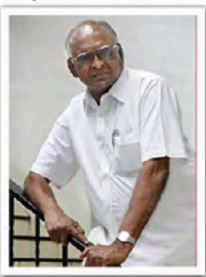
1. What are your likes?
I like all aspects that are associated with art. Mainly, I like directing movies. My other likings are reading books and watching drama.
2. What are your dislikes?
I hate lazy people spending their time idly without doing any work.
3. What are you conscious about?
I am very conscious about what I am going to shoot the next day. I make sure I do the homework for the next day's shooting.
4. Who is the most influential person in your life?
Mr. A.V. Meyyappa Chettiar. His deeds are wonderful and are everlasting.
5. What is your plus point?
My hard work.
6. What is your weakness?
I am not very strict with people. My lenience is considered my weakness.
7. Which will be your memorable day?
The day all the artists live together as a family will be my most memorable day.
8. The day that you would like to forget?
The day my wife died. She was my pillar of strength. She has sacrificed so much for the welfare of our family. She is always alive in our memories.
9. What is your advice to the youngsters who aspire to join the film industry?
First, they must ask themselves if they have the skill to direct movies. Then they should make an entry and if they work hard, then they can be successful.
10. Do you think that the film industry is apt for women?
To an extent yes. The problem is the improper timings that demand them to work so that balancing their career and family can be difficult.
11. Describe yourself...
I am a very content man. Be it family or career, I have been having a satisfying life. I am a very friendly person and I always will be.
Editor of the Thuklak magazine
I asked Mr. Ramaswamy to share his views on Tamil Nadu politics in general.
1. What are the plus points in the current ADMK rule in Tamil Nadu?
There are plus points seen in certain issues. For example, Selvi Jayalalithaa shows keen interest in securing foreign investments. She carries out a lot of economic reforms. She also shows keen interest in controlling terrorism. These are some of the plus points in the current ADMK rule.
2. What are your views on POTO?
I don't find anything wrong in the way Selvi Jayalalithaa handles POTO. Mr. V. Gopalsamy and Mr. Nedumaran supported the Liberation Tigers deliberately. Their supporters are also arrested under POTO. Supporting a banned organization comes directly under POTO. I am sure these are the charges under POTO. Though many are against this, I am not.
3. What have you got to say on the third front?
I doubt if the idea of a third front can succeed in the near future. If some steps are taken to establish a third front, it may yield some result in the future.
4. Do you think people will support or favour movie personalities entering politics?
It greatly depends on who is making the entry. People like Bagyaraj, S.S. Rajendran and Ramarajan made an entry into politics but they could not survive. Mr. M.G. Ramachandran, Selvi Jayalalithaa, and people like Dr. Karunanidhi and Thiru Annadurai, who have a movie background entered politics and they are/were successful.
In Andhra Pradesh, Thiru N.T. Rama Rao was very successful. So again, it depends on who is going to make an entry.
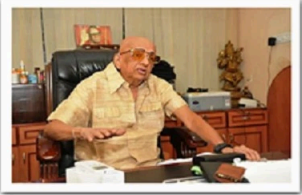
5. Do you favour Mr. Rajinikanth entering politics?
Yes. I do favour Mr. Rajinikanth entering politics. In case if he enters, then this third front might succeed. There could be a powerful alternative between these two Dravidian parties.
6. Do you think people will support Mr. Rajinikanth?
Definitely people will support him. In a way I feel it is good.
7. You are a lawyer, journalist, actor and many more. Which face do you like the best?
These are not faces. All these are parts of my face. If asked which part of the face I like the best, how to answer? I like the face as a whole. That is Cho Ramaswamy!
Bharatha Natyam Dancer
Uma first started to learn this art at the age of seven, when she was in Primary One. She says that she was then very much excited when her mother brought her to the class at the Cairnhill Community Centre, Singapore. At that age, Uma was highly captivated by the beautiful costumes, jewellery, makeup and the beautiful dance movements.
Uma was under the tutelage of Srimathi Neila Sathyalingam of Apsaras Arts. Mrs. Sathyalingam, otherwise fondly known as Mami, was truly an inspiration as she not only taught dance but also how to preserve one's passion. This is something Uma still cherishes and is trying to impart to her students. Yes, Uma now runs the Apsaras branch in Richmond, Virginia.
Uma owes much to her parents who took all the steps to nurture her into a dancer, as she says, "Amma and Appa always encouraged me and supported me in my performances. They took me to many dance programmes and they would also sit and watch them with me. My mum also cut out any newspaper article about Bharatha Natyam, or nice poses from magazines and saved all programme brochures."
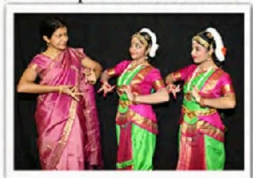
"All those traits have been passed on to me and I do the same with my students and it has helped me tremendously in inspiring so many little ones." She further says, "Amma brought me to my classes, I remember in the bus, and used to wait for me during class and even took notes about my adavus and I use a lot of that now to help my students learn their adavus." A truly supportive mother indeed!
She says dance, which was initially started as an extra-curricular activity, slowly became a passion, as Bharatha Natyam allows the mind, soul and the body to blend and that combination is beautiful for the dancer and the observer.
During her school days, she had to give more importance to her studies and hence dance practices were limited to the necessity. Now she has created a routine of daily practice of about thirty minutes with yoga stretches, exercises, two dances and even sit-ups. She has also compiled a list of exercises for her students as she believes flexibility, stamina and health are essential for any dance students.
She says that it is not easy balancing between any activity and schoolwork as it requires other preparations like planning and executing for performances, apart from the regular classes. It is all about time management, priorities and focus. She says that it is these three essential qualities that she has learnt from her dad that help her to excel.
Now, the best way she balances dance, work, family and social activities is because of the huge support from her own family, her husband Ashok and both sons Karthik and Ashwin.
She has a CPA (Certified Public Accountant) qualification from Delaware and an MBA from the University of Richmond, Virginia. She works full time as a Finance Analyst at Genworth Financial. Uma, who has nurtured more than 120 students, says that the Varnam on Lord Muruga in Kamas Ragam is her favourite item. She also loves the Brindhavana Saranga Thillana.
In Hindu mythology, APSARAS are celestial dancers. Apsaras Arts was originally established in Singapore as an Indian Dance Company in 1977. Srimathi Neila Sathyalingam, Uma Chetty's guru, is the founder, director and choreographer of Apsaras Arts, Singapore. "Neila Mami", as she is fondly called, holds a basic diploma and post graduate diploma from the prestigious dance school, Kalakshetra in Chennai.
Since its inception in 1977, Apsaras Arts has expanded into Canada, Boston (Massachusetts) and Richmond (Virginia). Apsaras Arts Richmond, was started in 2000 by Uma Chetty and since then this school has grown from 4 students to 120 students ranging from beginners to advanced classes. There are also 3 teachers besides her who teach in Apsaras. They started as her students and now teach as well. More information is available at www.apsarasvirginia.com
The main objective of Apsaras Arts Richmond is to create awareness of Bharatha Natyam in the United States, while maintaining the highest standards for teaching and performing. Apsaras Arts, Richmond, VA has performed in various Hindu Centre fundraisers, Children's Hospital Fundraisers, Indian cultural events, Girl Scout events, Tsunami Fundraisers, Asian Festivals etc. This school has also given multiple dance demonstrations for various organisations and schools, including the University of Richmond, Virginia Commonwealth University and Thomas Dale High School.
Apsaras Arts Dance Group celebrated its 10th anniversary in 2012 and since then, every year they have an annual day for 120 Apsaras students and call it "Apsaras Anjali". Uma has also had 10 students complete their Bharatha Natyam Arangetram from 2006 to 2012.
She received the Bharatha Kalai Mani award from her guru in Singapore, for her achievements. One day she hopes to produce a dance drama, "Valli Thirumanam", with her post-arangetram students with a live orchestra.
She urges one to take to any Art they are interested in. Once they like it, that will grow into a love, and that can take them through many aspects of life, as they study, marry, have children and grow older. The pursuance of any Art should be based on individual desire and passion and not on others' perception or persuasion.
Bharatha Natyam is a beautiful art that teaches dedication, commitment, discipline and ability to adapt to changing situations, so one should surely take up this art as it reaps huge rewards.
Author and Culinary Educator
Alamelu Vairavan, an author and culinary educator in the USA, shares her experiences in her development as a culinary educator. Together with her co-author, Dr. Patricia Marquardt, she has published a number of Indian cookery books.
I was born in Karaikudi and educated in Chennai, India. I grew up in a large household with a professional cook and regularly shared in an abundance of delicious foods. Although I knew nothing about cooking, I did greatly enjoy good food. After my marriage, I accompanied my husband, Dr. K. Vairavan, to the U.S. as a young bride. Necessity, as they say, is the mother of invention.
I learned cooking in New York from a professional Chettinad Chef Natesan (popularly known as "American Natesan", a Head Chef at wedding banquets) at my aunt Mrs. Visalakshi Alagappan's home, while my husband was finishing his Ph.D. at the University of Notre Dame.
With those basic cooking lessons, I joined my husband at Notre Dame. To my surprise, I found immediate joy in cooking. I am a very enterprising woman, a quality that I have inherited from my mother, who is a warm, gracious hostess. Whenever friends dined with us, they enjoyed my food and they were full of praise, and immediately wanted the recipe. That motivated me and gave me enough confidence to explore cooking further.
Besides learning from Chef Natesan, my visits to India gave ample opportunity to constantly upgrade my cooking expertise. As there is no external help in America for domestic work, that compelled me to study further and gain experience in South Indian and Chettinad cooking. After each trip to India, I tried those recipes that I had learnt there, modifying them to shorter versions that still resulted in authentic dishes.
While learning to cook, I also participated in many community activities and did many cooking demonstrations to the American public. All these activities encouraged my interest in cooking very much. As my interest grew, I discovered that there was hardly any book on South Indian cooking written in English. This fact, in addition to the repeated requests for recipes and my own growing interest in cooking, convinced me to write a South Indian cookbook. Another motivating factor has been my desire to pass on my recipes for posterity.
My co-author, my dearest friend and neighbour, Dr. Patricia Marquardt enjoys cooking and loves to explore different cuisines. Whenever Pat tried my Indian dishes for the first time, she would come to me with great enthusiasm and say, "This food is divine. How did you make it?" Pat was particularly fond of vegetarian dishes and flavoured rice dishes.
After Pat learned a few Indian dishes, she encouraged me to sample her cooking, which I also found to be marvellous. When I asked Pat to work on a book with me, she was delighted. I was thrilled to have Pat observe my cooking, ask questions, request precise measurements of the ingredients and help write the recipes in a step-by-step format. Our collaboration, which began several years ago with a vision of a good South Indian cookbook accessible to modern-day cooks, has now culminated in three publications by Hippocrene Books, a publisher in New York.
In 1997, we published Art of South Indian Cooking.
In 2003, we published Healthy South Indian Cooking.
In 2005, I contributed recipes to Cooking Healthy Across America published by the American Dietetic Association with John Wiley publishers.
In 2008, we published Healthy South Indian Cooking - Expanded Edition.
In 2011, I contributed recipes to Healing Spices by Dr. Bharat Aggarwal, a cancer research specialist at M.D. Anderson Care Center, Houston, Texas.
In 2011, I published Chettinad Kitchen by Westland-TATA company, New Delhi, India.
Whenever I cooked, my husband indicated how much he enjoyed the food that I prepared. My husband kept encouraging me, saying that I have become a good cook who knows how to prepare authentic, healthful, easy-to-prepare Indian dishes. That took me a step further as a culinary educator, resulting in me giving cooking demonstrations in the community to the American public, participating in block party contributions for neighbours and friends and conducting local cooking classes.
As a culinary educator, I offer classes teaching the public easy ways to prepare and enjoy healthful foods using legumes, spices and herbs. I offer classes through community education, hospital and university outreach programmes and wellness programmes for corporations.
With the passage of time, not only did my interest in cooking grow but also the endless opportunities became manifold. I have been featured on numerous TV shows and was a featured guest in many radio shows in several states. My books and recipes have been featured in magazines and newspapers including USA Today, Los Angeles Times, Wisconsin Woman, India Today and India Abroad.
I also serve as a culinary consultant for major institutions, creating fusion dishes for major events incorporating individual Indian dishes into a typically western meal resulting in a delicious blending of tastes. I have participated in many major "Food and Wine Events" in Wisconsin. Additional information about my culinary activities can be found at www.curryonwheels.com
I guess I must also talk about my academic training. I attended the University of Wisconsin-Milwaukee while raising the family, and graduated with a Bachelor's degree in Health Information Management. I worked in a health care facility part-time as a Director for Health Information Management. As a health care professional, I was very much into health.
I saw how poorly the food was served to patients in institutional settings. So, I decided to quit my job in the health settings and pursue my passion in promoting healthful cooking to the public. In America, obesity and diabetes are on the rise. People are often encouraged to eat 5 to 7 servings of vegetables and fruits. America is blessed with an abundance of food. People here usually eat vegetables as salads or simply steamed and boiled, resulting in bland and boring vegetables that are not appealing. Americans consume more red meat and not as many vegetables. There was a need to show people how to cook vegetables, lean meats and flavoured rice dishes in a more appealing way by enhancing them with spices and legumes. I am able to transform vegetable haters into vegetable lovers, including kids. Americans are not used to spices and legumes. I orient them to spices and legumes and I discuss how to set up a basic spice pantry. I also talk about the health benefits of spices. Spices are easily available here and are inexpensive. To make things easier for Americans at the beginning, I have come up with a "start-up spice package". It includes 7 spices and 50 recipes for them to make from our cookbook. It is a big hit... a cookbook with a start-up spice kit! When Americans tell me that they love making poriyals, kootu and sambhar using a variety of vegetables, it is a very satisfying, fulfilling experience for me. My New York publisher has made our cookbook available through amazon.com and our book is available world-wide. Please see the reviews for the cookbook on amazon.com. Now, I have a Second Season TV cooking series on the American Public Broadcasting station titled, "Healthful Indian Flavors with Alamelu". This will be 13 half-hour shows that will be broadcast weekly starting January 7th, 2012. My first series of 6 shows was picked up around other states in the U.S. So, no doubt Mrs. Alamelu Vairavan has popularised Indian cooking among other races and we can look forward to much more from her!
Founder of the Dwarakamaye Art Studio in Chennai
Ms. Visalakshi Ramanathan is a woman of creativity and innovation. Being well versed in many forms of paintings and drawings, she mainly concentrates on the Tanjore form of art.
When asked what is her specialty in this area, she says, "I do fusion work of Tanjore painting with other forms of art, like acrylic painting, stone wash painting, crayon work, water colours. I would say that this is my specialty."
Mrs. Ramanathan's works are done with minute details and fine outline that appeals to the customers. Her innovation and the output have gained her the trust of her clients.
Having started to learn Tanjore art as a hobby during her holidays when she was 13, she is now full time into this art, building on her commitment and expertise. She says that the talent of drawing runs in her family, as her mother and brothers are also good artists. She further says that it was her mother who motivated her and always took her to many competitions, art galleries and exhibitions, which gave her sufficient exposure to delve into this art.
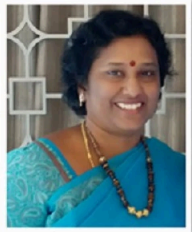
Pieces of Tanjore art of a medium size, say 12 x 10 inches can become costly for one, when they have to be given in considerable numbers during functions. As an alternative, by using a mould, Mrs. Ramanathan designed pieces with the same design, style and effect as a masterpiece similar to the Mysore style of art. This fusion type was a big hit among her clients. Similarly, her fusion of stone wash paintings of Buddha with Tanjore art is yet another big hit.
"Anyone who comes to my gallery at my residence always has a few words of appreciation. Even a non-artistic person falls in love with the eyes of the deities in my paintings, which gives immense satisfaction to me. My paintings are also bought by people in the US, Germany, Malaysia and other countries."
When asked her to share some piece of advice to youngsters, she said, "Always have a hobby in life. Do whatever you do with a passion and love for your job. Life will never get boring and time will not be wasted. Leave behind something in this world that will speak for you after you leave!"
Rangoli Artist & Guinness Record Holder
1. How and when did you develop your interest in Rangoli?
I have been doing Rangoli from young and I developed the interest from my mother by looking at her creations.
2. Can you explain briefly what Rangoli is?
Rangoli is an Indian art form where colourful patterns are created on the floor using materials like flour or coloured sand. They are designed during festivals like Deepavali, Dassera, Pongal and Holi, as well as during childbirths, weddings etc.
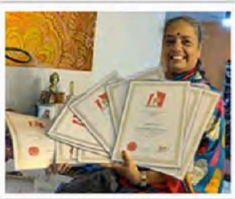
3. How many Guinness records do you hold?
I have one Guinness World Record.
4. What are your other awards/accolades for Rangoli art?
I have featured in the Singapore Book of Records in various categories and was awarded the Bharat Gaurav award for spreading Indian culture in Singapore.
5. How do you choose the pattern/colour combination for your Rangoli?
I choose the design and the pattern according to the occasion and the need of the organizers.
6. Can you explain to us your process of getting into the Guinness Book of World Records... like how did you come to know about the Guinness World Records and what its requirement are? How did you prepare yourself for this feat?
One lady in London won the first Guinness Record with a Rangoli of 1,400 sq. ft. with the help of a big group. So, I thought that I could easily do something bigger all alone. I approached Whampoa Community Centre and they were very supportive and allowed me to use their function hall. I then wrote to Guinness and they required me to register with them. They also had a lot of conditions like appointment of judges, media coverage etc... with all of which we were greatly helped by Whampoa Community Centre.
The total carpet area of the hall was around 3,000 sq. ft. so I could use most of it and draw up to a size of 2,750 sq. ft. after allowing some space for people to walk and move around. If the hall was bigger, then I could have drawn a bigger Rangoli. I did the drawing in 7 hours.
I did not prepare much for this event. In fact, my husband asked me to do a trial drawing but I was very confident that I would be able to achieve it. So straightaway on the appointed day I went and drew the Rangoli. My prayers to Sai Baba helped me a lot and I felt that he was with me throughout the event.
7. Can you talk about your life, your family and how they have supported you?
My family has been extremely supportive to me. My children always help me by running errands and my husband supports me a lot. I started my career in Singapore as a kindergarten teacher and then shifted to special needs children. Later on, I did a post graduate course in Art Therapy at LASALLE College of the Arts and I am now a practicing Art therapist. I also do Social work and together with my husband I am running a recreation centre for persons with special needs.
8. How do you balance your family and career?
I have not found this very difficult. My children have been independent and cooperative and we are a very well-adjusted family.
9. Do you want to say anything more?
Creating Rangoli is my passion and I am trying to promote and preserve this traditional art form for future generations of Indians and Singaporeans. The colours give lots of energy and this stimulates the brain a lot so I feel everyone should do Rangoli.
Collaborative Rangoli Artists
I am greatly privileged to have witnessed very closely the preparation effort for creating a magnificent Rangoli for the Singapore Book of Records by my friend, Sudha Ravi and her daughter Rakshitha.
It all started with a phone call from her on a Monday morning, asking if we could design the e-invitation to observe her attempt to create a Rangoli for entry in the Singapore Book of Records. I marvelled at the magnitude of the work she was engaged in and I could see my mind and thought drifting towards it instantly.
I could guess that she was going to make the women in the community proud with this great achievement with her passion for colours. I was awed by the theme she had chosen for the record attempt - The Singapore Skyline for the Rangoli! Only Sudha Ravi could think of such unique and intricate designs!
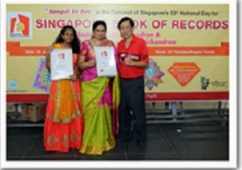
It was not only an art, but a Science too. Measurements were taken, the sketch was drawn and scaled out to calculate the amount of rice needed, the amount of each colour and the quantity of glitter needed and she had also gone to the extent of planning different accessories to be used for each part of the Rangoli during execution.
The 3000 sq. ft. piece of art that all of us saw on the 28th of July 2018 was a collaborative effort made over a few months. Planning the colours for the design, procuring the necessaries from all different sources, grinding the rice, mixing the colours with it, processing, storing and preserving them well... was all no easy task. It was 600 kgs of rice, 50 kgs of colours, 20 kgs of glitter... all made to proportion.
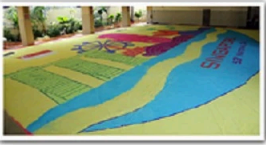
Just as how Sudha is blessed with talent, she, being an amazing person, is also blessed with great friends who helped her all her way in this humongous preparation of the colour blends. As I mentioned later in the award ceremony that evening, "There is always a woman behind a successful man, and here there was a man behind this successful lady". Mr. Ravi, Sudha's husband, was an incredible support right throughout her endeavour.
She had also choreographed two fascinating videos for the e-invitation that made us all anticipate the great day with excitement....
Here comes the great day....
It was a massive job to have been completed within a few hours... Covering 3000 sq. ft. with intricate designs, using amazing colours and adding borders and glitter to all the designs out there, within a stipulated time is definitely not easy... having witnessed the mother and daughter create the beautiful art so painstakingly, makes me understand how much passion and determination they must have within themselves to complete this amazing task and create the record. I should call it "Burning Aspiration"!
We have seen people creating large Rangolis as a group but this was by a DUO! Can you believe it? 20 m x 14 m - two of them had to do it INCH by INCH! Having all of us around reminding and haunting them, "Time is running... please hurry up... faster..." even when we knew they would hate us for that, at least only for that moment...
The little girl was amazing. I have no words to describe her determination. Her father was there with her right throughout, just hanging around her and motivating her, "You are doing a great job... Just a little more, that's it...", when both of them knew that there was so much more to go.... his words were so comforting and pulled her right through.... After about half of the Rangoli was completed, her body could not take the stress and I could see her hands getting tired and shaking and her body in great pain but yet she was fighting herself and supporting her mother until the end and when it was all done, she hugged her mother and father and cried. That really moved me to tears too. Hats off to Rakshitha!
A mother cannot teach the meaning of "Determination" in a better way to a daughter! It is a lesson no school can teach. Sudha Devi, you are an amazing achiever and an inspiration to all of us!
Yes! They did it!
Sudha Ravi and Rakshitha have found a place in the Singapore Book of Records and they truly deserve it! They have practiced this skill over the years and now is the time for the recognition and indeed everybody who witnessed the creation of the Rangoli that day was amazed by the beauty of the art, the striking colours and its magnificent layout.
With all this on one side, she had also organized a well-planned event that evening for the award ceremony, with my help and guidance. As expected of her, Sudha had designed a beautifully decorated reception and stage decor. The event also showcased videos of her works and the making of the Rangoli. Sudha's mother and brother had come all the way from India to support her. A family's support is always crucial for any achievement. She had also prepared a miniature version of her design to be placed on stage. That was an awesome piece too! It was a proud moment for Sudha Ravi, Rakshitha and for all of us when they received the certificate from the President of The Singapore Book of Records, Mr. Ong Eng Huat, in the presence of the Guest of Honour, Mr. R. Dinakaran, Nominated Member of Parliament. May this success lead to greater achievements in the years to come!
Founder of the M.Rm.Rm Cultural Foundation
Visalakshi Ramaswamy, the founder of the M.Rm.Rm Cultural Foundation, is an enthusiast of craft and culture and has been an active advocate of craft development for many years. She has documented the craft and heritage of the Chettiar community along with S. Muthiah and Meenakshi Meyyappan in the book The Chettiar Heritage. She realized that several old and traditional houses were coming down at a fast pace, and several craft and hobby crafts of the region were disappearing.
Documentation of all these crafts was crucial because even though many of them were not in practice today, people who worked on them were still around, most of them being octogenarians. The need to document everything while there was still access to information seemed vital. The M.Rm.Rm Cultural Foundation was set up in 2000 with the primary objective of documenting, preserving and reviving the many crafts of the region. "Project Kottan" was one of the first initiatives of the Foundation, and this book is the culmination of many years of being involved in the collecting, researching, resurrecting and reinventing of the humble kottan.
Ms. Ramaswamy is an Executive Committee member of the Crafts Council of India, and is very much involved in its projects. She also works with the World Crafts Council in projects to promote and encourage craft education in schools. She is a member of the All-India Handicrafts Board of the Ministry of Textiles, Government of India and on the advisory committee of the DakshinaChitra museum (a museum in Chennai, India, which showcases South India's living heritage), working with them on several of their initiatives.
Ms. Ramaswamy is passionate about the textile traditions of India and has been working for many years to revive the handloom weaving traditions of Tamil Nadu. Kandanghi is her line of traditional Chettinad silk and cotton sarees that have many admirers in India and abroad.
Ms. Ramaswamy has also curated a lifestyle exhibition of the Chettiar community at her home in Chettinad and is currently involved in setting up an in-situ museum to recreate the actual experience of a traditional Chettiar home. Ms. Ramaswamy's zest, enthusiasm and deep passion has sustained her work in the craft sector. Her vision and forethought has helped her maintain a balance between the ideal and the practical, and this has been the key to the achievement of her goals.
Recently, she authored a book The Kottan: The Palmyra Basket of Chettinad, which was released by the Indian Finance Minister, Mr. P. Chidambaram in October at Chennai.
This book not only showcases the finest basket weaving tradition of the region, but also serves as an important record of the traditional techniques of kottan basketry that were languishing for decades until Visalakshi Ramaswamy, through the M.Rm.Rm. Cultural Foundation, undertook the task of reviving the craft. The book explores the journey of the beautiful Kottan from its role as a hobby craft in the Chettiar community to its disappearance and revival. It brings out the history of the Kottan and its traditional uses, details the weaving process and materials, and includes comprehensive design documentation. The intensive revival process and the circumstances of the craftspeople of today complete the story of the Kottan. Awards, international recognition, the Geographical Indications tag and an extensive clientele now ensure that the Kottan today has found a place in the contemporary home - a happy ending to a near-tragic tale. Visalakshi Ramaswamy's vivid recollections of the Kottan in her youth enrich the narrative. The extensive documentation of designs and painstakingly illustrated techniques give the book archival status. The book is organized into ten richly illustrated chapters, complete with accompanying text and line drawings of the basket-making process, a glossary, and over five hundred colour illustrations of traditional and contemporary baskets. The book is a must-read for anyone with an interest in craft, culture and design, and will be indispensable to craftspeople, academics and designers alike.
Javagal Srinath was born in Mysore, Karnataka on the 31st of August 1969. He made his one-day international cricket debut in Sharjah against Pakistan in 1991 and his test debut against Australia in Brisbane in 1992. He was noted as a key bowler in the team right from his debut. A gentle man and a soft-spoken person off the field, he shares some of his views in this interview.
1. Can you tell us about your formative years?
It has been good on the whole...I had a bit of ups and downs...Actually there are a lot of things to learn and the game has been a big teacher in my case. Well, I had a few achievements to my credit and I am happy that I could represent India.
2. Apart from cricket what are your interests?
A bit of information technology...and hobbies wise reading, music and forest animals - I mean wild life...
3. It is a general opinion that Indian teams do not perform to their full potential. Where do you think you lack?
Yes, we are not as consistent as we need to be. Well, I got into scientific training and methodology very late in my career and of course it is a fact that some of the basic facilities were not available too.
4. Any interesting incidents off the field in recent times?
Not really
5. What are the ups and downs while leading a public life?
It is a short-lived glory and one must make the best of it. You should set your mind to accept all the ups and downs and to face criticisms.
6. Unfortunately injuries were a setback in your achievements. Do you regret that or are you content with your achievements?
I am an underachiever...or a slow learner. Injuries are part of a fast bowler's life and one has to live with it.
7. Whom do you attribute your success to?
Success is a state of mind.... as long as you are content and hungry to perform, you will be successful in due course!
8. Can you describe yourself in a few words?
That's for people to judge. I am a man of weakness with both good and bad qualities.
9. Your advice to youngsters who wish to become fast bowlers is....
Play the game...enjoy the game...like the game and study well!
Aarthie Ramaswamy from Chennai, 19 years old, has won many awards in the field of chess, most recently, in 1998 and 1999, the Girls' under-18 title in the Asian Sub-junior Championship in Mumbai. Also in 1999, Ramaswamy, representing India, won the Girls' under-18 section of the World Youth Championships in Spain.
Excerpts from an interview that was taken at her residence:
1. What do you like doing?
I enjoy going out with my friends.
2. Do you have any dislikes?
I don't think there is anything in particular.
3. Who has been your greatest influence?
My mother has played a very important role in my life.
4. What was the turning point in your career up to now?
Winning the 1999 World Under-18 Chess Championship was very important.
5. Are you superstitious?
Yes, sometimes I am.
6. Is there anything you are self-conscious about?
Yes - I am very self-conscious when I speak in public.
7. Is there anyone you feel sorry for?
I think the physically handicapped have a huge burden.
8. What are some things that excite you?
I love nice houses...and babies.
9. Who is your role model?
Judith Polgar, the Hungarian Chess Champion, is definitely my role model.
10. Do you have a future plan?
Now I play with women Grandmasters. In future I want to play with men too.
11. What advice would you give to youngsters wanting to play chess competitively?
Dedicate yourself to the game and work hard. Then success will be yours.
How many know about the young little boy—P. Chidambaram, who is today India's Finance Minister? Learn about his childhood days from someone who has really seen him grow as close as could be. She is none other than his mother, Mrs. Lakshmi Achi. Here, she talks about her son's formative years.
1. Can you say a few words about yourself to our readers?
I was born in the year 1920. My parents are Rajah Sir Annamalai Chettiar and Mrs. Seethai Achi. My father was a Merchant Banker and a philanthropist. He started the university which is named after him—Annamalai University. He was conferred the title "Rajah Sir" by the British Government. We hail from a modest and traditional family. I studied in Raffles School. Once I finished my S.S.L.C., I got married at the age of sixteen. I scored 588/600 in that exam. My husband is Mr. Palaniappan Chettiar, an industrialist.
2. How many children do you have?
I have four children—three sons and a daughter. My first son, Mr. P. Lakshmanan, is an industrialist. My second son, Mr. P. Annamalai, passed away a few years back. My third son is Mr. P. Chidambaram, today's Finance Minister of India. My daughter, Mrs. Uma Narayanan, runs a Pre-School called "The Nest" at her residence in CIT Colony, Chennai.
3. Can you tell us about the formative years of Mr. P. Chidambaram?
He was born in 1945. He grew up in Chennai. He studied his kindergarten and primary levels at St. Thomas Convent, where he got a double promotion from UKG standard to 2nd level. Then he continued his education at the Christian High School. Then he did his university education in Loyola, Presidency and Law College, after which he went to Harvard University, where he did his MBA.
4. During his childhood, was there a trace of him springing up as a promising politician later?
He always had so much inclination towards the outside world. Even his mind would ponder about various countries' leadership and their progeny.
5. What are his distinctive characteristics?
He has a very strong memory. He absorbs things very quickly. He reads very fast. By the time we could finish reading a page, he would have read fifteen pages.
6. Could you recall some incident that showed his distinctive character?
Yes, there are many. When I taught him for his exams, he finished studying quickly, and moved on to the next chapter. I would be apprehensive as to how he was going to fare in the exams. He shrugged my worry off coolly and told me not to worry. At the same time, he got good marks in the exams. Another characteristic of his that I can remember would be, when he explained some incident to me and when I happened to go away half way and later asked him to explain the rest, he did not go on explaining from where he left off. He would start from the beginning. So, the nature of explaining things clearly was very apparent in him from his childhood.
7. What was the family's reaction, when he disclosed his love marriage?
It was very difficult for us to accept it. We were totally against it. My husband, Mr. Palaniappa Chettiar, could not digest it. We did not attend the wedding. Later, we were convinced and pacified after a gap of nine months. Now we do have a cordial relationship.
8. Did you attend the budget session, when he was the Finance Minister during the year 1996-1997?
Yes. I did attend it. The seating arrangement in the parliament was such that we could sit and listen to the budget directly. He read for one and a half hours.
9. How did you feel?
It was a very memorable time. I was very happy as it was really a balanced budget.
10. As a mother, did the media approach you after the budget session?
Yes. They did. They mobbed us and asked many questions concerning the budget. My niece, who had come along with me, and I said, "It is a very balanced budget. Hope it helps the Nation."
Note: This interview was taken at Mrs. Lakshmi Achi's residence in Chennai.
Director of Rehabilitation at Gracehaven
Mrs. Lakshmi Alagappan is Director of Rehabilitation at Gracehaven, a residential home run by the Salvation Army. Her husband, Mr. Alagappan, is a finance controller. She is a mother of two children: Aishwarya (13) and Eshwar (10).
Mrs. Lakshmi Alagappan counsels divorcees and young offenders sent to the rehabilitation centre by the court. She advises their family members on how to help these youth overcome negative behaviors, and she takes active care of the overall welfare of their families.

When people are facing problems in life, they tend to seek help from social workers. Consequently, a social worker must face people with various kinds of emotional, physical, and financial struggles. When a person faces a particular problem, they are encountering a single issue and seeking an individual solution. How do social workers feel when they constantly hear about numerous problems? How does it affect them?
Though the consequences of these problems have different degrees of impact on the victim and the social worker, how does a social worker react to the ills that menace society?
Mrs. Alagappan says, "While we were in the Master's program, we were clearly advised on how to approach problems and how to prepare ourselves before counselling others. You have to be really strong to be a social worker. If not, it can lead to various kinds of distress in life. You must develop an attitude to stay away from the problem while counselling. Only then can you be a good social worker in the long run. Although we attain this mental state in due course, we are still human beings. Some ills of society can really bother us."
So, if it affects her, what does she do to overcome the problem?
"To me, yoga is the best way to get peace of mind. There are a number of other things that I do. I like to listen to good songs; I chat with my friends; I spend quality time with my children.
I don't carry work-related worries home. At home, I am a wife to my husband and a mother to my children. Once I leave my office, I completely forget about work. That is the best way I keep out my stress. Then I am a normal housewife—attending functions, praying, watching television, going for a walk, and so on.
Every day, at least once, I speak over the phone with my maid and my husband to make sure I keep track of what is happening. I have an understanding maid who has been with us for a number of years. She has almost become a part of our family. She knows our demands well and is always ready to fulfill those demands.
We have trained our children very well to take care of their everyday needs. We have assigned each of us a task to be carried out. We make sure we do our tasks at the right time—so there is no postponing of work and no dragging. This means there is a good flow of discipline and understanding in the family, leaving no room for confusion, frustration, or dissatisfaction."
She goes on, "Spending quality time with the children is the most important task for working mothers. I make sure my children don't feel that I don't spend time with them. For that, I spend at least half an hour with each child each day. I try to be very friendly with them. I make sure I teach them moral stories. I also quote examples from real-life stories and try to discipline them.
My husband and I take the utmost care in fulfilling our children's needs. My husband plays a vital role in my growth. Without his support, it is impossible for a woman to attain her desired goals in life. I have never experienced male chauvinism in my life. He is always supportive. Many a time, he has encouraged and helped me to achieve my goals."
She concluded with this: "If there is good understanding and respect among the family members, it is possible for a housewife to be a successful career woman as well."
Mrs. Soundara Nayaki Vairavan
Journalist, Author & Editor
Mrs. Soundara Nayaki Vairavan, an accomplished author of eight books, holds a Diploma in Freelance Journalism from the International Correspondence School, London, and a Master's in Communication Management from the University of South Australia.
Her publications, written in both Tamil and English, cover a diverse range of subjects, including Singapore, Women, Music, and Media Writing. Over her distinguished career, she has written more than a hundred articles published in leading magazines across Singapore, India, the USA, Australia, Congo, Africa, Sri Lanka, Canada, and Hong Kong.
She is also the editor of the prominent e-magazines:
Online Voice: www.onlinevoice.info
Sing-Ind: www.thesingind.com