Nagarathars in Singapore
Nagarathars in Singapore
by
Dr. SP.Thinnappan
Mrs. Soundara Nayaki Vairavan
Gemini Graphics & Printers Pte Ltd, Singapore 210668
Navaso Pte Ltd, 547, Serangoon Road, Singapore 218169
Heritage Industry Incentive Programme (Hi2P)
There is a growing interest to know about the Nagarathars (also called Chettiars) in Singapore.
However, there are anly a few authentic records available in Singapore with only a few having
access to these materials to do research. In October 2005, we (who are both Nagarathars) decided
on a venture to record the arrival. the activities and the lifestyle of the Nagarathars in
Singapore in a book.
We gathered articles and research papers available from the Chettiar Temple and also conducted
interviews with the pioneers of the community in Singapore. With the help of the Nogarathar
Association in Singapore, we sent out letters to the members requesting information. With these
materials in hand, we started writing the book in 2008.
When we approached the National Archives of Singapore for photographs, we learnt of the grant
made available by the National Heritage Board. We proposed our project to them and they approved
the hip (Heritage Industry Incentive Programme) fund. We are indeed grateful to the National
Heritage Board for recognising our project and awarding us the grant which covered part of the
cost of producing this book. The remainder was sponsored by the Chettiar Temple Society and the
individual donations by Mr RM Palaniappan of Abiraame Jewellers. Mr VR. Alagappan of Saravana
Stares, Mr Subbian LN, Mr Subbiah Lakshmanan and Dr.A. Ilancheran. We are also grateful for
their support.
We sincerely express our gratitude to Mr Narayanamohan. Chairman, Singapore Indian Chamber of
Commerce and Industry (SICCI) for writing the foreword to this book.
Dr. SP. Thinnappan
Mrs. Soundara Nayaki Vairavan
We like to express our gratitude to
Mr. K. Kannappan, Dr. R. Karunanithy, Dr. S. Vairavan, Mr. A. Palaniappan, Mr. S.
Thiyagarajah and Dr. N. Subramanian for reading the manuscript and giving valuable
comments.
Mrs. Alamelu Iynkaran and Mr. R. Mahanadas for proofreading this book.
Mr. C.Y. Ravi for selecting the photos.
Mr. K. Kannappan, Mr. S. Sathappan, Mdm. Saraswathy Palaniappan and Mdm. Nachiyammal
Arunachalam for providing their photos with useful information.
Mr. Pethachi Pichappan and Mr. Subbu Pichappan for their suggestions.
Mr. N.S. Narayanan, Mr. P. Sundarraju, Dr. K. Vellayappan, Dr. K. Iynkaran and Mr. N.
Chockalingam Singaram for listing the prominent Chettiars in different fields.
Mr. Subbiah s/o Nachiappa and his son Lakshmanan who had given some photos to National
Archives of Singapore and for their documents.
Mr. RM. Chidambaram for giving us the details on the Nagarathar Population in
Singapore.
National Archives of Singapore, for giving the photos at a discounted rate.
Publishers of Aachivandhachu for their kind permission to publish photos from their
publications.
Gemini Graphics and Printers Pte Ltd for designing and printing this book.
Dr. SP. Thinnappan
Mrs. Soundara Nayaki Vairavan
I have the great honor to write the Foreword for the Book Tited as 'NAGARATHARS IN SINGAPORE'. The book has been written by two eminent personalities of Nagarathars Community and they have spent their valuable time to do all the research, to make a beautiful memoir for the community they belong.
They have gone in to the roots of the community, understood their history, the commerce and the cultural heritage. It is not easy to carry out an in depth study where you could not find any reference to authentic records or information to stand by.
I am very happy and proud to note that the National Heritage Board has recognized the writing of this book and have provided the grant for successful completion.
The chettiars have lived a life of simplicity, honesty, integrity and standing as an example to the rest of the community to follow
The book also narrates about the temples, the community has established for the prayers for their community and for the benefit of entire Hindu community in Singapore is remarkable.
The Nagarathars contribution to politics, finance, business, language, engineering, medicine & civil service community are explained beautifully in the book.
I salute both the authors of the book for the valuable contribution made to Nagarathar's Community by writing a Biography of the community and for the other communities as an eye opener, to know more about them and to follow their footsteps.
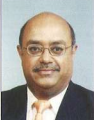
RANGARAJAN NARAYANAMOHAN
CHAIRMAN
SICCI
'In our multi-racial, multi-cultural and multi-religious society, it is vital to give minority
communities the space to be different, to maintain their own heritage and cultures, even as
they share certain core values and evolve common identity with all other Singaporeans. If we
force them to conform to a single Singaporean mould and give up their customs, language and
traditions, our ethnic harmony would have been threatened'.
Prime Minister Lee Hsien Loong (1999)
The Nagarathars are one of the first merchant communities to arrive in Singapore to do
business. They hail from Chettinadu, Tamil Nadu, South India. The aim of this book is to
explore the origin and history of the Nagarathars in Singapore, their contributions to the
fields of economics, education, religion, culture and their social way of life.
The late P.N.M. Muthu Palaniappa Chettiar J.P of Sungurumabai (Bukit Mertajam) describes the
earlier history and life of Nagarathars in his book written in Tamil 'Malayavin Thotram'
literally meaning the 'Origin of Malaya' with the English title 'Happy Malaya' (1938). This is
one of the earliest sources which contain a lot of information on the Nagarathars' lifestyle,
their commercial and charitable activities in the then Malaya, of which Singapore was a
part.
The book 'Indian Communities in Southeast Asia' edited by Sandhu K. S. and Mani A. (1999)
carries a research paper on 'Religious Fervor and Economic Success: The Chettiars of
Singapore' by Hans-Dieter Evers and Jeyarani Pavadarayan (pp 647-865).
Further, Jeyarani Pavadarayan's PhD thesis 'The Chettiars of Singapore: A study of an Indian
Minority Community in Southeast Asia' submitted to the University of Bielefeld (West Germany)
in June 1986 dealt in detail with the origin of Chettiars and their social, religious,
economic organizations. Hans-Dieter Evers (1987) in his journal article on 'Chettiar
Moneylenders in Southeast Asia' has tried to demonstrate that the rapid expansion of Chettiar
money lending was intimately connected with the spread of the colonial mode of production in
Southeast Asia. Lavanya Balachandran (2008) submitted a research paper on 'Challenges of
wealth: Religious and Economic Ethics of Chettiars in Singapore' for her study module SC5208 -
Issues in Singapore Society at National University of Singapore. These are the research works
done at an academic level on the Nagarathars of Singapore. Chandrasekhar S (1980) has given a
few bibliography items in his book 'The Nagarathars of South India'.
This book is not meant to be an academic research but it tries to provide useful insights on
the Nagarathars in Singapore to the general readers.
Nagarathars means city dwellers. The word originates from the Tamil word 'nagaram' which means
city. It also refers to a caste guild devoted to merchant interests during the period of later
Cholas (846-1279 AD). So Nagarathars means those who belong to trading community.
Nagar also
refers to temple in old Tamil Sangam (classical) literature. Their charitable buildings built
in the holy hindu places to house pilgrims are usually called as Nagara Viduthi and Nagara
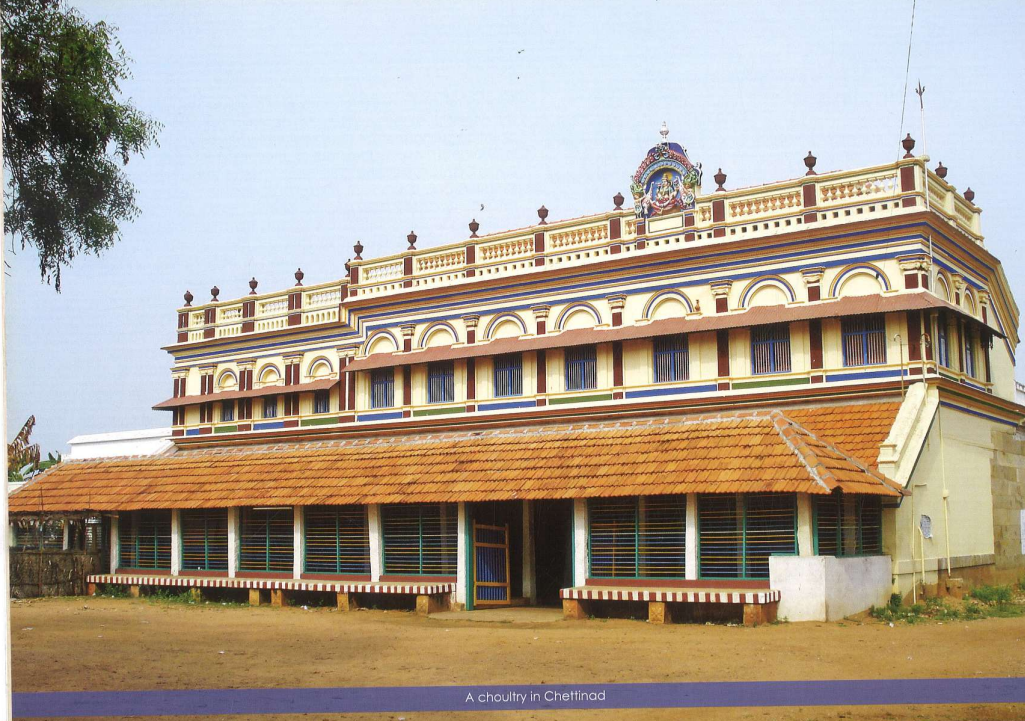
Chathiram (Choultry) that signifies the term Nagarathar. Nagarathar are also known
alternatively as Nattukottai Chettiars or Thanavaysiyars.
The term Nattukottai Chettiar means
people with palatial houses in the country side. 'Nattu' means rural while 'kottai' means
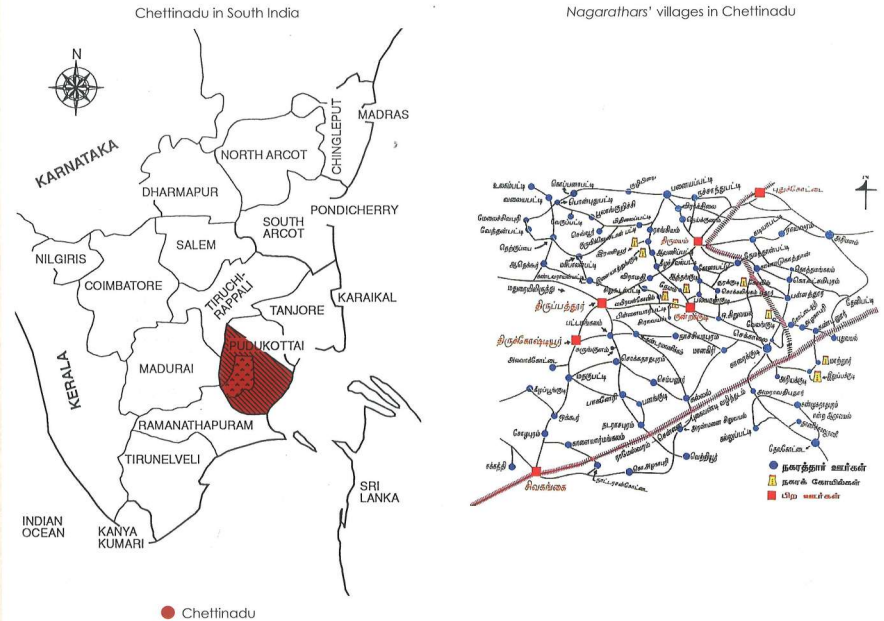
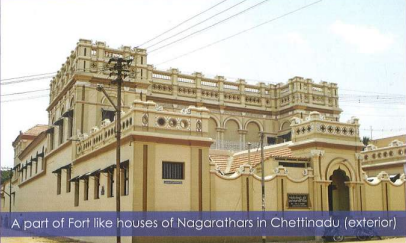
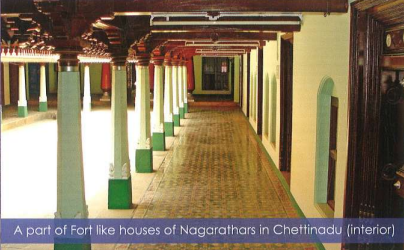
fort. Nagarathars built fort like houses in the villages of the districts of Sivaganga and
Pudukottai, Tamil Nadu after their migration from Kaveripoompattinam, around the 6th century
AD.
Kaveripoompattinam, was the capital fort city of earlier Cholas during the Sangam Period.
The word Chettiar originates from chetty which is one of the titles given by kings to the
community of business people in the earlier Sangam period prior to 2nd Century AD. The term
Thanavaysiyar denotes a business caste which deals with money.
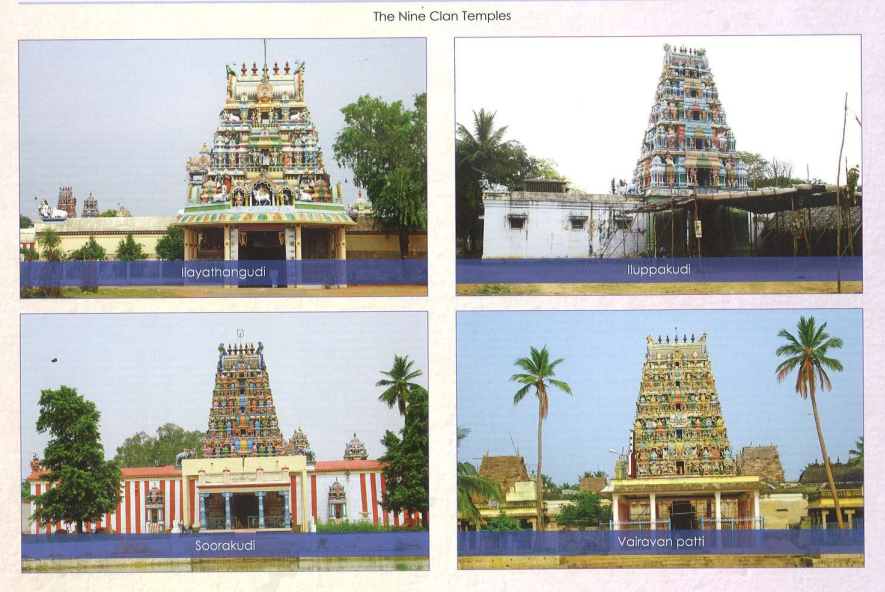
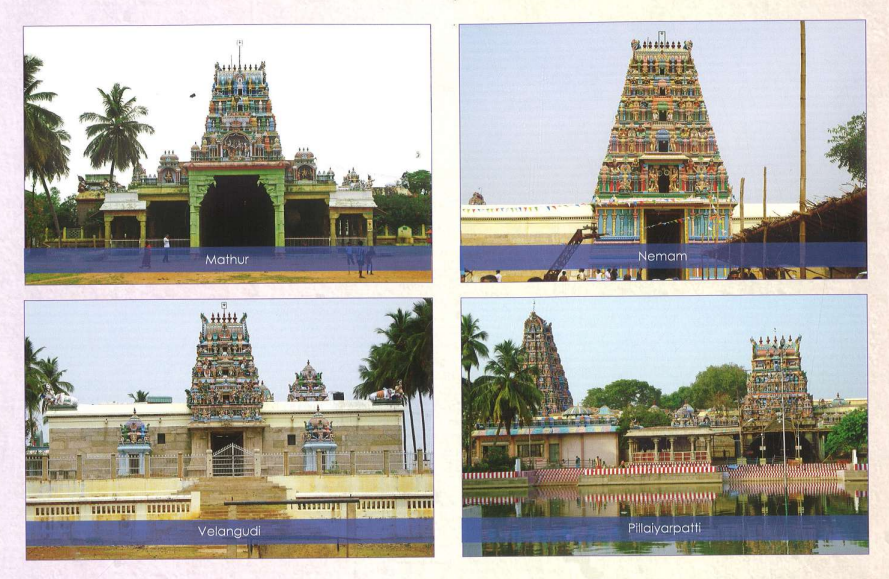
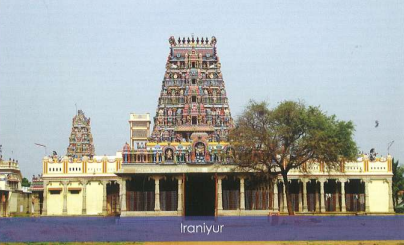
Nagarathars are grouped into nine Temples or Nagarams for social purposes viz Ilayathangudi,
Iluppakudi, Soorakudi, Vairavanpatti, Mathur, Nemam, Velangudi, Pillaiyarpatti and Iraniyur,
which are built in Chettinad, 'land of chettiars' - the area which includes 75 villages in the
districts of Sivaganga and Pudukottai, Tamil Nadu.
The Nagarathar caste is divided into 23 ghotras for the purpose of marriage and adoption.
Their association with the nine temples is the most distinctive feature that differentiates
them from other groups of chetty caste. All these nine clan temples are Siva Temples as the
Nagarathars are Saivite Hindus by religion. Their mother tongue is Tamil, one of the classical
languages of India belonging to Dravidian Family and their spoken Tamil is called as the
Chettinad dialect by linguists.
There is no authentic records to trace out the history of the Nagarathars. There is some
information found in the inscriptions of Velangudi (Tamil Nadu) and in the mutt of Thulavur
(Tamil Nadu). The above information has been ravaged by time. According to Subramanialyer's
interpretation of the Velangudi inscription, the history of the Nagarathars began in 2898 BC
and ended in 1565 AD.
The first two migrations are from Naganadu to Thodaimandalam and from Thondaimandalam to Chola
Nadu. And the third and last from Chola Nadu to Pandya Naadu. The identification of Naganadu
is very vague.
Thondaimandalam, a region in Tamilnadu, with Kancheepuram as its capital, was once ruled by
Pallavas. Silapathikaram, the earliest Tamil epic of 2nd century AD has records of Nagarathars
living in Kaveripoompattinam known as Puhar during the 2nd century AD. The second epic
Manimekalai confirms this. Due to some conflict with the later Chola King, the Nagarathars
migrated to the present Pandya Kingdom around 7th century AD.
When they migrated to the Pandya kingdom, they were said to have settled in four villages
donated to them by the Pandya King around a Temple in the village of Ilayathangudi, twenty
five kilometers from Karaikudi and they dispersed to other clan Temples gradually. They were
allowed to settle in the tract of the country north of the river Vaigai, east of the
Piranmalai and in the south of the Vellaaru (river). Thus the present area of Chettinad formed
part of the Pandya Kingdom.
Until the advent of Nayak rulers of Madurai who ruled during the 16th century, there were
periodical incursions by Muslim Chieftains, both from the North and South, as well as petty
feuds between Ramanathapuram and Sivagangai principalities. This insecurity and the growth of
the chettiar population led to the gradual dispersal into near by villages. Thus the 96
villages of the Nagarathar community came into existence.
By 1800, the British had established their rule in South India and founded the Madras
Presidency. When they restored peaceful conditions, the Nagarathars moved to various places
throughout India to do business. Due to the influence of the East India Company they started
to venture into the neighboring countries such as Sri Lanka, Vietnam, Burma, Malaysia and
Singapore to do business.
Wherever they go and establish themselves they always maintain strong ties with their native
towns and villages in Chettinad.
Other source regarding the history of the Nagarathars are from the records of the Palani
Temple or the pattyams of Palani. Palani is a small town near Dindugal in Madurai District.
The town has a temple on a hill dedicated to the Saivite God Lord Thendayuthapani. There are
eight pattayams or palm manuscript records in colloquial Tamil written between 1627 AD and
1805 AD which have information on the traditional salt business (uppuvaniham) of the
Nagarathar community, their contributions to the Palani Temple and their attachment (such as
carrying Kavadi during Thaipusam) to this temple during the seventeenth and eighteenth
centuries.
The Tamil epic Silapathikaram depicts Kovalan and Kanagi, its hero and heroine, as
Nagarathars. Their parents, believed to be sea traders who dealt in precious stones.
Fascinatingly enough, there is a word 'Singapuram' (Singapore?) which refers to a city in
Northern India, appears in Silapathikaram. In the epic Manimekalai too there are references to
a person 'Sathuvan', a sea trader with the title 'Chetty'. Hence, the Nagarathars are believed
to have traded in precious stones across the sea since the 2nd Century AD.
The Nagarathars are one of the earliest non-sea faring trading community in India. They tried
their fortunes across the borders of India conducting businesses and trade mainly in South
East Asian countries like Burma (now Myanmar), Vietnam, Malaysia, Singapore and Ceylon
(Srilanka) during the colonial era. That period is considered to be the most burgeoning period
in the Nagarathar history.
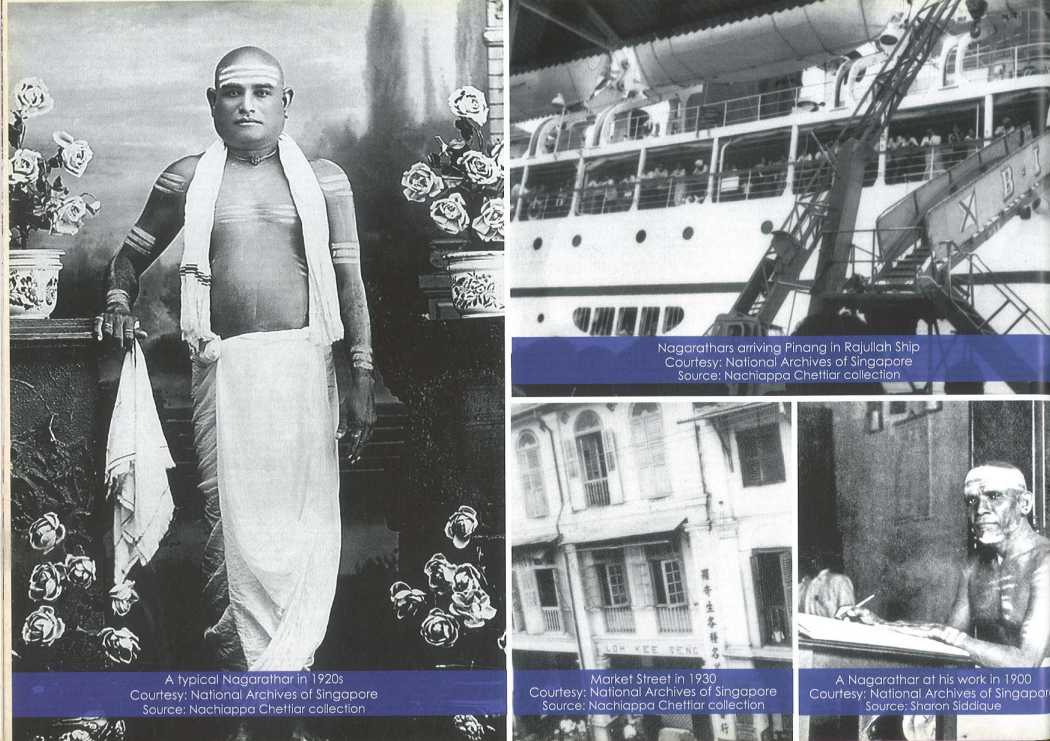
The Nagarathars came to Singapore primarily to carry out the money lending business. There is
no concrete evidence of the exact date of arrival of Nagarathars in Singapore. A Ramanathan
Chettiar, who compiled the History of Nattukottai Chettiars (1953), cites the Nagarathars
voyages to Pinang and Singapore in 1824 in sail boats. PNM Muthupalaniappa Chettiar, in his
book, Happy Malaya says that Nagarathars had arrived in Singapore sometime before
1838.
The proximity to their mother-land is likely to be one of the most compelling reasons for
choosing Southeast Asia to set up their trading posts. We can reasonably assume that the
Nagarathars, upon perceiving the opportunity for new merchants and traders in the newly
established port, made their way to Singapore and established business here.
In the 1820s, the ships would first dock in Pinang and which was hence a strategic point for
business. When the British transferred their administration centre of the Straits Settlement
to Singapore in 1832 with the development of entrepot trade, Singapore became more attractive
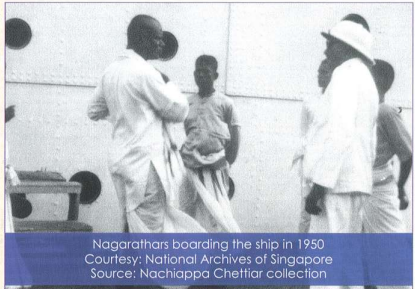
to the Nagarathars. They boarded ships from Nagapattinam, a sea port in Tamil Nadu, and later
from the port at Madras (present Chennai) the capital city of Tamil Nadu. They first
disembarked at Pinang and then came to Singapore by train or bus. The reason for this was the
strict health checking measures imposed by the authorities in Singapore.
The Nagarathars tenacity and fortitude in undertaking the sea voyages that could take months,
to far flung areas even in that pre-automobile age, is a testimony to their courage,
motivation, willingness to prosper. They have been successful business people and are one of
the pioneer money lenders of Singapore. They established their business centres along the
Singapore River at Market Street in the nucleus place of the town.
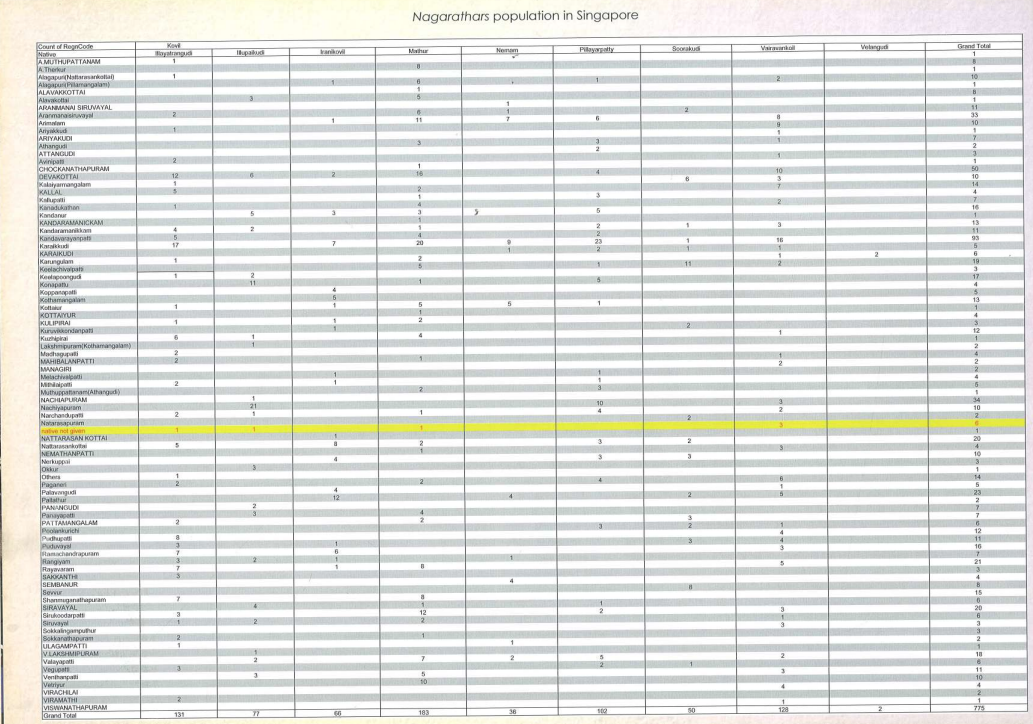
Currently there are about 800 registered Nagarathar families in Singapore. Almost all are in
varied professions and have diverged from their traditional money lending business, though a
few do still practice money lending.
It is a well-knit community still contributing immensely to the Hindu way of life.
The seeds sown by the Nagarathars, have now blossomed into a garden of beautiful flowers, as
Nagarathars have found a strong foothold in almost every sphere in Singapore, today.
The Nagarathars have an attitude for trading and so, they were keen on trading and money
lending in Southeast Asia. The Nagarathars can be called as the early venture capitalists of
Singapore, as they came here with their own capital to start their businesses with. In the
days when credit companies and banks were practically unknown, it was the Nagarathars who lent
money to small businesses along the Singapore River.
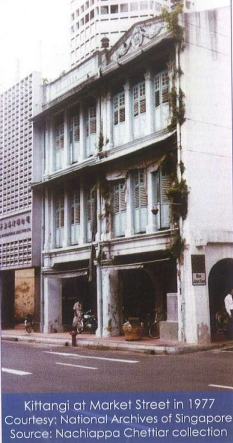
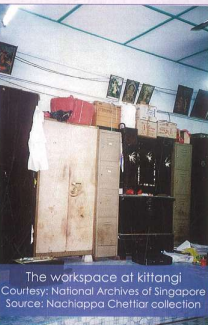
Their business houses were known as kittangis (warehouses). The kittangis are usually long
halls, where each occupant had his own workspace. At one time, there were a total of seven
kittangis along Market Street with about 350 Chettiar firms, in the central Singapore.
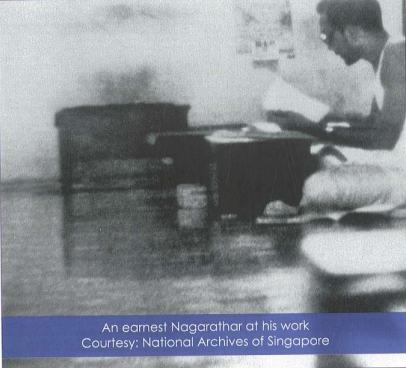
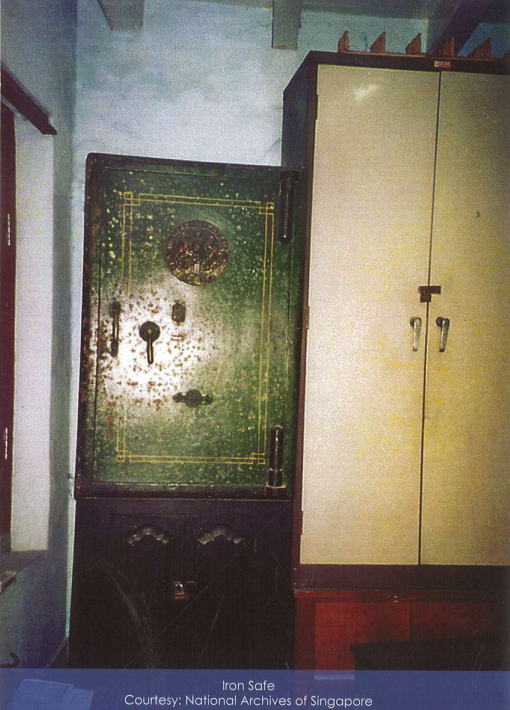
They each had a wooden box and teak-wood cupboards for the safe-keeping of cash and documents.
The Nagarathar money-lender would sit cross-legged in front of the wooden box and conduct his
transactions with his clients. They made their business out of a 'pettagam' (iron safe). There
was neither modern furniture nor any form of luxury.
In contrast to present day business methods which rely on various sources, and innumerable
tools such as the fax, the internet, the phone etc., the Nagarathars were usually sought after
through word of mouth and not through advertisements or marketing. Notwithstanding, they
thrived.
Their business continued steadfastly in the same place, in spite of lack of private space,
attests to the single-mindedness and clarity of purpose of the Nagarathars. Lack of privacy
did not lead to depression or dejection. On the contrary, proximity granted security. They
were undeterred by the competition from other Nagarathars and in fact there was a congenial
relationship and co-operation among them.
Their choice of location epitomizes their prudence. The proximity to Government offices, post
office and other important offices greatly reduced transport expenses.
The money lending firms bore the initials or the initial syllables of the proprietor's name.
For (eg), if his initials were PL (Palaniappan) and his name was Aruanachalam, the firm was
called PANA LANA ANARUNA. Each firm varied in size and clients ranged from Indian laborers,
hawkers, traders in textiles, provisions, shop proprietors, tin miners, palm-oil estate
owners, and rubber estate owners. Usually, it was a one man show.
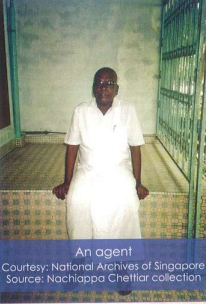
When the proprietor was away, it was managed by an agent, usually a Nagarathar or a very
trustworthy non-Nagarathar. The period of the agent was limited to three years, and then a new
agent would be appointed. In some firms, there will be another person called 'adutha aal'
(immediate next person to the agent). The agents were given salary, bonus and their expenses
including their travel. The details of the appointment are agreed upon in an agreement called
'sambalacheettu' (salary details). The agents became an important feature in the money lending
business. When an agent was employed, his own initials were replaced by those of the firms, a
clear indication that he was the representative of the business.
The salary depended on the volume of transactions of the firm and the bonus varied from 6 to
10 percent of his annual salary depending on the firm's net profit. Six months before the
expiry of the agent's term, a newly appointed agent will be sent to understudy him. Upon
completing his term, the agent first went to his owner's house, delivered his papers and then
returned to his village. With this, his connection with his firm practically ended. Then he
again sought re-employment either under his old firm or others.
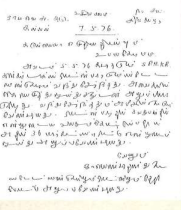
Letters were the Nagarathar's best source of communication. They wrote meticulously, recording
every detail, keeping the family back in India up to date. Letters preserved by Nagarathar
families bear testimony to excellent letter writing skills, attention to detail, and
meticulous recording of events. The agents were obliged to send a detailed report and review
of the business activities periodically, to their proprietors in India. The owners instructed
their agents through letters.
Nagarathars did not sign their letter and instead wrote their family deities name. Eg
veenumAnnamalaiyaarthunai.
The Nagarathars chose their clients through word of mouth, scrutinizing the history of the
client before offering the loan. The Nagarathars were more approachable than the banks, as the
banks had cumbersome procedures before loans could be approved. Hence it was easier to
approach the Nagarathar money-lenders when in dire need. Single women, who had to educate her
children, approached Nagarathars when they were in financial needs and during
emergencies.
The Tamil calendar was followed, when doing their business. All accounts were opened with God
as a partner. This is testimony to the Nagarathars' unshakeable faith. The common denominator
for fixing the interest rates was vested with the temple. In olden days, the Nagarathars used
Tamil numeral and fraction in their accounts and closed their business once in three years.
Without the use of the calculators, many could easily calculate interest to the lowest 1/320th
mentally. The Nagarathar boys were trained at an early age for such calculations and they got
a wonderful mastery of the arithmetics in the course of their office work.
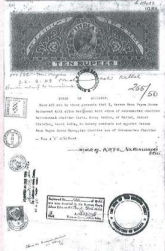
The Nagarathars are reputed for their excellence in book keeping. "Contrary to the
double-entry system used by the English Bankers of the Colonial Era, Nagarathars maintained a
single-entry system." (Cash, Credit and Collateral......Koh Sewo Chuan Collection) They are
said to have maintained three separate accounts for cash, return and cross entry. Maintaining
a single-entry system, not only kept costs low but also encouraged versatility in optimizing
the limited manpower.
The Nagarathars maintain four books for the purpose of accounts:
1. Chittai - the waste book or rough notes. 2. Kurippu the day book or the journal of daily
transaction. 3. Tittaccittai the balance book 4. Paredu the ledger, where each page being
allotted to one client.
Usually the Nagarathars balance sheet is called Capital, "Inthogai" (five amounts): 1.
Vizhumudhal 2. Varavu Credit, 3. Selavu Debit 4. Laabam /Nattam Profit/Loss (Aadhayam), 5. Kai
Iruppu Balance (Tamil Lexicon)
The money lending system functioned in the following way:
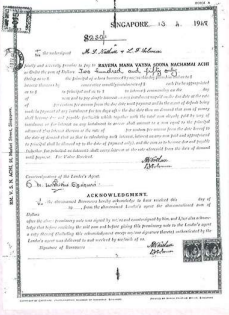
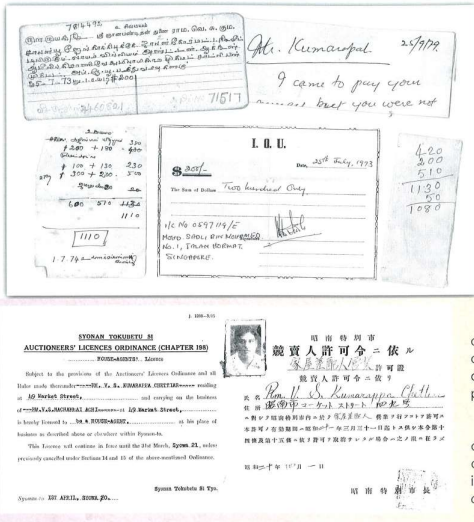
For smaller amounts, the borrower was required to sign a promissory note, whereas, for larger
amounts, valuables such as gold or title deeds were held as collateral. In some instances,
money was lent without any collateral. Interest rates were clearly specified in the promissory
notes. There were I Owe You chits, too.
If the borrower failed to repay on the due date, the amount owed was automatically adjusted
and the new amount owed comprised the principal and the acquired interest. The interest was
revised upward. (Cash, Credit and Collateral... Koh Sew Chuan Collection)
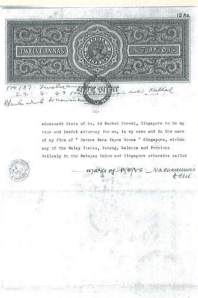
Records from the Singapore and Streets Directory present the following figures:
| Year | Number of Firms | Number of Banks |
|---|---|---|
| 1883 | 28 | 4 |
| 1900 | 19 | 6 |
| 1910 | 35 | 9 |
Cooper (1959) says there were also indigenous money lenders on the scene but they were not as organized and efficient as the Nagarathars. The Nagarathars were very systematic in their business.
Every day, they recorded the transactions, and carried out duties efficiently. When a client
failed to pay the interest for a month, Nagarathars did not impose rigorous measures, to
recover their money. Instead they acted humane in allowing more time for the debtors to settle
debts.
Nagarathars, with their innate ability to integrate with the local people, could get
along well with all races. Their willingness to compete with others, their loyalty, their
business acumen and their tolerance for the delayed payments from the clients gained them
respect. Being more familiar than the other indigenous groups with European was a further
advantage. Though small in number, they outnumbered European banks between the nineteenth and
early twentieth centuries.
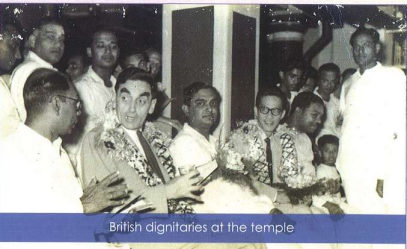
The Nagarathars borrowed money from the banks and relent it to clients. It is believed
that, when the British opened their banks, they absorbed some of the functions of the
Nagarathars. They were respected by the British. Any function that took place at the Istana,
(the president's official residence) included an invitation to the Nagarathars. Similarly,
British dignitaries honored the invitations from the Temple. Some prominent Nagarathars have
served as advisors and consultants to famous financial institutions like the Chartered banks
for the development of their business activities.
Over the time, more Nagarathars were attracted to Singapore and they established their
kittangis at Clemenceau Avenue and at Cantonment Road. Growing demand in the world market for
raw materials and food stuff saw increase in investment in mining and food production.
This eventually led to a boom in the Nagarathar business. Thus, the Nagarathars have
contributed significantly not only to the development of Singapore, but to the whole of South
East Asia. They were crucial in the transformation of the traditional subsistence-based
economy into an export oriented one.
They also owned land in Changi, where they had coconut plantations and gardens. The coconuts
and flowers needed for temple prayers were supplied by these farms, until they were acquired
by the Government for urban renewal. The cows were reared there and the milk for the abishegam
was brought from these plantations to the temple. The Nagarathars invested heavily in landed
property.
But every good thing must to come to an end and so did the Nagarathars money lending business
in Singapore which began to shrink for various reasons. According to many scholars, there were
two phases in the money lending. The first phase was between 1930 and 1945. In 1930, money
lending business began to decline as the Government passed various legislative bills to
control and restrict money lending activities in Singapore. The Japanese occupation of
Singapore between 1940 and 1945 was another reason for the decline.
When British rule was reestablished in 1945, the decline was offset to an extent. It lasted
till 1963, soon after Singapore and Malaya were declared independent by the British.
The second phase of decline began in 1965 (when Singapore became Republic) when stricter
immigration and employment policies were introduced by the government. Other reasons were the
Singapore Money Lending Act and the advent of loans from modern banks.
In 1966, there were about 108 registered Chettiar money lending firms, while in 1982, the
number drastically dropped to 7. (Singapore Government Gazette 1966: 1982). In 1978, the
Government acquired the buildings (kittangi) in the Market street for urban re-development.
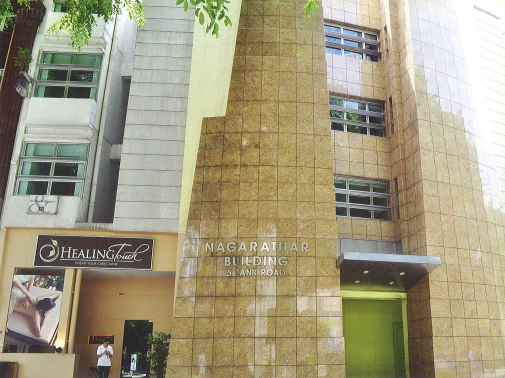
Hence the Nagarathars had to primarily concentrate only in the remaining few kittangis at Tank
Road.
However, the Nagarathar population in Singapore continued to grow in a different form. The
same rules and regulations, which brought down the money lending business, led to younger
professional Nagarathars' migration to Singapore.
Survey on Chettiar Occupation in Various Economic Fields in Singapore, 1983.
| Occupation Category | Percentage | Number |
|---|---|---|
| Business / Professional / Semi-Professional | 20% | 12 |
| Administrative / Education | 33.3% | 20 |
| Technical | 3.3% | 2 |
| Clerical / Sales / Service | 35.0% | 21 |
| Unskilled | 3.3% | 2 |
| Retired | 5.0% | 3 |
(Source: K.S. Sandhu & A. Mani (eds), (1993 and 2006), Indian Communities in South East
Asia)
These professionals came with their families and as a result, the Nagarathars are not only
employed in various fields but also settled with their families.
Nearly a hundred years after the Nagarathars arrival in Singapore, the Chettiar Chamber of
Commerce was established on 18th January, 1931, four years before the Indian Chamber of
Commerce was founded. It was officially opened by Mr. Broadly, barrister-at-law and then
Municipal President on 8th May 1931. He was full of praise for the role played by the
Nagarathars in the economic development of Singapore. The chamber was initiated by Mr.
Annamalai Chettiar of Ramachandrapuram. He had large properties to his credit and hence the
road was named after him as 'Annamalai Road' in Bukit Timah, near the old race course. Mr. S.
S. Subramaniyan Chettiar of Amaravathipudhur, founder of Gurukulam (home based education)
School in Amaravathipudhur was another proponent of this Chamber.
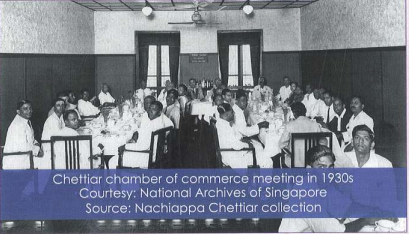
The primary objective of the organization was to keep members abreast of the economic
activities and the prevailing conditions in the country. Some pioneers in the community recall
that the Chamber issued daily bulletins on rubber and tin prices in Malaya and Singapore. It
is said that the information was more extensive and the analysis far superior to that of the
Indian Chamber of Commerce. The Chamber had acted as a bridge between the Government and the
Chettiar Moneylenders and has donated generously to the social organizations.
The chamber had a library, where members read the dailies and other periodicals.
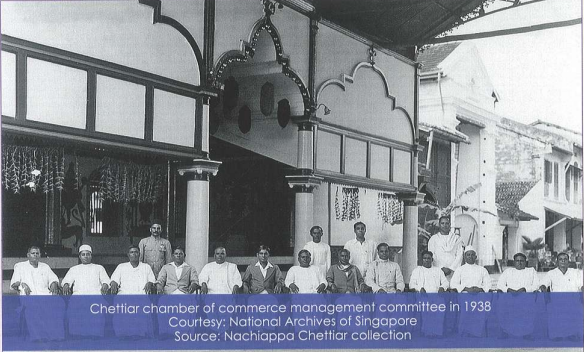
Until the Chettiar Temple Society was formed, the management of the Sri Layan Sithi Vinayagar
Temple and Sri Thendayuthapani Temple was under the jurisdiction of this Chettiar Chamber of
Commerce. The members of this Chamber are eligible to become the members of the Management
Committee of the temples.
Today, with professionals outnumbering moneylenders, the Chamber activities have dwindled, but
is kept active by holding AGM and monthly meetings. Now new Nagarathar members doing business
are joining the Chamber.
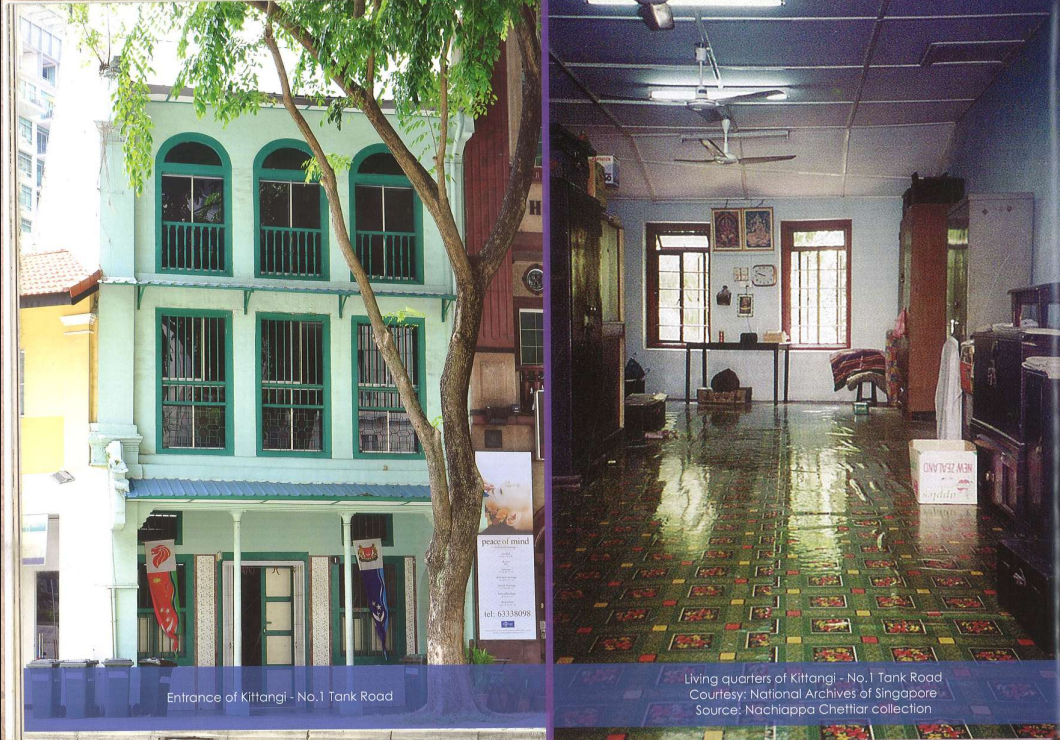
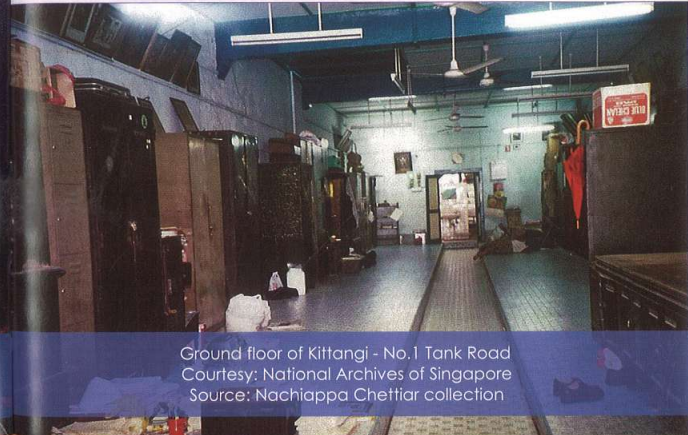
Nagarathar men, who came to Singapore to do money lending business, lived in kittangis. A
kittangi (warehouse) is a long house of a few storeys with a single entrance and exit.
Business was conducted on the ground and first floors and living quarters were in the top
floors. The top most floor served for storage. The altar was housed in the second storey. The
dining area, the rest and bath rooms were at the rear.
The Nagarathars principle was 'act globally, think locally'. Since they were miles away from
their motherland, the shared living space not only helped them save on maintenance and rent,
but it also helped to maintain and reinforce the interests and values upheld by the community.
This is the indelible character of the Nagarathars obvious even in the most recent
generation.
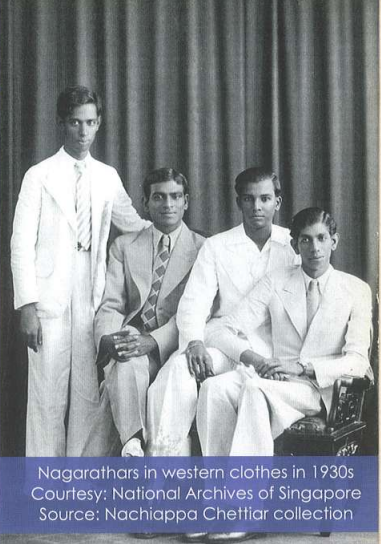
Yet another of the Nagarathars characteristics is ascetic minimalism. The clothes they wore
and their accessories were Spartan. The Nagarathar men are easily recognized—a white shirt,
white dhoti, vibuthi smeared forehead. But they also wore pants and shirts that helped them
integrate with other races. Though they strongly adhered to the basic Nagarathar principles,
they were flexible, accommodative and picked up the local language, which helped them to
expand and develop their business.
They were self-disciplined. As the kittangis were centrally located, Nagarathars seldom had to
use public transport. They walked to their clients' offices to collect the interest. To places
that were further off they took the bus or trishaw. They never intimidated by distances to be
covered on foot.
They lived frugally. They had a common cook and a radio. The newspaper was shared by all. They
washed their own clothes and hung them to dry on the third floor.
The early birds were up at the dawn and queued up to use the rest room. Some used the public
toilets in the Raffles Place. Toilet facilities were provided and maintained by the
Nagarathars in the Club Street. These toilets were used by both the Nagarathars and the
public. Upon the expiry of the lease, the Government took over the site. After the morning
ablutions they unfailingly prayed, thankful for all the blessings and safe conduct through
what the day had in store for them.
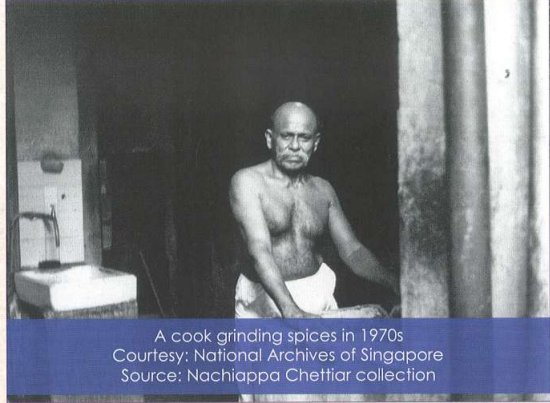
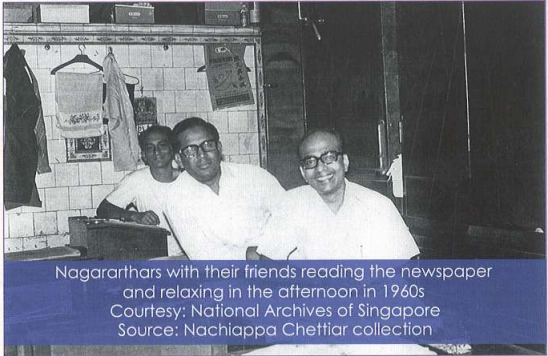
There was a person called koottumurai, stationed in the kittangi who took the collective care
of the place. Lunch was Nagarathar cuisine prepared by the cooks stationed in the kittangis.
Nagarathars rested in the afternoon, listening to the radio and reading the newspaper. They
kept themselves updated with the news, and passionately discussed different topics in depth.
Their discussions on events and issues around them are said to have been very
enriching.
In the evening, they refreshed themselves, said their evening prayers and then resumed
business. At the end of the day, they updated the accounts accurately and concisely. Every
cent was accounted for before they wound up for the day.
Being far removed from their families back in India, they usually brought their sons with
them. The young boys were brought up under the strict and direct guidance of the elderly to
expose them to the business. These young boys attended school and concentrated primarily on
their studies, occasionally helping the elders run errands to places in the vicinity.
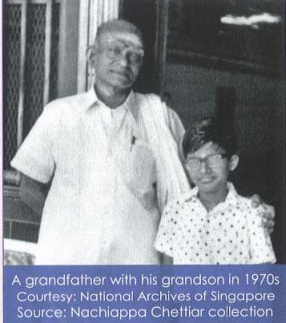
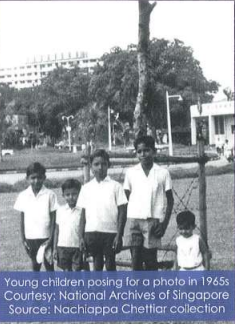
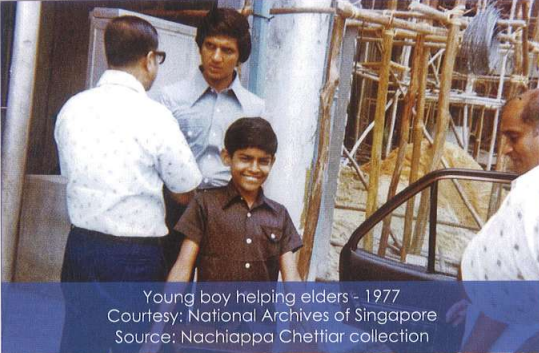
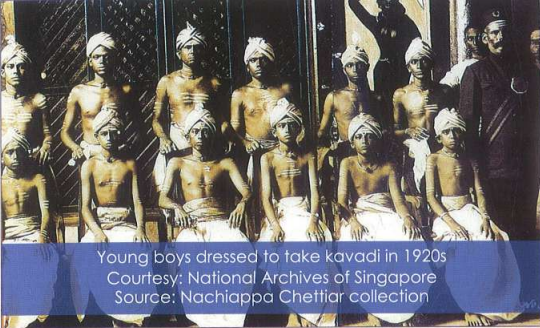
These boys were disciplined. They had to take responsibility for their belongings and behave
responsibly in spite of their tender age. Many who grew up in that tradition find their
experiences invaluable, as the ingrained values have helped them learn to be
independent.
Being focused on the very purpose of their migration—to conduct and prosper in business—they
hardly indulged in worldly pleasures. But, they did not deprive themselves either. On
weekends, they played cards while the little ones played carom. They caught late night movies
at the cinema.
The Nagarathar hospitality and cuisine warrants special mention. In kittangis were not to be
outdone. The cooks prepared the Nagarathar food including all kinds of non-vegetarian dishes.
They were very hospitable to visiting Nagarthars, serving them a grand feast and accompanying
them to the various places they wished to visit. They were very receptive of their guests, and
welcomed even strangers since it gave them a chance to bond with even more members of their
community.
Being very devout Hindus, the Nagarathars visited Temple almost everyday to offer prayers.
They rendered their services during the Karthigai and Thaipusam festivals. There were readings
of the Ramayana, the great Indian epic. The custom continues to this day at the Sri
Thendayuthapani Temple.
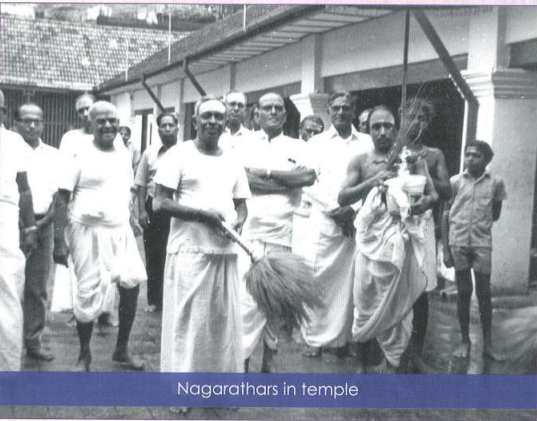
The families of the Kittangi Nagarathars do have privileges, as they are the only people
eligible to become a trustee of the temple. The trustee has the crucial job of decision making
for all Temple activities. This privilege of becoming a Karbar or trustee is extended to any
male members of Nagarathars who carried out the money lending business. However, after 2014,
the trusteeship will be open to all Nagarathars living in Singapore.
Though there is less activity in kittangis now, they still continue with the traditional
poojas during Pongal, Deepavali, and Navarathri, when people assemble to carry out the
customary ceremonies.
Nagarathars kittangi life epitomizes their business interests, simplicity, flexibility,
self-discipline, austerity, confidence, generosity and many more inimitable virtues.
The 1950s was a time of mass movement of Nagarathars to Singapore, to work in bank related and
educational institutions. Such a migration was a major structural shift, as these Nagarathars
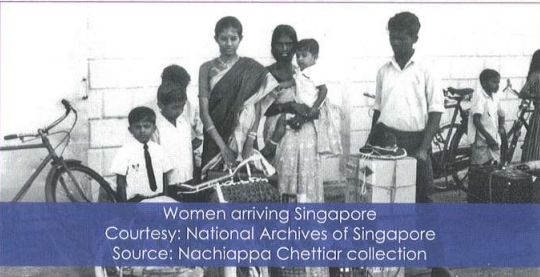
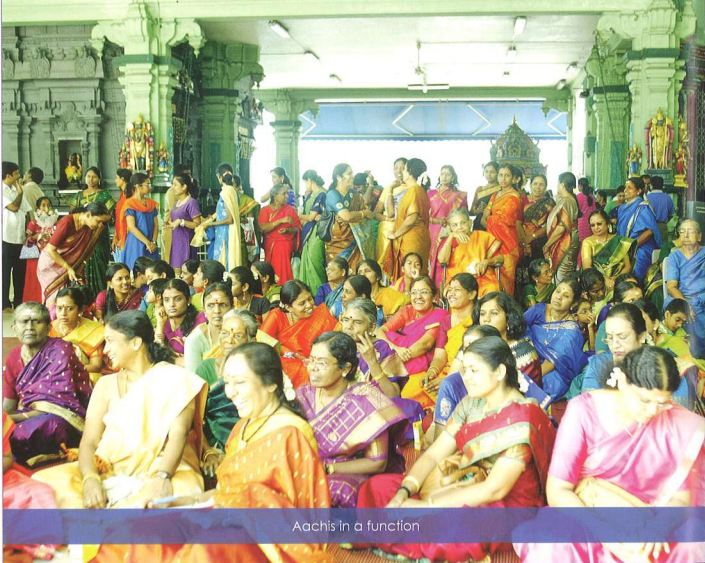
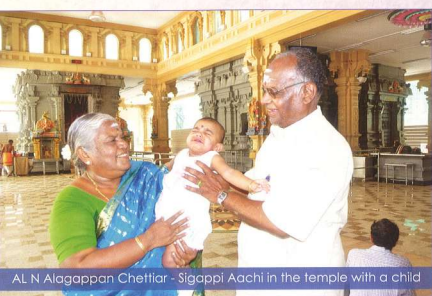
moved with their families. Chettiar women are usually referred to as 'Aachis'. Traditionally,
Aachis do not cross seas. Hence, women from this conservative society had to cross many
hurdles before they could join their husband overseas. Mr. Thaneermalai Chettiar was the first
to bring his wife to Singapore, regardless of the general resentment against migration of
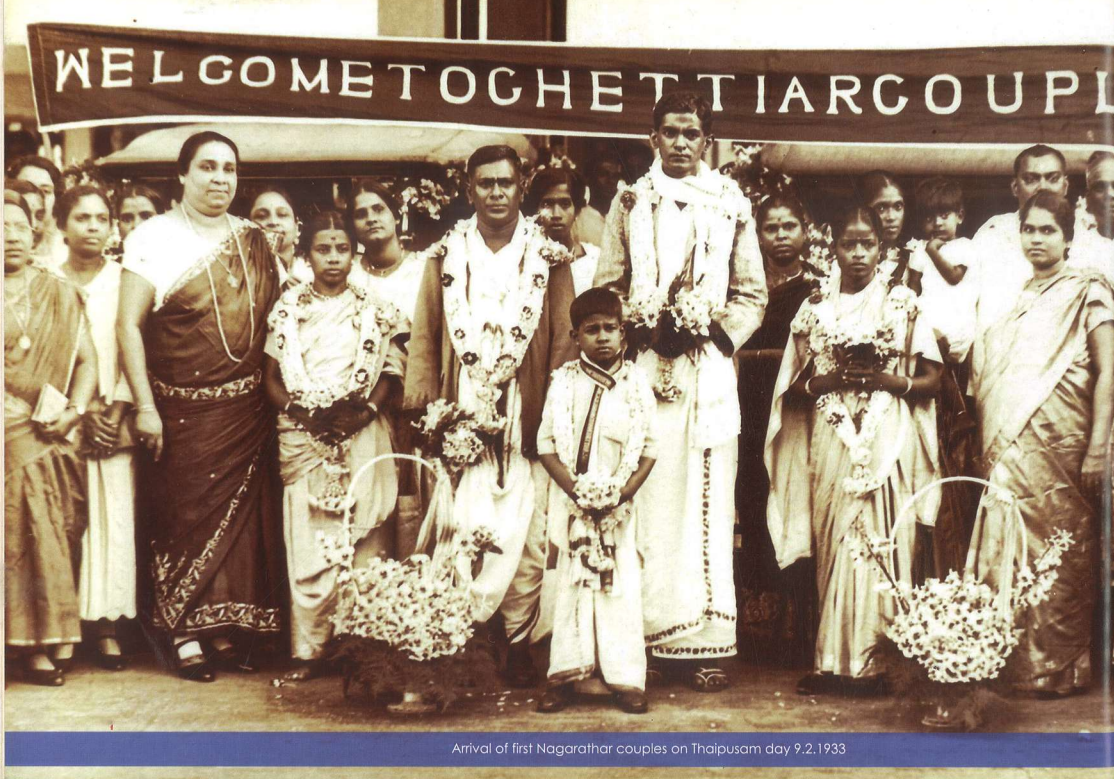
women. In 1933, A. V. Thiyagarajah Chettiar of Devakottai and AR. A. RM. Chokkalingam Chettiar
of Karaikudi brought their respective wives (9-2-1933). That was a turning point in Nagarathar
history.
4.2 FAMILY LIFE: 1950-1970
In the early 1950s, Singapore was a developing country and it was difficult to rent a house.
Perhaps that was one of the principle reasons the Nagarathar men avoided bringing their
families. Smt. Nachiyammai Aachi, who arrived in Singapore in 1953 with her husband and two
youngest children, recalls that there were around five to seven Nagarathar families then in
Singapore. They made the arduous trip that took 7 to 8 days in ship from Madras to Pinang and
then journeyed to Singapore by train.
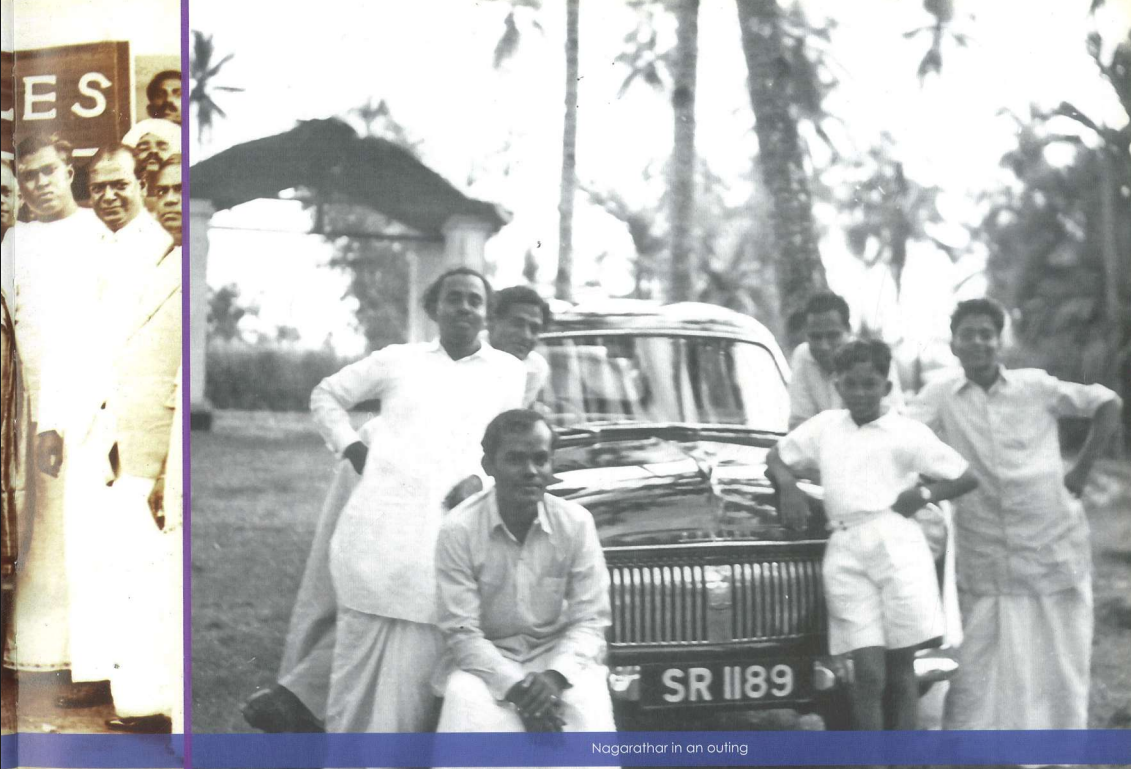
Transportation was at best inconvenient and unreliable. Only the extremely wealthy owned cars.
Due to these restraints women were confined to their houses, with neither telephone nor
television. They had no choice but fall back to their devises to fend for themselves during
critical periods, such as child-birth. The young and inexperienced had no one to turn to for
guidance or advice as their immediate family was back in India.
Admirably, instead of falling victim to homesickness and loneliness, the Nagarathar families
bonded with each other. As these families generally lived in the same area, there were many
opportunities to engage with one another. In treating each other as part of a big family,
other Aachis were counted in case of an emergency or when in need of advice. When newcomers
arrived fresh from India, the established families took it upon themselves to reduce their
cultural shock, helped them to pick up the nitty gritty details of life in the new country and
hence made them feel at home.
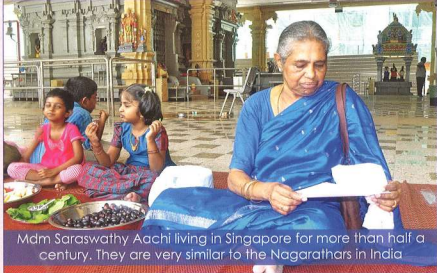
For example, Madam Saraswathy Palaniappan arrived in 1958 and delivered all her three children
in Singapore. With only a Malay lady for assistance, Mrs. Palaniappan relied on the older
Aachis to help her through child-birth, bathing and feeding the new born and preparing the
post-maternity diet-food for the mother. In the 50s, telegrams were the premier mode of
communication, and it took two days to be delivered to the recipient. Normal day-to-day
activities were communicated through letters which took up to a month to reach the
destination.
The Nagarathars were content with their day-to-day lives. Though there were no yoga centers,
meditation clinics or psychiatric clinics to help alleviate stress and depression, the
families claimed to have lived a fulfilling and satisfying life, especially because they had
little expectations when they first arrived in this foreign land.
The average income of a middle class house-hold in the 1960s hovered around $350. Madam
Saraswathi Palaniappan rented a room in a Chinese home for $60. Her grocery expenses were only
$20, since a tin of oats or a bottle of Horlicks cost a mere dollar. Limiting their daily
expenses to only basic necessities, Nagarathar families were usually able to save over $150
per month.
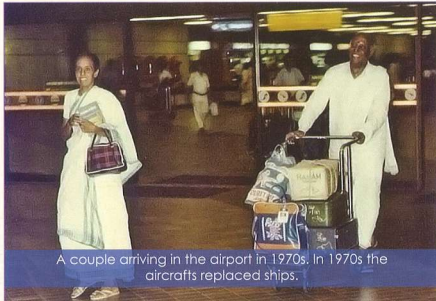
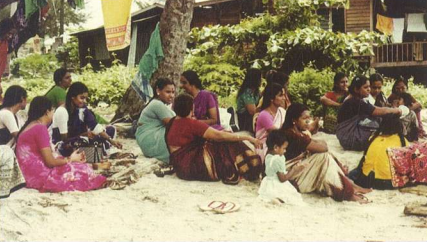
The role of Nagarathar women in Singapore society started to change in the 1970s. In the mid
20th century, women were typically shy and introverted, as their families expected them to be.
During trips to the temple or the beach in the evenings, they were generally accompanied by
their husbands, as it was then unthinkable to allow women to travel alone in public.
After achieving its independence in 1965, Singapore developed rapidly. As more families
emigrated and the infrastructure of Singapore improved, the Nagarathar life became more
sophisticated, as people increasingly began to enjoy more outdoor entertainment rather than
spending quiet evenings at home. They attended speeches, went shopping, and watched movies at
the cinemas. In the 1970s, the social aspect of the Nagarathar families in Singapore took an
interesting turn as the second generation began to get married. Since a wrong notion exists on
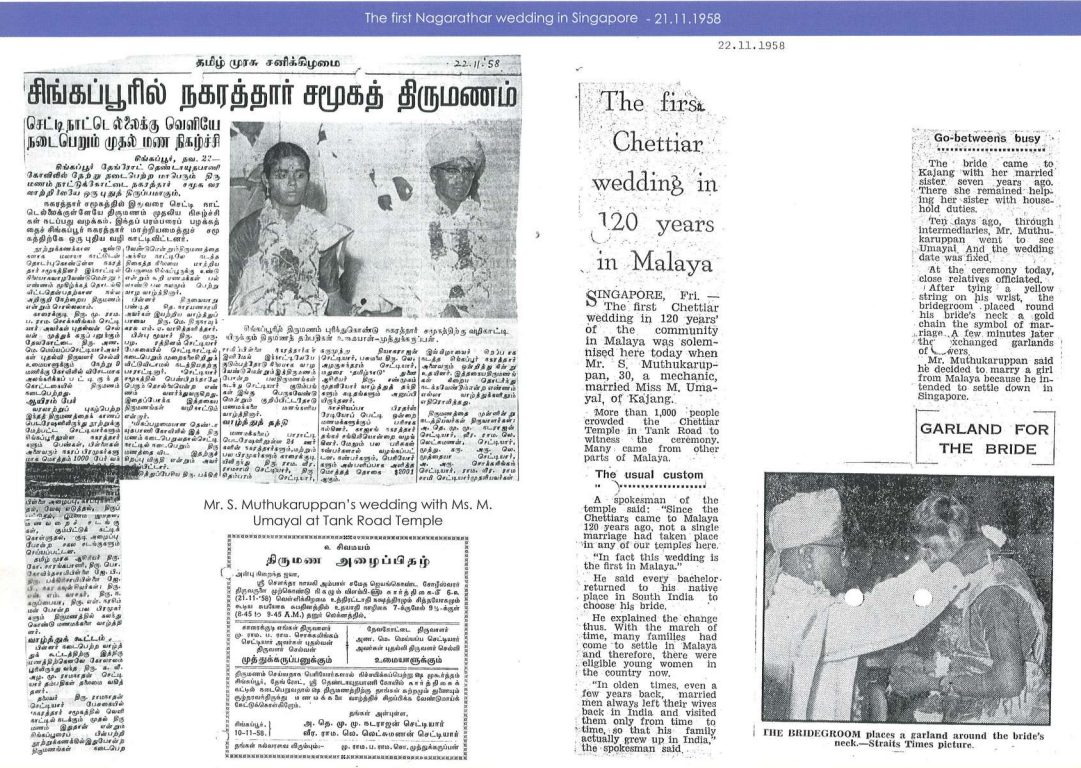
the first two marriages that were solemnized at Sri Thendayuthapani Temple, not a single
Nagarathar marriage has taken place as yet. Even if both the bride and groom hail from
Singapore, the marriage is conducted in Kuala Lumpur, Malaysia.
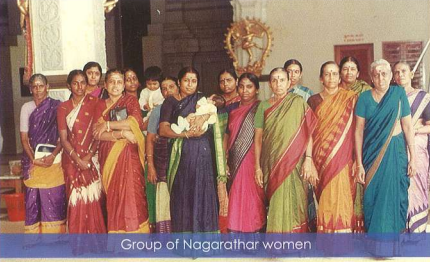
Today Indian vegetables are available around the clock but in the days of yore, they were very
rare and expensive. Only those who lived in terrace houses had access to the choice of
vegetables, such as plantains, curry leaves, and drumsticks. These were exchanged among the
women present during temple functions, especially during Karthigai. Remarkably, they were
neither attracted to nor influenced by the modern culture developing in Singapore at the time.
Such sincerity and integrity are still revered and appreciated with many Nagarathars in
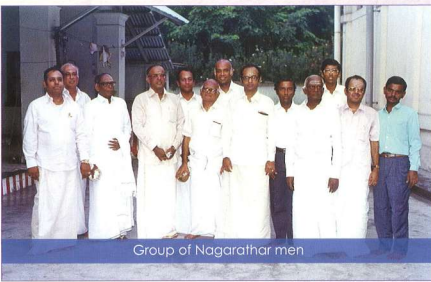
Singapore. Now, in the 21st century, many Nagarathar women are employed, and consequently more
educated and independent.
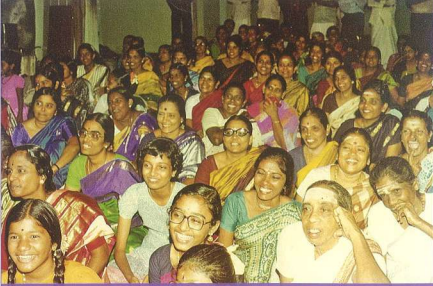
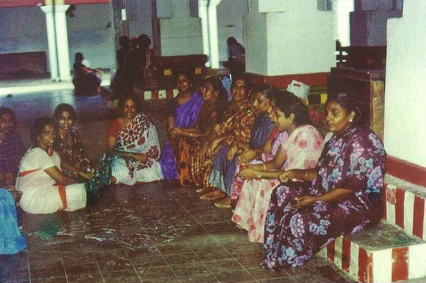
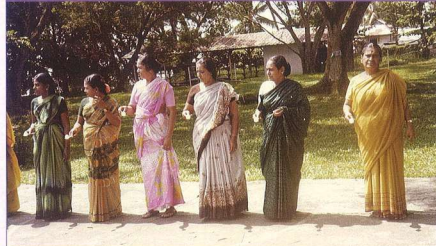
4.4 FAMILY LIFE: 1990-2010
With the dot com boom in the 1990s, more young families emigrated and there was a surge in the
population of Nagarathars in Singapore. Lacking natural and human resources, much of
Singapore's economy depends on trade. Being a young nation, not many families had inheritances
and majority of them are employed. In modern days, where sophistication and luxury has gained
supremacy, both men and women are income earners in most households. Since both parents are
employed, families either recruit domestic maids or leave the children in child care centers.
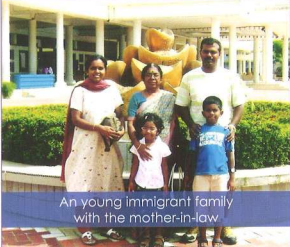
Some over-cautious parents bring their mothers or mothers-in-law over on long term visas to
stay with them till their children become more independent.
The prime meeting place for the Nagarathars is the Tank Road Temple. When one Nagarathar
appears at the temple after a long period of absence the typical query would centre on what
has kept him away from the temple activities.
Currently there are over eight hundred families living in Singapore. With flights becoming
cheaper and more frequent it is not unusual to bump into three or four Nagarathar families on
their way to India, at the airport.
Currently, at least ten Nagarathar families reside in each of the major suburban areas in
Singapore. Almost all the nine Nagarathar Temples now have representation in
Singapore.
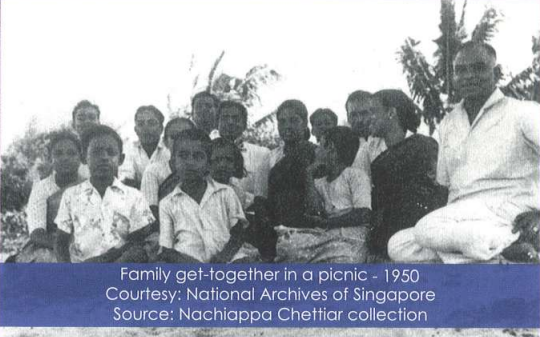
Major social activities have evolved with time and technology. The older Nagarathar enjoy
picnics and long walks as a group, while the younger generation enjoys bowling, snooker,
swimming, eating out and oversea tours.
In Singapore east meets west. Even well before its independence it had drawn people of all
countries. Thus, the Nagarathars in Singapore are fortunate to be able to enjoy the
multinational and cosmopolitan background that their country of residence has to offer in the
form of a fusion of eastern and western cultures.
The Nagarathar community still retains its religious and cultural identity in Singapore. They
actively celebrate the major Indian festivals of Deepavali, Pongal, Pillayar Nonbu and others.
The local Nagarathars have taken it upon themselves to ensure that these smaller festivals
receive their due respect and participation. It must be noted that the Nagarathar community
has, and is still playing an integral role in the maintenance of the status of Tamil festivals
and celebrations in Singapore. Glimpses of a Nagarathar marriage ceremony is also featured to
provide readers with an insight to and how tradition has remained largely unhindered.
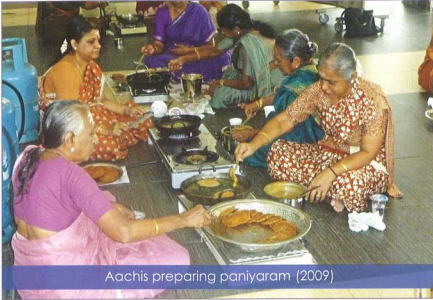
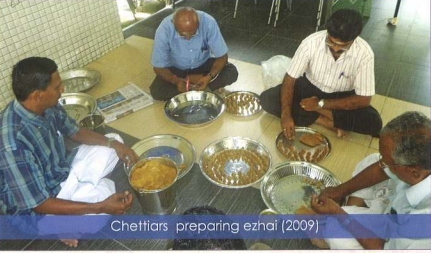
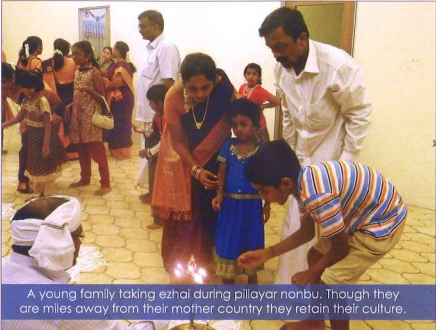
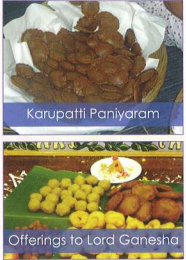
The Pillayar Nonbu is a twenty-one day fasting in honour of Pillayar or Lord Ganesha as the
deity is universally known. The nonbu begins between the months of November and December,
called the Thirukarthigai day, on the night of the full moon. On the twenty-first day, the
Nagarathars gather at the Chettiar Temple to worship Lord Ganesha. This event is organized and
conducted by the Singapore Nagarathar Association.
Offerings for this prayers include foodstuff exclusive the Nagarathar's such as karupatti
paniyaram. Ezhai is a cone shape food item made of sugar, rice flour and ghee. At the tip of
the ezhai, a thread is placed. Once the prayers are over, the older Nagarathar men will sit in
a row with a lamp lit in front of them. They will light the thread of the ezhai from the lamp
and will bless the members of each family. This is the highlight of the festival. The
expectant mothers do get an additional ezhai. Some families celebrate this festival in their
own houses.
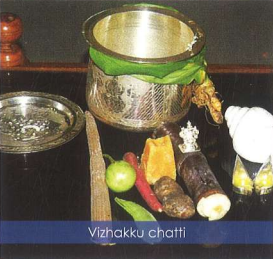
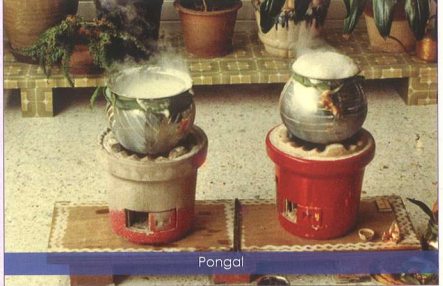
Pongal is a Tamil festival similar to harvest festival in the Western countries and it is
celebrated on the first day of the tenth month of the Tamil calendar called Thai. It usually
falls either on the 14th or 15th of January each year. Pongal means boiled rice from the new
harvest. Pongal is celebrated for four days in Tamil Nadu while in Singapore it is just
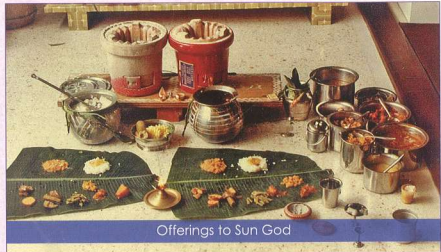
celebrated for a day. On that day, Tamil hindus cook pongal and offer it to the Sun God. The
tamilians are predominantly agriculturists and worship the Sun God. The Aachis will have a
vilakkuchatti (a vessel with lamp) in which they keep a small Vinayagar statue, small pieces
of sugar cane, coconut, banana, sugar potatoes, brinjal, long beans, yam etc. While offering
prayers to the Sun God, this vilakkuchatti will be kept with the pongal. After worshipping the
Sun God, the Nagarathars worship their family deities.
5.3 DEEPAVALI
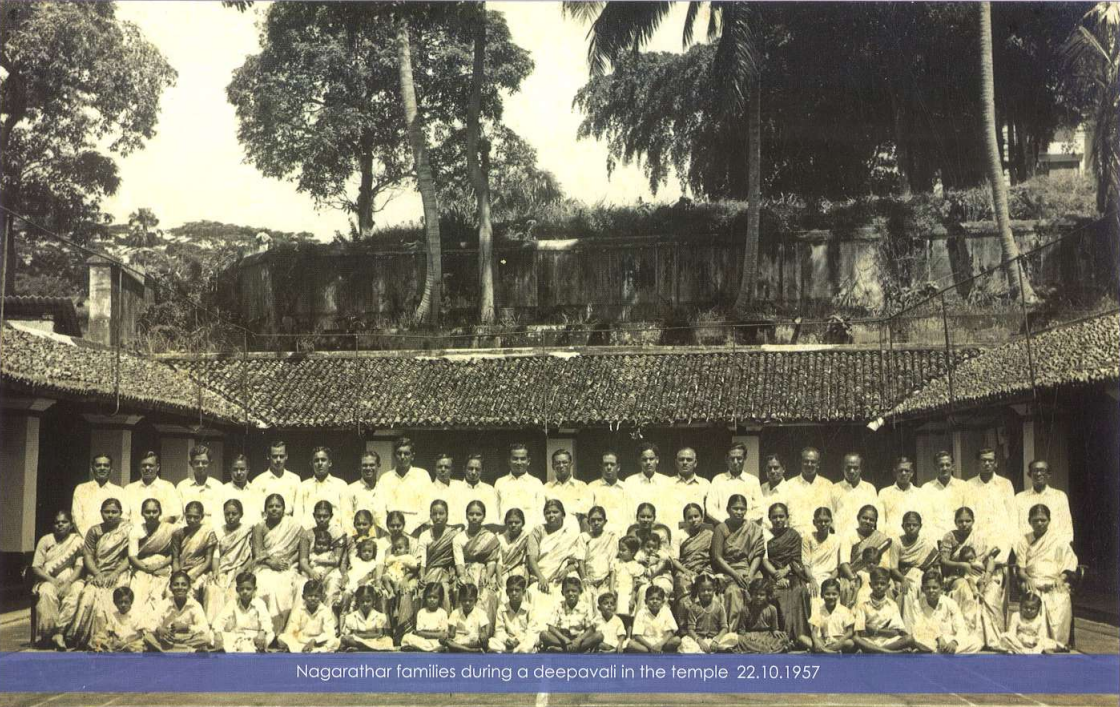
During Deepavali, families visit each other's homes and are treated to numerous homemade
traditional snacks such as theynkuzhal, murukku, mavurundai, cheepucheedai and athirasam. They
would go to the temple before noon to worship. In Singapore the Nagarathars have the
opportunity to celebrate Deepavali similar to India, as it is a public holiday. Almost all
Nagarathars do visit Sri Layan Sithi Vinayagar Temple and Sri Thendayuthapani Temple. Except
for firing of crackers, Deepavali is celebrated with great authenticity by Singapore
Nagarathars.
6.1 MARRIAGE/SASHTIAPTHAPOORTHY/SATHABISHEGAM
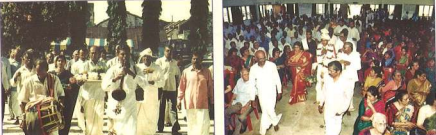
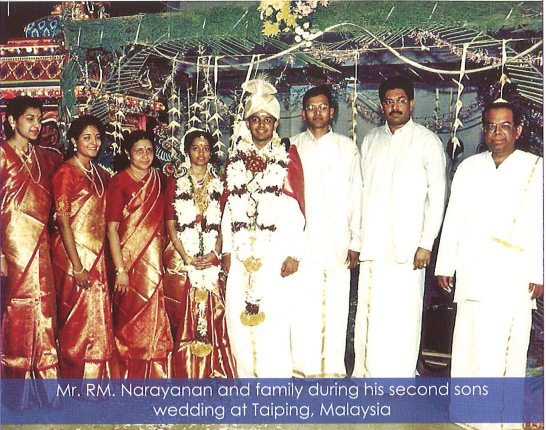
A typical Nagarathar marriage is a very traditional affair with both parties observing several customs. Most Nagarthar marriages are arranged. If the bride and groom are from the same clan temple/gotra, then the marriage will not be solemnized. Previously, Nagarathar weddings were conducted over seven days but today they are just a two-day event. These are some of the features in a Nagarathar wedding that takes place in Malaysia and Singapore:
Once the horoscopes of the bride and groom match (in some families they do not have the practice of matching the horoscope) and after they have formally seen each other, their parents will confirm the marriage date by exchanging the trays containing beetle leaves, fruits etc.
b. Kovililpaakkuvaithal (Solemnization)
Both the families have to register the wedding in their respective clan temples, three days before the wedding with all the relevant information pertaining to their families and the wedding. Then the wedding is solemnized.
c. Manai Poduthal (Setting of the dais)
This is the setting of the marriage dais. This will take place on the eve of the wedding in front of the prayer at the wedding hall.
d. Minji Poduthal (Wearing of the toe ring)
This custom of putting a toe ring on the groom by his maternal uncle takes place on the eve of the wedding.
e. Kolamiduthal, Arasanikaalkattuthal and Thumbupidithal
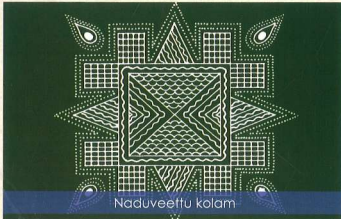
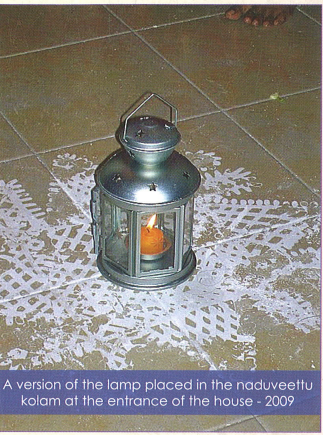
This is an exclusive kolam of the Nagarathars called naduveetukolam which is drawn by the Aachis at the entrance of the hall near the temple. The men will help erect a bamboo stick tied with papal leaves. Then a few married women will do a custom called thumbupidithal inside and outside the wall of the room in which the marriage dais is set. This thumbu is drawn in the form of a house with the help of a thread and kolam powder, indicating that couple are about to start their own family soon and assume its many responsibilities.
f. MapillaiAzhaithal (Welcoming the groom)
This literally means the welcoming of the groom which takes place on the morning of the wedding. The bride's family will proceed from the hall near the temple with a garland and other ornaments to the temple to honor the groom and welcome him and his family to the hall.
g. Bagavanam (Prayer)
This is done to both the bride and the groom separately on the morning of the wedding. Once the priest performs the Vinayagar pooja, the respective maternal uncles will tie the specially made cloth either in red or yellow color on the left wrist of the bride and the groom.
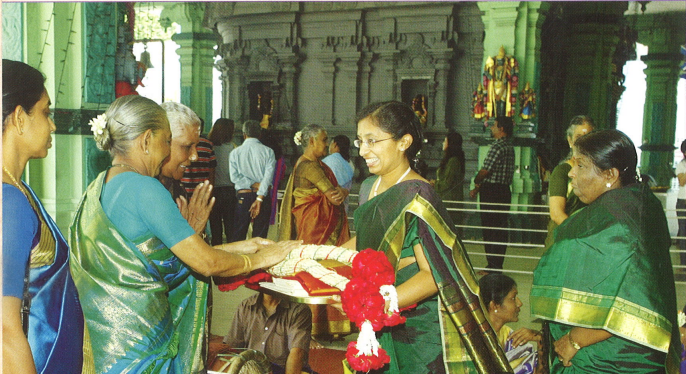
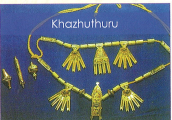
h. Khazhuthuru - Aasi vanguthal (Blessing the nuptial chain)
Before the groom ties the nuptial chain on the bride, the maternal uncle and aunt of the bride will ask for the blessings of those present, by extending the tray containing the khazhuthuru or the nuptial chains and garlands.
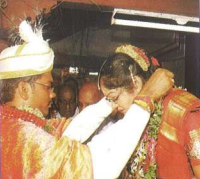
i. Thiruputtuthal (Tying the nuptial chain)
This is the main part of the wedding. The groom will tie the khazhuthuru around the bride's neck while she stands on the wedding dais and the groom remains on the floor.
j. Isai Pidimanam Ezhuthuthal (Signing the agreement)
This is the formal signing of the wedding in a traditional version of the documents called 'Isai Pidimanam' inside the prayer room by both the fathers of the bride and the groom. This will serve as the legal document of the wedding.
k. Thiruputtiasadangu
Here the mother-in-law performs a sadangu called thiruputtusadangu that signifies handing over the responsibility of the family to the new daughter-in-law.
l. Manavarai Sadangu
This is similar to the above, which is done by the sister-in-law of the bride. In this Sadanguthattu, salt, cotton, holy ash, turmeric and other things are kept in small cups.
m. Kumbittukattikozhuthal
This is when the bride and groom will get the blessings of the elders.
n. Panam Ezhuthuthal (Registration of attendance)
The families of both the bride and groom will sit separately and record the contributions of their extended families called pangalis. One of the reasons for this is to verify the attendance of the pangalis.
o. ManjalNeeraduthal
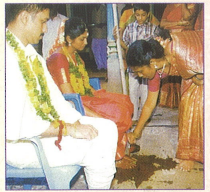
In the evening, the couple will sit on a bench and the sisters-in-law or the brother-in-law will pour yellow water (water mixed with turmeric) on the feet of the couple. Their parents will pour a little yellow water on the saree and dhoti tips of each other.
p. Kappukazhatri, kaal modhiramiduthal
Either the sister or the mother of the bride will put toe rings on both feet of the bride.
q. Pillai edukkikoduthal
The bride will get the blessings of the elders to have many children by giving them a silver thing called Kulavi in a red cloth.
r. Khulamvazhumpillaiedduthal
This will take place in the evening. There will be three pots filled with water and in one a silver doll is placed. The couple have to find the doll by joining their hands.
Other ceremonies
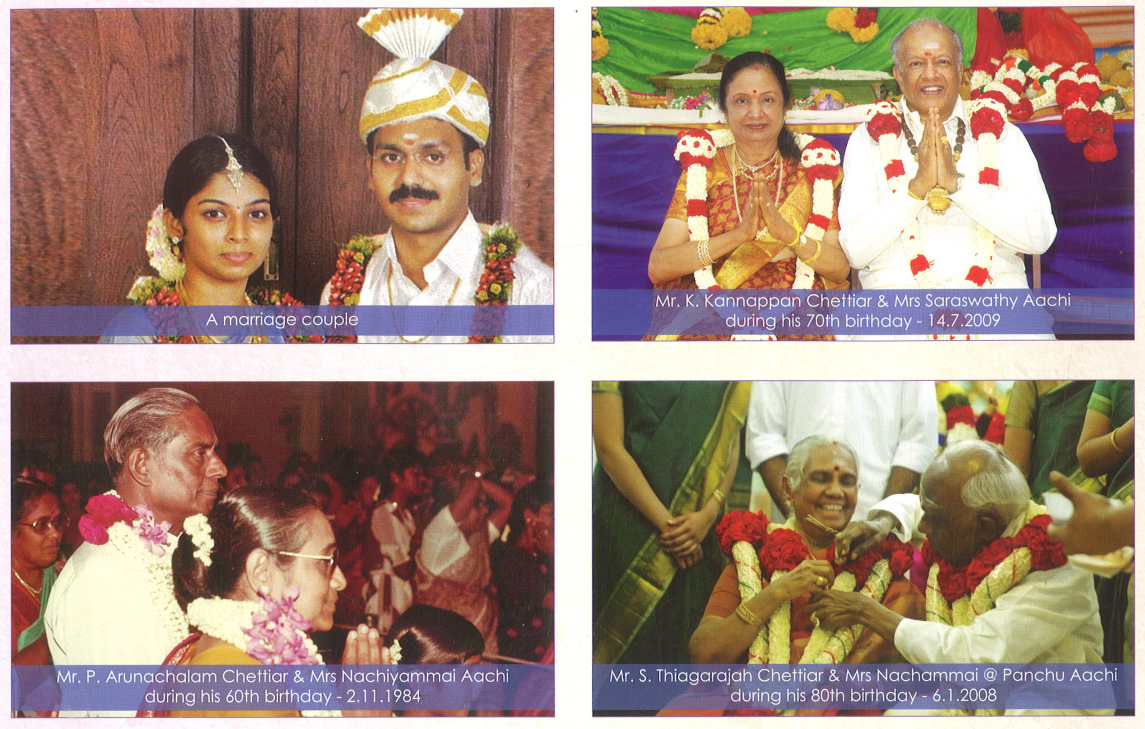
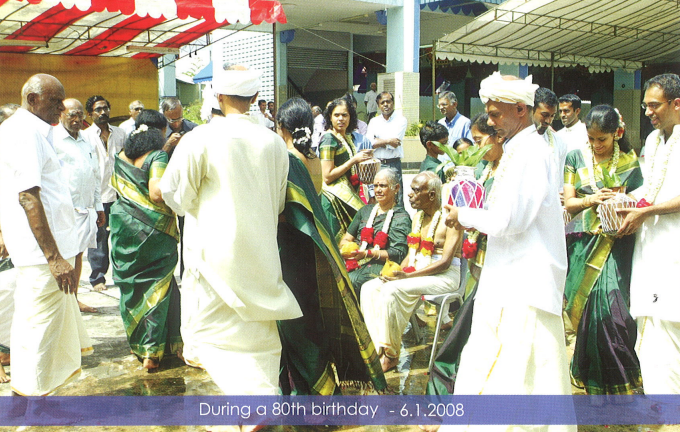
The Nagarathras usually celebrate when the man reaches his sixtieth birthday (sashtiapthapoorthy) and his eightieth birthday (sathabishegam). These functions are celebrated in the temple. The men will wear gowrisangam and the women wear khazhuthuru during these functions.
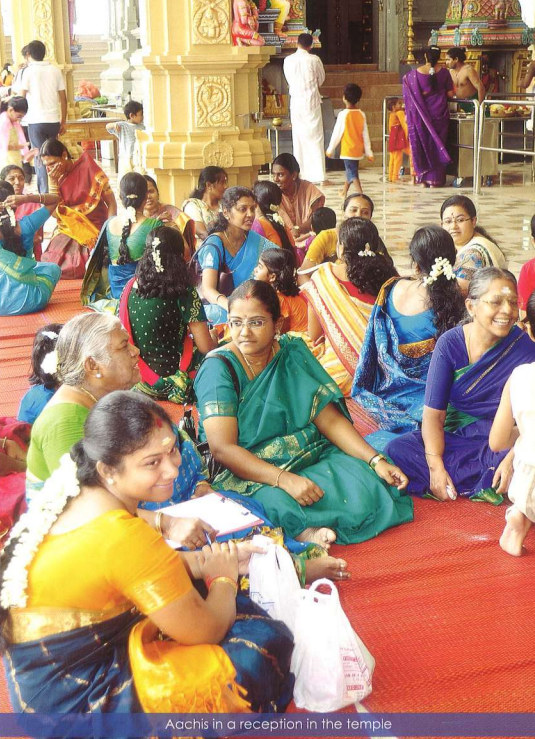
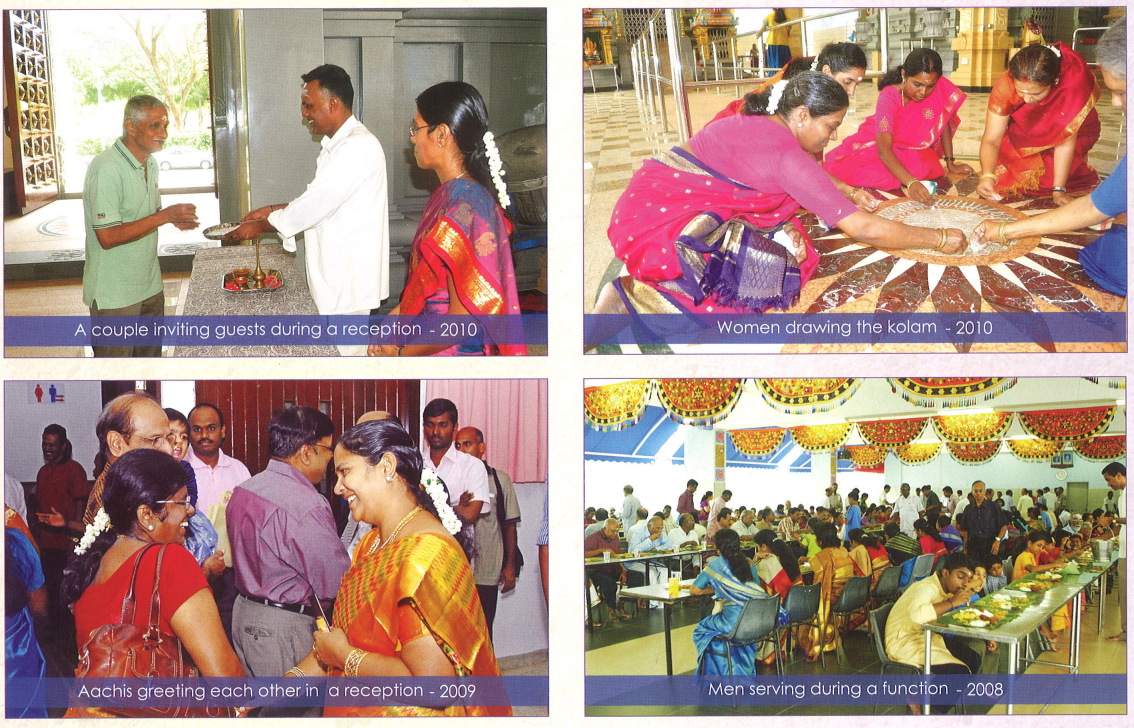
Receptions are conducted in the temple alongside the worship of Lord Muruga with special poojas such as Shanmuga archanai. Invitations are sent out to all the Nagararthars. All the Aachis will help with the kolam (decorative rice flour patterns on the floor) and stringing of flowers while the men help to serve food. It is a usual custom to blow the sangu during all the occasions of Nagarathar families.
6.2 HOUSE WARMING AND OTHERS
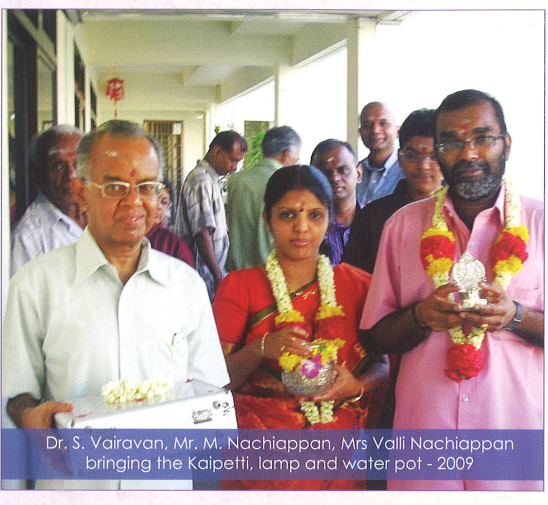
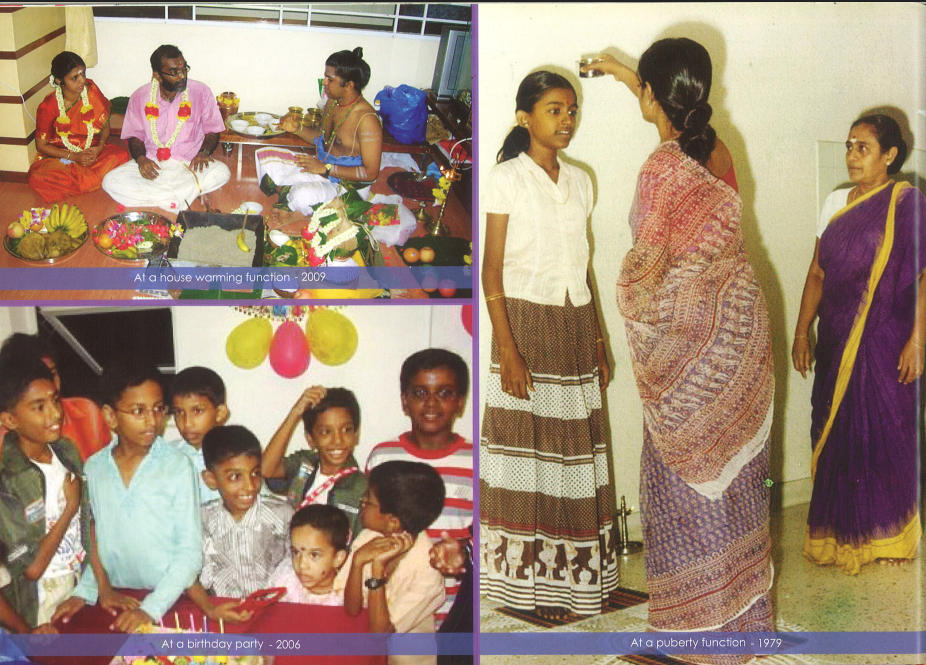
Within a year or two of their arrival in Singapore, the Nagarathars are usually able to afford a house in Singapore. Invitations will be sent out for the house-warming ceremony. A sumptuous meal will be also served. The house warming commences with a prayer of Ganapathi homam or prayer of Lord Ganesha. The new owners will enter the house carrying with them the money box (kai petti), lamp, water pot and groceries with them.
In the Nagarathar funeral, the deceased is cremated and not buried. The holy ashes will be dissolved in river or sea water. The Nagarathar Association Singapore informs the members of the funeral through SMS and E-mail. All the Nagarathars make it a point to visit the family and extend their support physically and morally. The clan Temple members substitute their relatives especially, when the extended family cannot make it from India. The families do visit India within a year to mourn the family member's death.
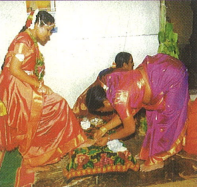
There are also birthday parties, celebrations at the attainment of puberty and many others. Parents and in-laws fly over to Singapore to participate in these ceremonies and celebrations. Whether they celebrate a newborn or mourning a death, the rites and rituals remain very traditional among the Singapore Nagarathars.
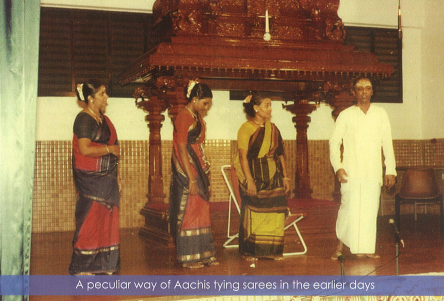
In the early days in India, the Nagarathar men wore dhotis only and had no shirts on. When they moved far off from Chettinad, they started to wear western clothes such as shirts and pants to keep up and integrate with the other races. Similarly, it was not a practice for women to wear blouses. Later, they started to wear blouses but the way they tied their sarees was different from other Indian ladies.
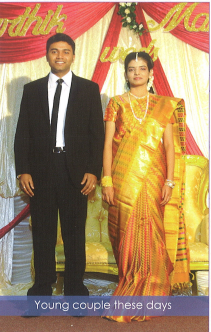
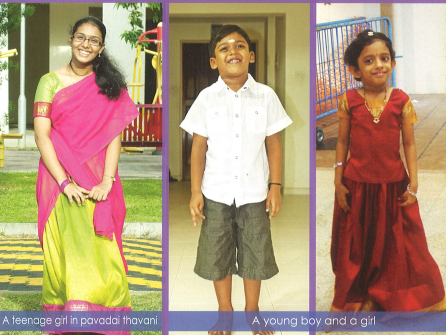
Young girls who reach puberty wear an attire called pavadai and thavani. Today the Nagarathar women wear all kinds of clothes, most common of which are the churidhars or Punjabi suits and western clothes especially among the younger generation.
Young girls who reach puberty wear an attire called pavadai and thavani. Today the Nagarathar women wear all kinds of clothes, most common of which are the churidhars or Punjabi suits and western clothes especially among the younger generation.
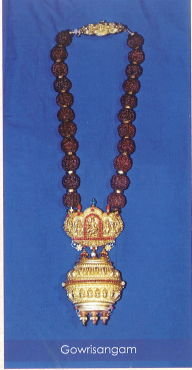
There are some exclusive Nagarathar jewelleries such as khazhuthuru, the string of nuptial chains tied by the groom around the neck of the bride on the wedding day, that signifies that they are married. There are other exclusive Nagarathar jewels such as two rows of stud (irettaivarisaithoodu), mangalacharam, gowrisangam and ruthratcham.
Gowrisangam is an ornament made up of Rudraksha bead believed to represent Lord Siva and his consort. Wearing Gowrisangam manifests Nagarathars' strong belief in Saivism.
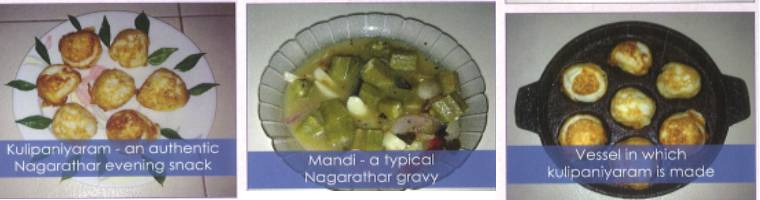
There are many Chettinad restaurants abounding in Singapore. Nagarathar cuisine is world renowned and the Singapore Nagarathars are not an exception. Even during casual visits, they are treated to delicious food items. With all Chettinad ingredients available in Singapore, it is possible to get authentic Nagarathar food. Hence the Nagarathars are not deprived of the Chettinad food items, though they are miles away from their mother country. The Nagarathar diet is well balanced and tasty.
8.1 NAGARATHAR ASSOCIATION (SINGAPORE) (ROS 135/RAC)
A community needs an 'Association' to bring people together. Visionaries in the community saw
the need for the formation of such an association for better co-operation among its members
and to organise community based activities.
Thus, in 1980, the Nagarathar Association of Singapore, a non-profit organization, was formed
informally with a view to enhance social harmony. Mr. Veerappa Chettiar of Venthampatti was
the first President. The association is an antidote to loneliness and home sickness. Initially
the association conducted only few activities like the Pillayar Nonbu and Aachimarubayam. On
30th May 2002, the association was formerly registered. It still functions under the Temple
address No: 15, Tank Road, Singapore 238065 with the E-Mail address singainagarathar@gmail.com, and their website
address is www.singainagarathar.com.
In the first week of January each year, a new committee is elected to take charge of the whole
year's activities. Each committee has a formal structure that consists of a President, Vice
President, Secretary, Assistant Secretary, Treasurer, Assistant Treasurer and Committee
Members. Monthly meetings take place among the committee members, to assess developments and
plan future events.
The address book, collated and published by the association and updated at appropriate
intervals, carrying the address, phone number, e-mail address of the registered members, is a
valuable guide, present in almost all the Singapore Nagarathar households. It also has other
comprehensive information about the members.
Earlier a quarterly news letter was circulated. Now the publication is in the form of a book
called 'Singai Nagarathar Malar' which is mailed to registered members once in three months.
It carries reports on the association's events and information on upcoming activities, as well
as announcements of births, attainment of puberty, marriages, deaths and others. Thought
provoking articles, great recipes, stories and poems are also featured.
The member's are also informed about the activities through mass SMS and e-mail. During
emergencies, like a death, the association carries out an important service by informing
members of the community and swiftly gathering the community together to help or to carry out
the rituals.
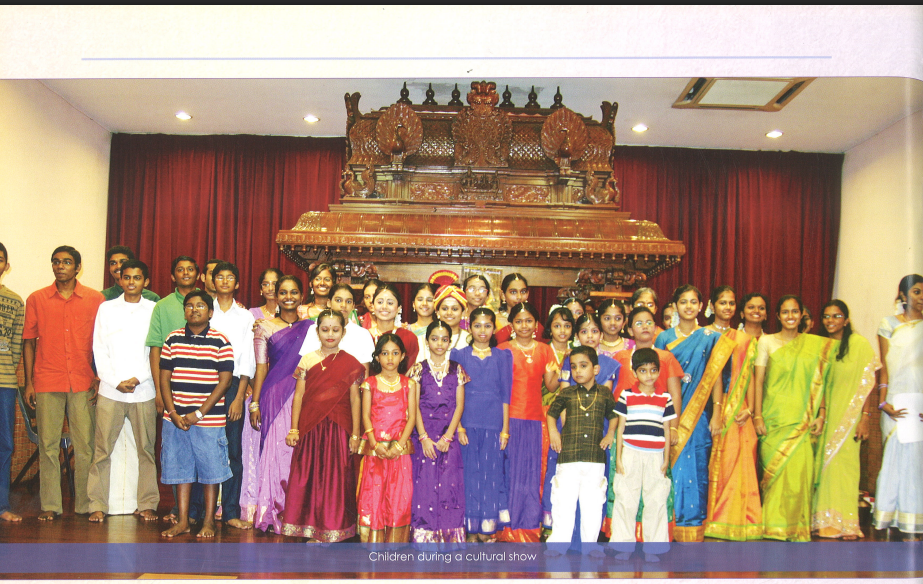
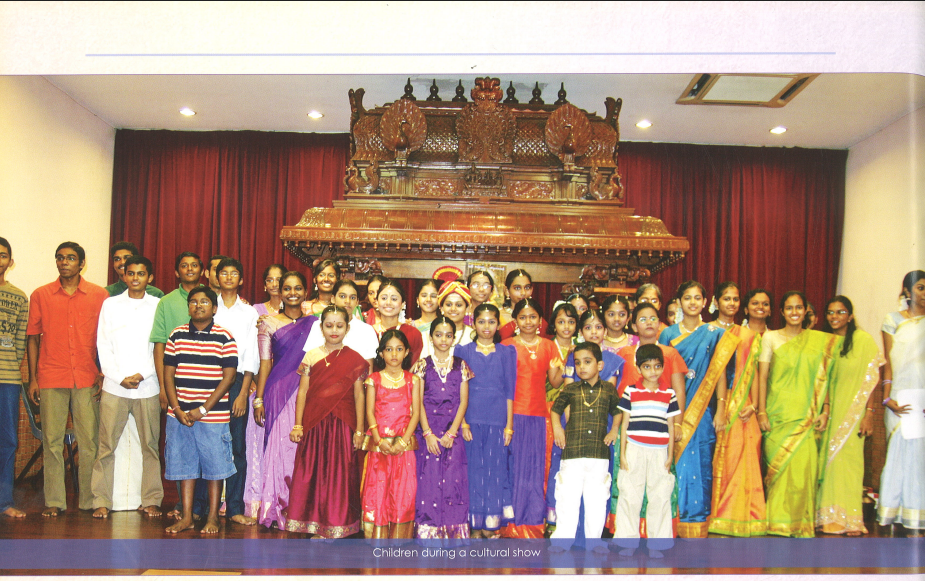
Cultural Show
A cultural show, a picnic and Pillayar Nonbu are some of the events that are eagerly
anticipated every year. The cultural show is usually an evening program that serves as a
platform for the young ones to exhibit their talents. There is such a continual surge in
participation that the committee has had to start the programme in the afternoon itself to be
able to end it on time.
Many new faces appear during such events—a clear indication of the increase in the Nagarathar
population! Parents are more enthusiastic than the young ones as they show more interest in
their children's performance. They are always on the look-out for new items to outperform the
rest. Cultural programs help bring out new talent and build confidence in the participants.
The children charm the audience with all forms of art such as music, dance and drama.
Picnics
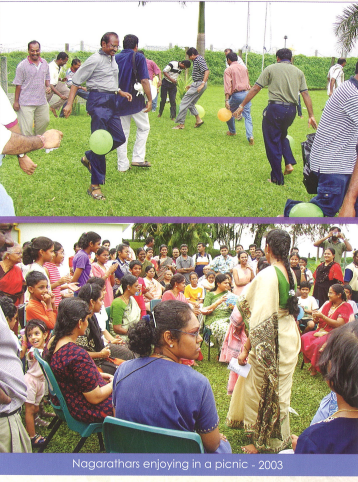
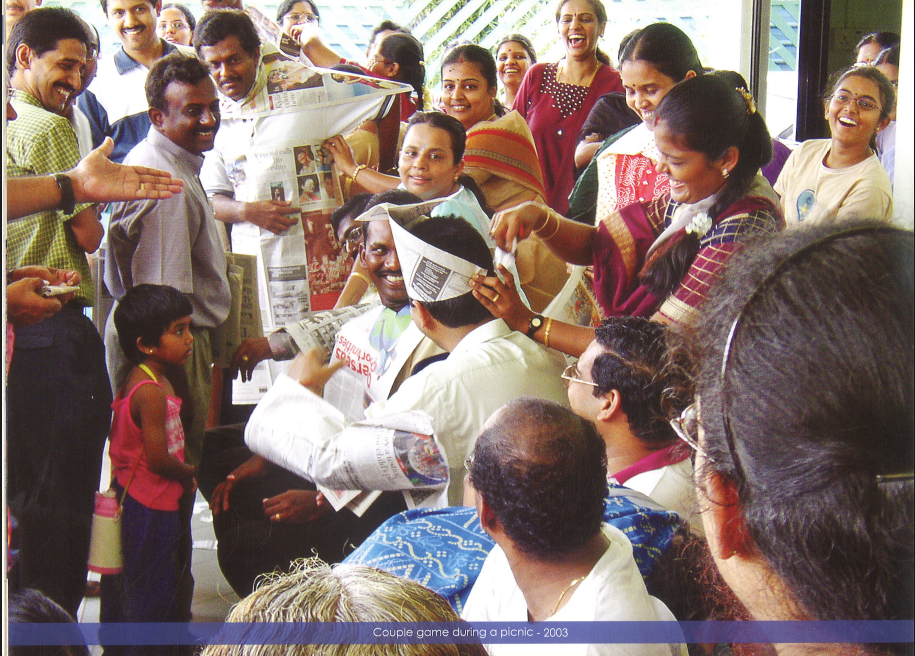
Picnics are whole day events that provide an opportunity for all age groups to play, relax and
to win prizes! Each new committee comes up with new and refreshing games for different age
groups from nursery children to senior citizens. The grand finale comes in the form of a lucky
draw, where top winners receive gold, air tickets or electrical items.
Others
Some programs, like a funfair or an overseas tour vary from year to year depending on the
convenience of the committee. They also help promote Tamil literature by conducting literary
functions. The women get due attention as some committees conduct 'Women's Day' with
programmes exclusively for women.
The association serves as a platform for people to share ideas and maintain interest in and
uphold the values of the community. Since the immediate family is back in India, these
associations can help bond the community into a supportive family.
It also creates a platform for more get-togethers and introduction to a pool of talent,
which eventually motivates people to venture into new areas about which they would have been
ignorant. They also get to know about community news back in India, about sales, events and
other entertainment on the island. The Nagarathar Association of Singapore is an active
organisation that serves its community through helping it unite and maintain its
culture.
8.2 SPORTS COMMITTEE
Apart from the Nagarathar Association, Singapore, there are other committees that bring
together people with similar interests. One such is the sports committee that was founded in
2006. After a trial period and based on the good response to the games, the 2008 AGM of
Nagarathar Association Singapore decided that a separate sports council be set up to help
the Nagarathar Association, Singapore to handle sports activities.
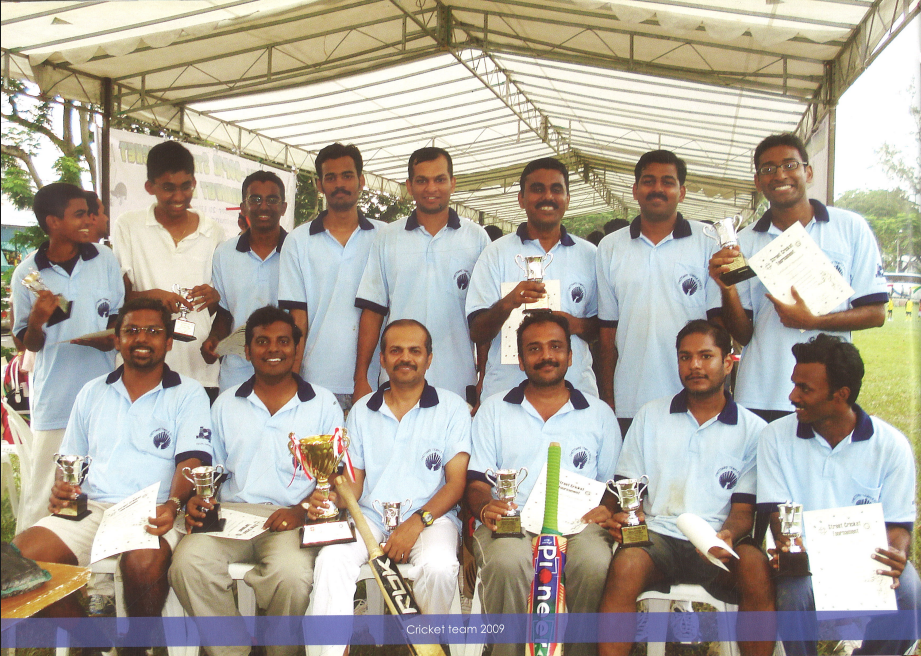
This committee aims to foster community bonding through the promotion of sports for
Nagarathars in Singapore. It organizes sports activities such as cricket, carom, badminton
and chess tournaments. Other than conducting competitions among the Nagarathars, it has
embarked on a chess training program for the children.
Overwhelming response to its activities has encouraged the committee to venture into new
games, as it has plans to rope in all segments of people into sports. It plans to introduce
bowling for ladies, street soccer for adults etc. It hopes to create awareness about all
sports among the children in the community and to identify talented individuals.
The Sports Committee is earnest in its goals to encourage people to lead a happy and healthy
life through sports activities.
8.3 EDUCATION CENTRE
Nagarathars wanted to tap into the potential of young Nagarathar IT professionals to educate
their members. Sri Thendayuthapani computer centre began functioning on 1st May 1996, with a
group of 12 young IT professionals.
Its students came from all age groups. The centre acquired several computers and the
earliest courses included training in basic and advanced computer related courses. With the
growing popularity of Information Technology, the centre conducted IT road shows in 2000 and
2001 with the help of vendors and volunteers. They also managed a library of educational CD
ROMs and books for a few years.
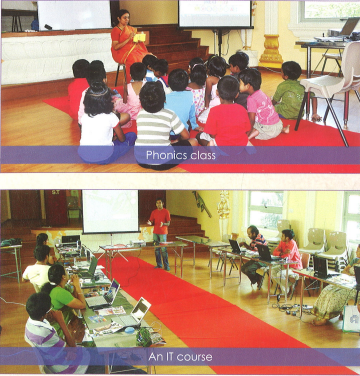
With the growing popularity of computer networking and the Internet, the centre installed
local area networking and conducted Internet related Courses. With the potential for IT
courses reaching saturation, the focus changed and the centre has revamped into an education
centre called Sri Thendayuthapani Education Centre (STEC) rather than just an IT
centre.
The change in direction led to some special courses and seminars like:
- Project Management
- Conversational Chinese and Malay Courses
- Seminars on Shares, Investments, Property in Singapore and India
- Arts and Crafts making
- Phonics for pre-school children
- Tamil classes for Primary and Secondary students
- Arts, phonics and general knowledge seminars
- Educational Tours for Children
The STEC's volunteers have also been maintaining the Chettiars' Temple Society's website http://www.sttemple.com for the past 10 years. They
have made the web so comprehensive, informative and colourful over the years that it
attracts thousands of viewers worldwide. Its volunteers took care of live webcast of
Consecration Functions at Sri Layan Sithi Vinayagar Temple in 2007 and at Sri
Thendayuthapani Temple both in 1996 and in 2009.
Besides educating its members and maintaining the temple website, the volunteers lend a
helping hand in maintaining the computers and software applications at Sri Layan Sithi
Vinayagar & Sri Thendayuthapani Temples.
The centre is proud that some of its students have become professionals, thanks to its
benevolent service. Currently courses are ad hoc. The commendable non-profitable service of
the centre began entirely on volunteer support and remains so till today. The volunteers
embody the belief that "education is a godly service" working towards a bright future for
everyone concerned. Prof. Regupathy Subramaniam was the first Adviser. At present Mr. K.
Kannappan is the Adviser.
8.4 THONDAR KHUZHU (VOLUNTEER GROUP)
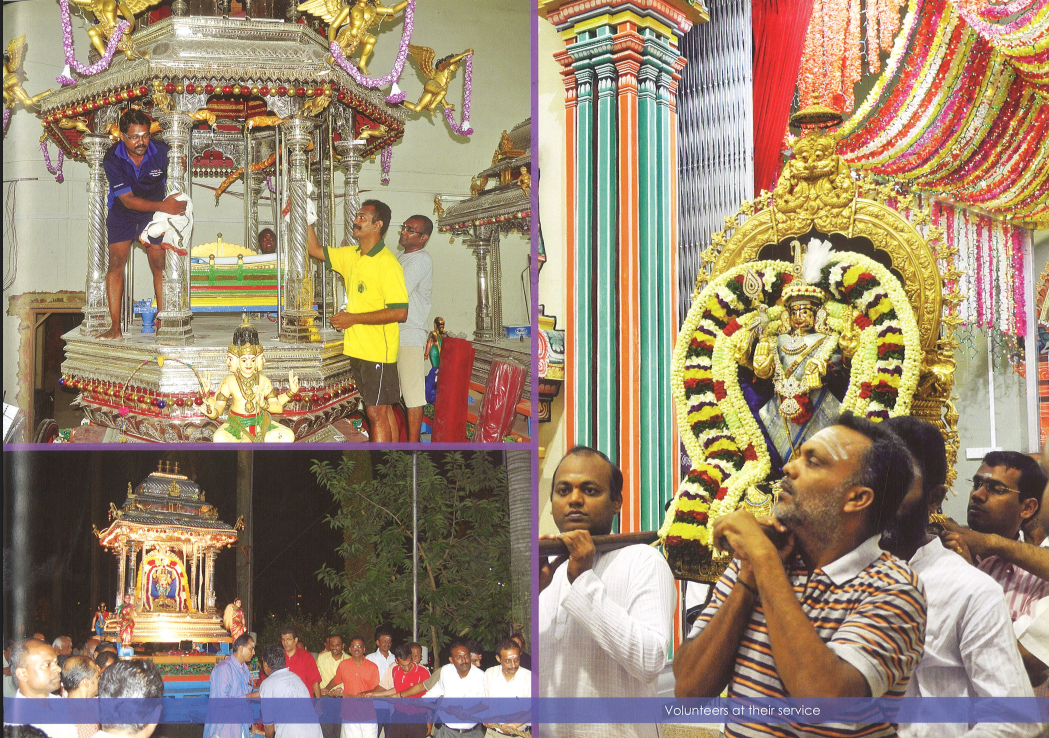
In 1983, the shortage of human resources during the Sri Thendayuthapani Temple Consecration
ceremony, led to the formation of a thondarkhuzhu. Its primary function was to carry
essential material for the construction of the Raja Gopuram, the temple tower. The team
functioned effectively during the consecration ceremony and consequently was an invariable
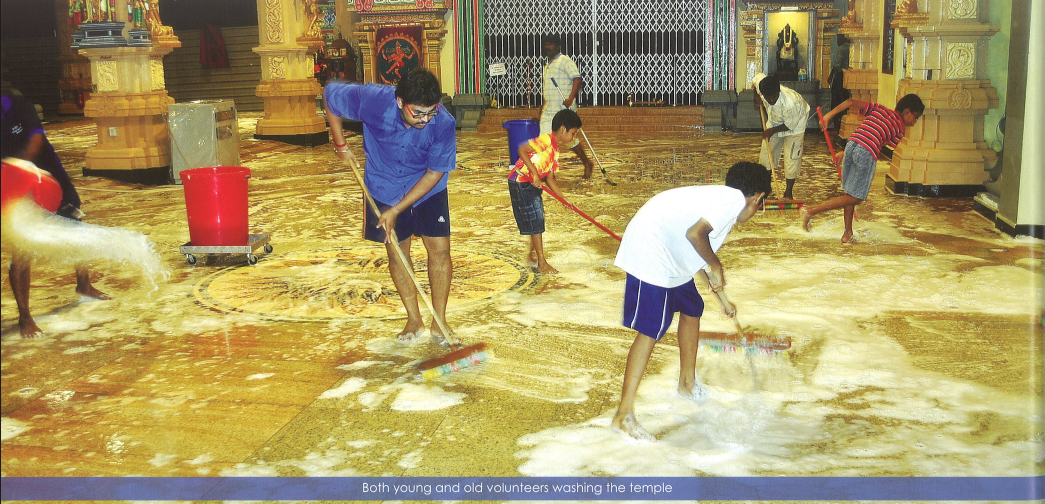
choice for the weekly cleaning of the temple. The thondarKhuzhu lives up to Singapore's
principle of cleanliness, doing an exceptionally great service keeping the Sri
Thendayuthapani Temple and Layan Sithi Vinayagar Temple clean, washing them every week and
fortnightly respectively.
From a team of thirteen it has now grown to over 150 members over twenty seven years. Their
volunteer service begins with English New Year on which day they carry out the upayam at Sri
Thendayuthapani Temple. It has been the tradition since 1985.
They do more than just clean the Temple. Their service includes maintenance of the Silver
Chariot, kavadis and Vahanams (Carrier for God) in the temple. They also conduct group
prayers on the third Friday of each month. Yet another of their services involves preparing
mini-packets of vibuthi (holy powder) to be offered to devotees who perform archanas at the
Temple.
During major festivals, when huge quantities of food have to be prepared, they are an
invaluable help in chopping mounds of vegetables and in serving food. During Thaipusam they
assist in each and every segment of the festival. They also bear the Lord Thendayuthapani
around the perimeter of the Temple during the festival season.
The ThondarKhuzhu is steadfast and tireless in its services to the Temple and the
community.
Nagarathars are known for building Hindu Temples throughout India after the Chola period.
This feature was praised by the Holy saint Shankara Charyar of Kanchi. Nagarathars followed
the same in Southeast Asian Countries such as Singapore, Malaysia, Vietnam, Burma and Sri
Lanka.
The Chettiars' Temple Society has under its jurisdiction the management of the Sri
Thendayuthapani Temple and Sri Layan Sithi Vinayagar Temple. According to the rules and
regulations of the constitution of the society, members of the management committee are
elected unanimously at the Annual General Body (AGM) meeting that is held the next day after
Thaipusam every year. According to the Tradition of Nagarathars, it is called Magamai
Koottam.
During the magamaikoottam, a trustee is nominated to manage the Sri Layan Sithi Vinayagar
Temple and Sri Thendayuthapani Temple for the year. This system originated and worked well
during the time when few Nagarathars were doing their business at the kittangis. This kind
of management system is a very ancient one. Every month a meeting is held among the members
of the Management committee and major issues are discussed and resolutions are made. A
Nagara koottam is also mandatory. They follow the conventional method in registering the
details of the magamai. Magamai means the financial contribution of the business firms or
individuals to the Temple annually. The list of donors will be read with their contribution
in the AGM.
Nagarathars are known for their management skills. There is a Management Committee
consisting of President (Karbar), vice president, treasurer, assistant treasurer, secretary,
assistant secretary and others.
Any Nattukottai Nagarathar above 21 years, who is the citizen or PR of Singapore and who has
not been declared bankrupt and who legitimately belongs to one of the nine clan temples is
eligible to become members of the society. The exchange of the Management takes place in
front of Sri Thendayuthapani.
Apart from the Temple activities, it also aims to promote the educational, religious,
spiritual, moral, cultural and social interests of members and their families and others
associated with the society. Their objective is to serve society by organizing religious and
charitable activities for the public in general, particularly for the underprivileged and
poor. They also participate in activities at the National level to promote the general
well-being of all communities in Singapore.
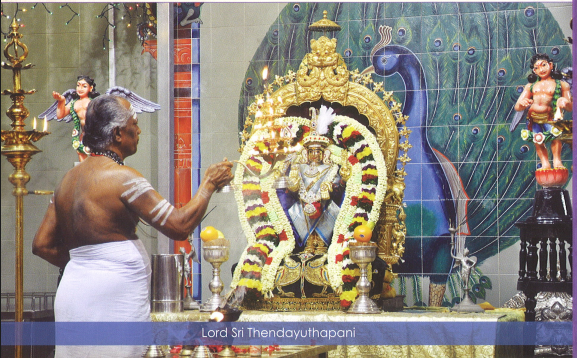
Traditionally, Nagarathars are saivites, one of the main divisions of Hinduism. The supreme God of the Saivites is Lord Siva. All their nine clan Temples are Siva Temples. According to Agamic Tradition, the rituals for the Siva Temple will be carried out by Brahmin Priests. As the Brahmins were prohibited from crossing the sea, they built temples for Lord Muruga known as Lord Thendayuthapani. Thendayuthapani means a deity with the 'Thandam' (spear), as a weapon. Their traditional attachment to the Muruga Temple at Palani encouraged them to build Murugan Temples in overseas countries to which they migrated. Accordingly, Nagarathars in Singapore too constructed Sri Thendayuthapani Temple.
9.1.1 Construction History
This Temple is located at No. 15, Tank Road, Singapore. The stone slabs of the Sri
Thendayuthapani Temple can be traced back to 4.4.1859. The principal deity in the Temple is
Lord Muruga also known as Sri Thendayuthapani.
Initially the Nagarathars worshipped a vel (spear) installed under a tree on the banks of
the river. In 1859, they constructed a temple for Lord Thendayuthapani. The first
consecration ceremony took place on 4-4-1859. The subsequent consecrations took place on
2-2-1936, 7-7-1955, 24-11-1983, 29.11.1996 and 27.11.2009 respectively.
The structure of the temple was very different then. Flanking the main sanctum were Jambu
Vinayagar and Idumban. At the front were halls on sides as well as an alangara mandapam,
artha mandapam and karuvarai similar to that found in traditional Chettinad houses in India.
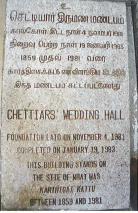
From 1859 to 1981 there was a hall called 'karthigaikattu' where anna dhanam (free meals)
was served during the Karthigai festival and Thaipusam.
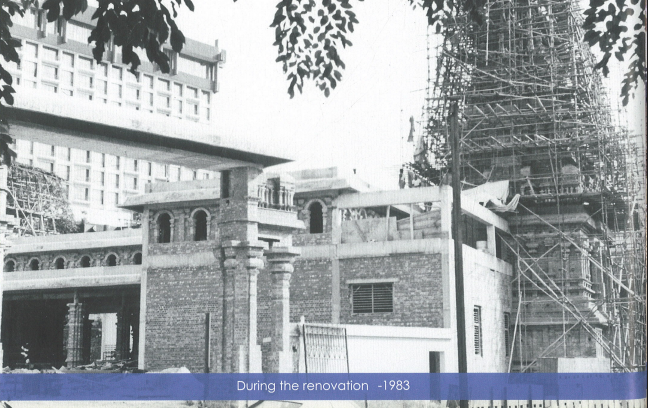
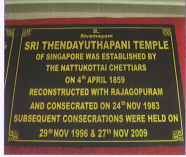
The Nagarathars, desirous of worshipping Lord Siva too, erected a second temple in 1878,
next to the Sri Thendayuthapani temple, housing a Siva Lingam incorporating the power of
'Lord Shiva' and his Sakthi 'Umayammai'. This temple's consecration took place on 26-1-1886.
Lord Shiva was worshipped under the name of 'Chockalingam' and 'Sundareswarar' and his
consort by the name of 'Meenakshi'. Since the Nagarathars hail from the Pandya Kingdom, it
was a practice to name the deities after those in Madurai Temples. At present the God and
Goddess are housed in separate sanctums.
The Thendayuthapani temple was reconstructed in 1983, housing Lord Siva and his consort
within the same premises. A double-storey 'kalyana mandapam' (Wedding Hall) replaced the
karthigaikattu around 1981.
The air-conditioned wedding hall with the imported Indian wedding dais can accommodate about
five hundred people. It is a multipurpose hall, serving the public at large in many ways.
Additions included a rajagopuram, a library, an Alangara Mandapam, an office, ample space for
circumambulation, and car park facilities.
During the year 2009-10, the temple was renovated again with an additional storey to
accommodate the temple staff and other modern facilities such as lifts etc.
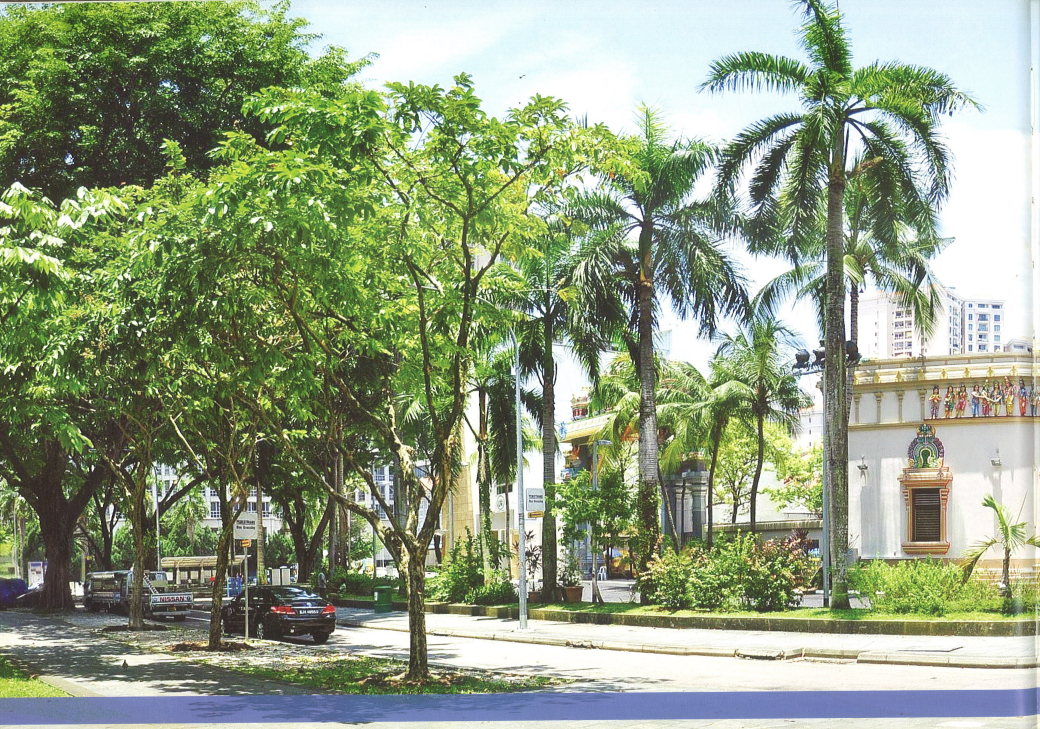
This temple is situated in the centre of the city, in Tank Road, between Orchard Road and River Valley Road. There are two reasons given for the origin of the word Tank road. It may have been derived from the pond (referred to as a tank) opposite the temple. The other reason is that the Malayan Railway Station was situated here and the tank nearby supplied water for the trains. Sources indicate that the Nagarathars purchased this land from the East India Company in Spanish dollars that was in use then. This temple is well connected to all parts of Singapore through excellent public transport. One of the top tourist attractions, the Singapore River, is close by.
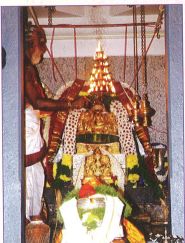
Thendayuthapani temple can be perceived as a merger of two temples — Thendayuthapani Temple
and Sivan Temple. The prime deity, Lord Thendayuthapani, is in a 'vel' form, with the image
of the Lord embossed in gold, evoking a vision. This is one reason why there is neither a
peacock statue nor a 'palipeeda' facing the deity unlike other Murugan Temples. Within the
sanctum is an Imbun Muruga statue which is the 'Urchavar'. The daily abishegams are
performed behind the screens only for the 'Vel'. Devotees can watch the abhishegams only at
Maha Sivanrathiri and on the day of the annual abhishegam (varushaabishegam).
The small sized Jambu Vinayagar to the left of the main sanctum is made of copper. Every
morning this deity is taken inside the main sanctum and given its abhishegam along with the
vel before being brought back for the pooja 'daily worship'. Usually, the very first pooja
is offered to Jambu Vinayagar. To the right of the main sanctum is Lord Idumban.
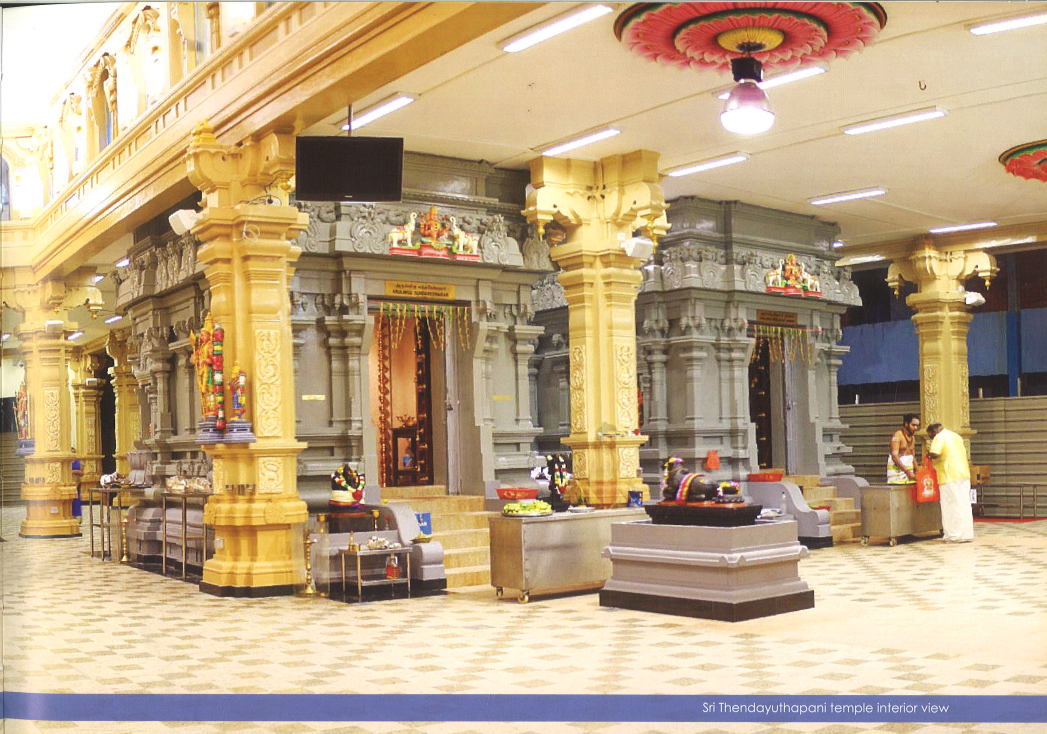
As we saw earlier, there are two separate sanctums — one for Lord Shiva in the Linga form
and another for Goddess Meenakshi. There are other statues for different deities, too.
According to Hindu principles, the poojas are performed by Brahmin priests for the above
Gods and Pandarams conduct poojas for Lord Vinayagar and Lord Thendayuthapani.
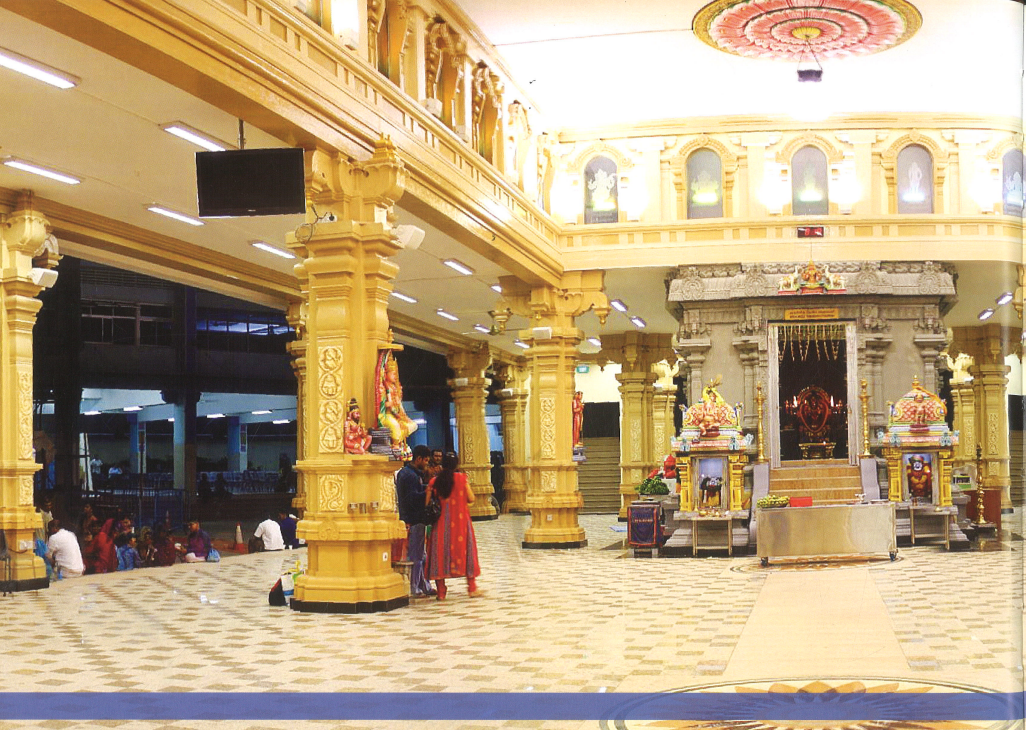
Sri Thendayuthapani Temple with its beautiful architecture is one of the biggest Murugan
temples in South East Asia. It was designed by architectural exponents from India in
compliance with the Hindu sculptural principles. It has a rajagopuram, vimanas, beautiful
sculptures and a wedding hall.
The five-tier rajagopuram measuring 75 feet high and 34 feet wide is representative of the
beauty of the Temple. Another unique feature of the temple is the Sivan Sanctum shaped like
an elephant's back unlike the typical square. The six Murugan deities featured in the six
pillars of the temple, representing the 'Aarupadai Veedu' — 'Six abodes of Murugan' in
India.
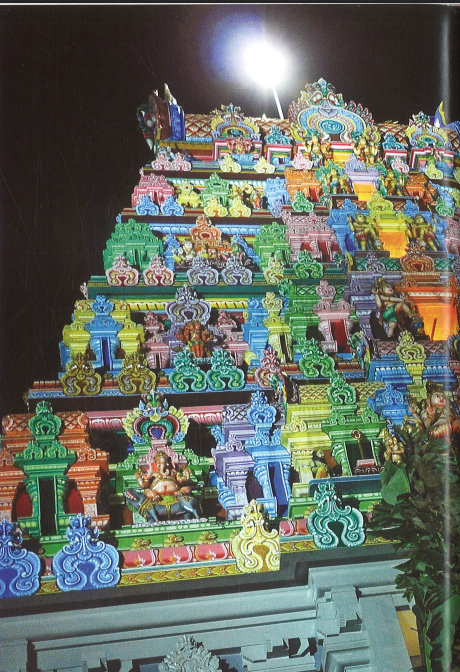
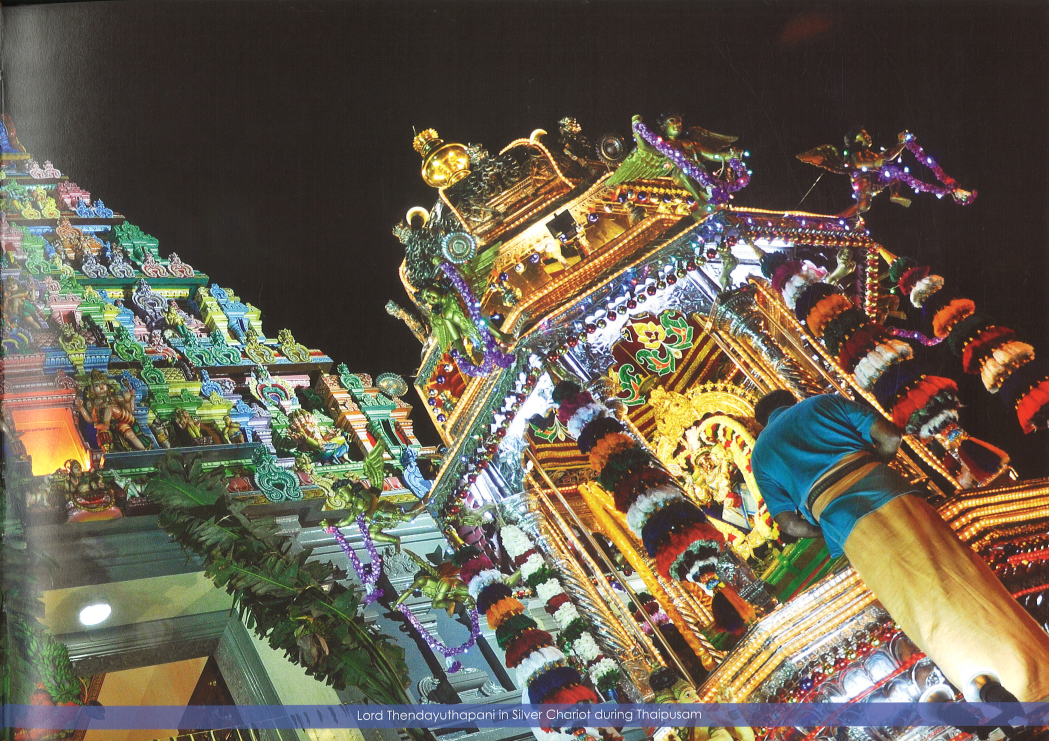
Moreover, the images of Gods engraved in the forty eight windows at the vimanah, add to the beauty of the Temple. These opaque glass images glow both in the day and the night creating a divine aura. The Alangara mandapam is yet another testimony to temple art and architecture, as it has many dance poses of Lord Nataraja.
9.1.5 Thaipusam and Other Festivals
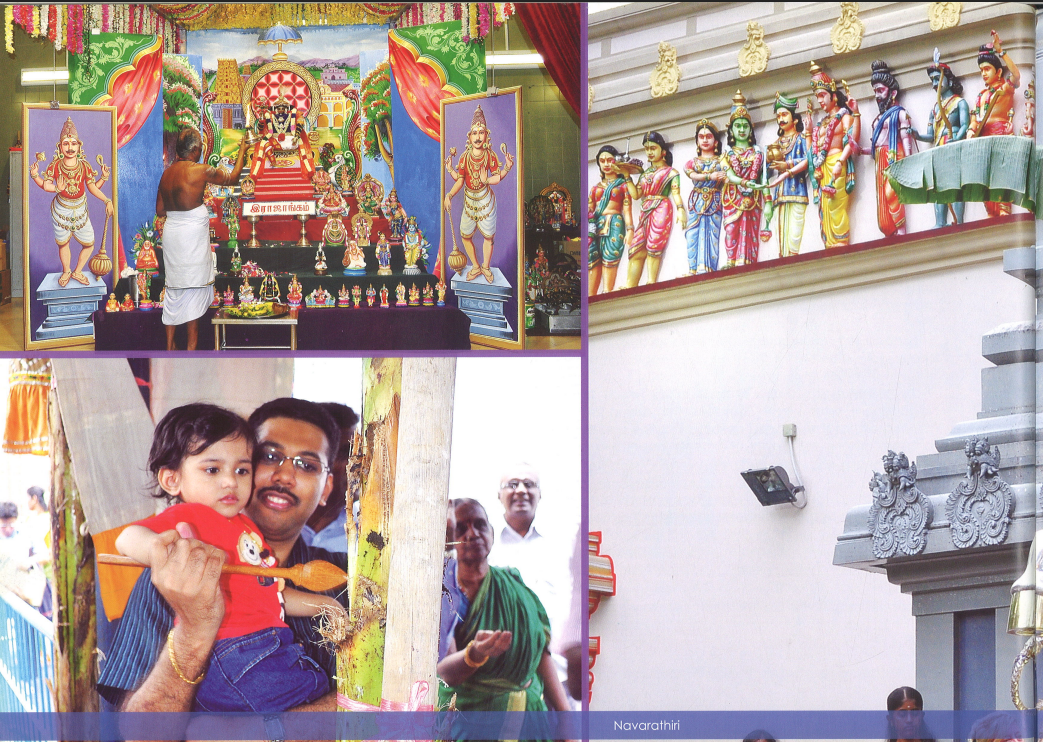
Thaipusam and Navarathri are the two most important festivals celebrated in the Temple. If
there is one single most important festival that distinctively marks the Nagarathar
community as one of the most respectable within the Singapore Hindus, it would have to be
Thaipusam. It was introduced by the Nagarathars in Southeast Asia during the nineteenth
century. Singai Nesan, a journal dated 6 February 1888, describes elaborately the Thaipusam
festival of Singapore during that period. It has been the tourist attraction in Singapore
for many decades.
Thai is the tenth month of the Tamil calendar, Pusam is the name of one of the 27 stars and
Thaipusam is the full moon day of that month. The Temple Management does elaborate
arrangement for Thaipusam. Almost all the Nagarathars do the volunteer work to make the
occasion a successful one. Non-Nagarathars too extend their service to show their devotion
to Lord Muruga.
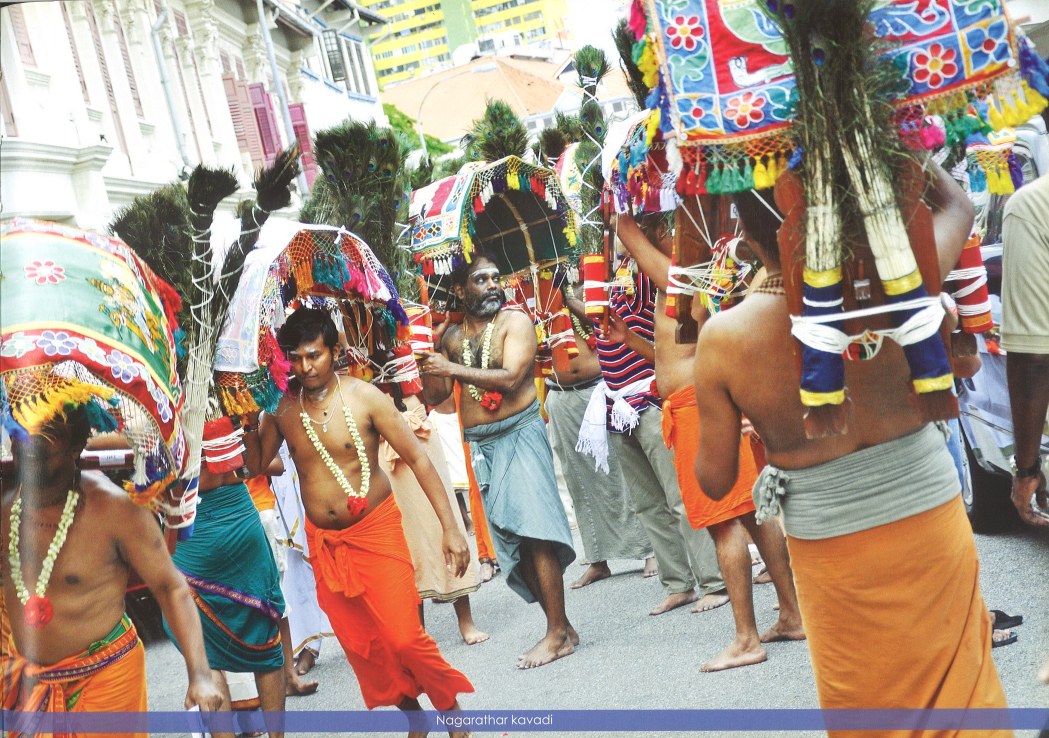
Very early on the eve of Thaipusam, Lord Muruga seated on the silver chariot proceeds to the
Vinayagar Temple in Keong Saik Road. In the evening, the chariot followed by the nagara
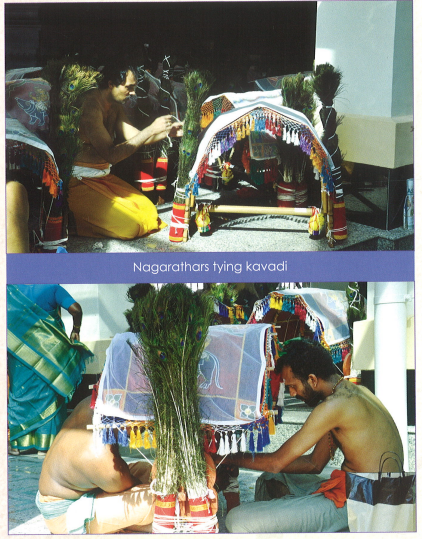
kavadis, make their way to Thendayuthapani temple via Market Street. Kavadi is a decorative
pole of wood with an arch over it, carried on shoulders with offerings mostly for Muruga
temple. Kavadis resting on the shoulders of devotees carry offerings to Lord Muruga. Kavadi
bearers can choose not to pierce their tongue or cheeks, especially if they are carrying Pal
Kudam (milk pots) on their heads.
On Thaipusam day devotees bear palkudams 'Milk pots' and kavadis all the way from Srinivasa
Perumal Temple in Serangoon Road to Sri Thendayuthapani Temple in Tank Road. The stream of
devotees begins in the early hours of the morning and continues till 12 midnight.
Thaipusam was the first legislated Hindu public holiday in 1879. This status was retained
until 1968. In the earlier days it was celebrated over 3 days. During those days, the deity
was taken to the beach in a procession to the accompaniment of fire crackers.
There are certain aspects/customs that distinguish the Nagarathar community from other
Hindus with reference to ecstatic ritual in Thaipusam. First, they highlight that when the
Nagarathars carry the kavadis the day before, the community participates in the procession
collectively along with other non-kavadi bearing Nagarathars. Second, the Nagarathars and
the non-Nagarathar kavadi bearers take different routes during the Thaipusam day.
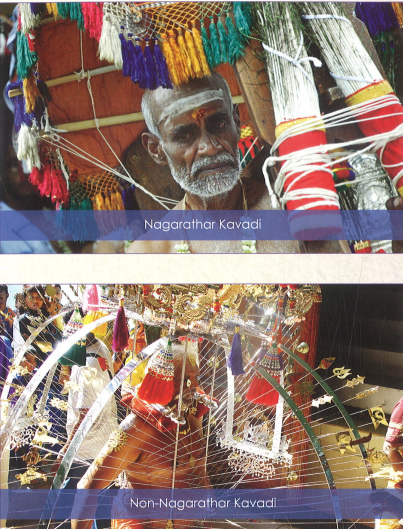
Third, the ecstasy and intensity with which the non-Nagarathar Hindus express their devotion
during Thaipusam is such that it at times invoke notions of trance and euphoria, which is
absent among the Nagarathars who appear to be more self-restrained. Fourth, the Nagarathars
in fact do not practice the act of skewering their bodies with metal hooks. Fifth, the
Nagarathars carry only yellow sugar in their kavadi pots to offer god. Generally Thaipusam
celebrated with this distinction is locally referred to as 'chettypusam'.
Another festival celebrated here is the Navarathri 'Nine nights' festival that takes place
over nine days. This Temple is a pioneer in Singapore in organizing cultural performances
spread over the nine days.
Usually Navarathri festival is meant for Goddess Sakthi, goddess of Valour; Saraswathy,
Goddess of Knowledge, Wisdom and Learning; and Lakshmi, Goddess of Wealth. But in this
Temple, Lord Murugan is decorated in various forms, representing Siva, Vishnu and Sakthi.
Each day of the festival is symbolic of the belief that even if God appears in different
guises, he is omnipresent and bestows blessings on his devotees.
The alangarams (decorations) are carried out in the following order: Rajangam, Vennai Thali,
Markandaiyar, Venuganam, Kannappa Nayanar, Unjal, Pittukku Mann Sumathal, Kalinga Nardhanam,
Saraswathi. On the tenth day the deity rides the Kudhirai Vaganam 'horse mount' and shoots
arrows in the eight compass directions.
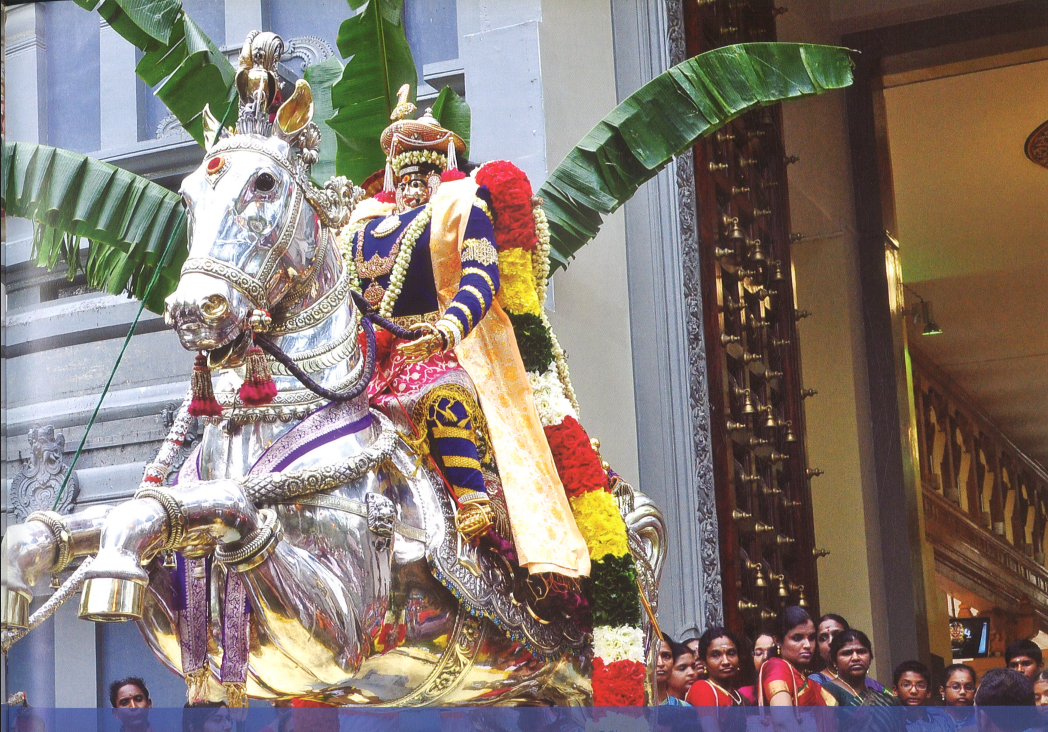
During that time, the Nagarathars usually perform a ritual known as ambukhuthuthal and kiluukipoduthal for the welfare of their male children. Each month's Karthigai observance concludes with a 'swami purapadu', procession of the deity and with anna dhanam. Anna dhanam (offering of food) is considered as an important part of the festival of this Temple.
Numerous books and songs in praise of Lord Thendayuthapani have been published. Many famous poets including Kannadasan and many others have written poems on this Temple. SingaiNagarandhadhi and Chithirakavigal, the two books written by 'Yalpaanam Sadhasivapandithar' in 1887 are considered the first on Lord Thendayuthapani. It can be said that, as a result, many scholars believe that Lord Thendayuthapani evoked Tamil literary activity in Singapore and Malaysia. During the consecration ceremony in the 80s, these poems were published, in the souvenir magazine.
The temple is also a prodigious donor. Among the many temples in Singapore, Sri Thendayuthapani temple is the first to have donated S$50,000 to the Singapore Indian Development Association (1991). Later also Chettiars' Temple Society (CTS) donated $63,000 to the Singapore Indian Development Association (2006-2010). CTS has given $45,000 to the President Challenge Fund during 2006-2010. SANA, the drug rehabilitation centre's Hindu welfare association, is also a benefactor. $1,200 went to the Hindu Centre Education Fund. From 1998 onwards S$500 has been going to St. John's Medical vehicles. $1,000 was donated to the disabled association. Yet another benefactor is the Police Station that gets $1,000. S$2,000 goes to the Community hundial fund. They have also donated $35,000 to the National University of Singapore (NUS) for the inception of Gold Medal award in the school of business. CTS also gave bursary cash award ($22,800) to the 63 needy students irrespective of race and religion. A sizable donation has been given to neighborhood CCs, Non Hindu organizations, Singapore Corporation of Rehabilitative Enterprises (SCORE) and S Rajarathinam Endowment Fund and NUS societies.
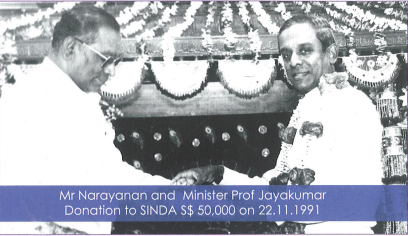
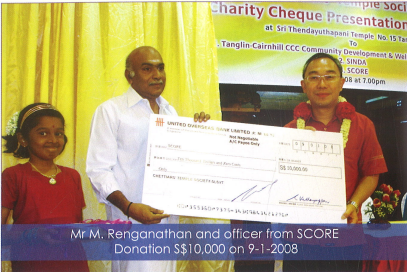
Sri Thendayuthapani Temple has maintained very close relationship with other temples in Singapore. One of Singapore's oldest temples, the Sivan temple which was in Orchard Road is now situated in Geylang, lacked an Amman sanctum. In 1964, the management of the Thendayuthapani temple took over the responsibility to build the sanctum similar to that of the Goddess Sanctum in Varanasi. Pooja expenses (i.e) poosai padi is provided by the Nagarathars. In 1993, they donated $31,000 for the construction of the Sivan temple. They donated S$15,000 to gold-plate the Goddess's gopura kalasam and S$5,000 for silver-plating the peedam. The Temple has been providing the daily oil, spices and other necessities to Geylang Sivan Temple until it moved from Orchard Road in 1980s.
During Punarpusam, the eve of Thaipusam, upayam is conducted in South Bridge Road Mariamman
Temple, the oldest temple in Singapore. When Lord Muruga arrives in his silver chariot, He
is honoured by Mariamman temple. The Nagarathar kavadis, on the eve of Thaipusam, make their
way from Sri Layan Sithi Vinayagar temple to Sri Thendayuthapani temple via Mariamman
temple. In 1921, the Goddess statue here broke and the Nagarathars helped replace it. In
1936, Sri Thendayuthapani temple management helped in the consecration ceremony of the Sri
Mariamman Temple by lending their Silver Chariot and vessels needed for the ceremony.
On Thaipusam day, the kavadi procession begins at Sreenivasa Perumal temple in Serangoon
road and makes its way to Sri Thendayuthapani temple. The common expenses of the Thaipusam
will be shared between the two temples Sri Thendayuthapani Temple and Sreenivasa Perumal
Temple. It has also donated $1,000 to the Mandai Road Mariamman Temple. (Maha Mariyamman
Temple, Yishun).
Sri Layan Sithi Vinayagar Temple situated at 73, Keong Saik Road that was built in 1925, has
a long tradition. There are differing views about it's historical background and of its
deity.
According to Mr A. Palaniappan's article, in both Tamil and English, this temple was
originally located opposite Outram Park SMRT Station, next to Singapore General Hospital. It
was originally a Vinayagar statue installed under a tree. A track from 'Sepoy line' led to
the temple. Towards the end of the First World War, the temple had statues of Vinayagar and
a snake all under one roof. Hospital and prison staff patronised the Temple. The priest, who
had been conducting the daily poojai had to leave for TamilNadu. He approached the
Nagarathars to take over the Temple.
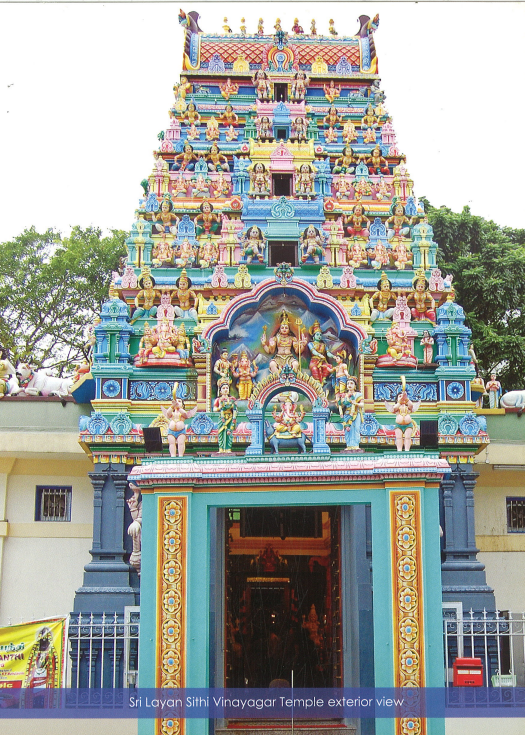
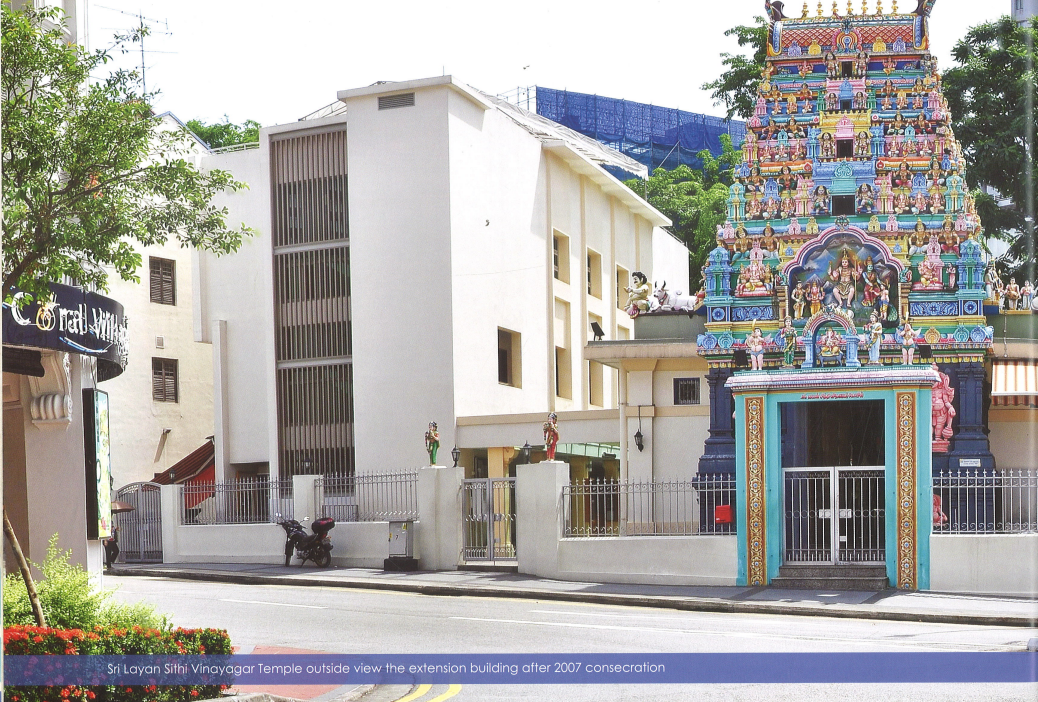
According to Happy Malaya by Muthupalaniappa Chettiar, Thiru Ponnambala Swami installed the
image of Lord Vinayagar. This Swami, a family man, was a soldier and had come to Singapore
with the Indian army. When he was in Singapore, he worshipped a Vinayagar and decided to
leave that deity with the Nagarathars, when he had to leave for India on a job transfer. The
Nagarathars, unable to decline the Swami's request, obliged and accepted the deity and built
a temple to house it.
In the early 1920s, the Government acquired the site to extend the hospital. The
compensation together with contributions from Nagarathar was used to build the temple at the
present premises. During the construction, it was discovered that the deity was deformed. As
it was improper to install a deformed deity, it was decided to replace that deity with a
stone one, made to order from India.
Some strongly believed that it was unethical to dispose of the deformed deity in the sea before the consecration ceremony, which took place on 1-6-1925. Also it would mean breaking the promise made to the Sanyasi. Hence they decided to position the deformed deity along with the made-to-order Vinayagar, Rama Namam and a Vel 'spear' (symbolic of Lord Muruga). As it was located in Sepoy Line which had a line of barracks, the temple was named Layan (for line) Sithi Vinayagar temple.
The name Vinayagar means supreme or paramount leader. The word 'Sithi' also denotes success and distinctive ability. Lord Vinayagar bestows all these on his devotees. Hence, he is 'Sithi Vinayagar'. Lord Vinayagar helps the devotee overcome a succession of trials and tribulations. Layan is a derivative of the English word "line" which gives us clues about the location of the Temple. The Temple was originally situated in 'Sepoy Line', and hence 'Layan'.
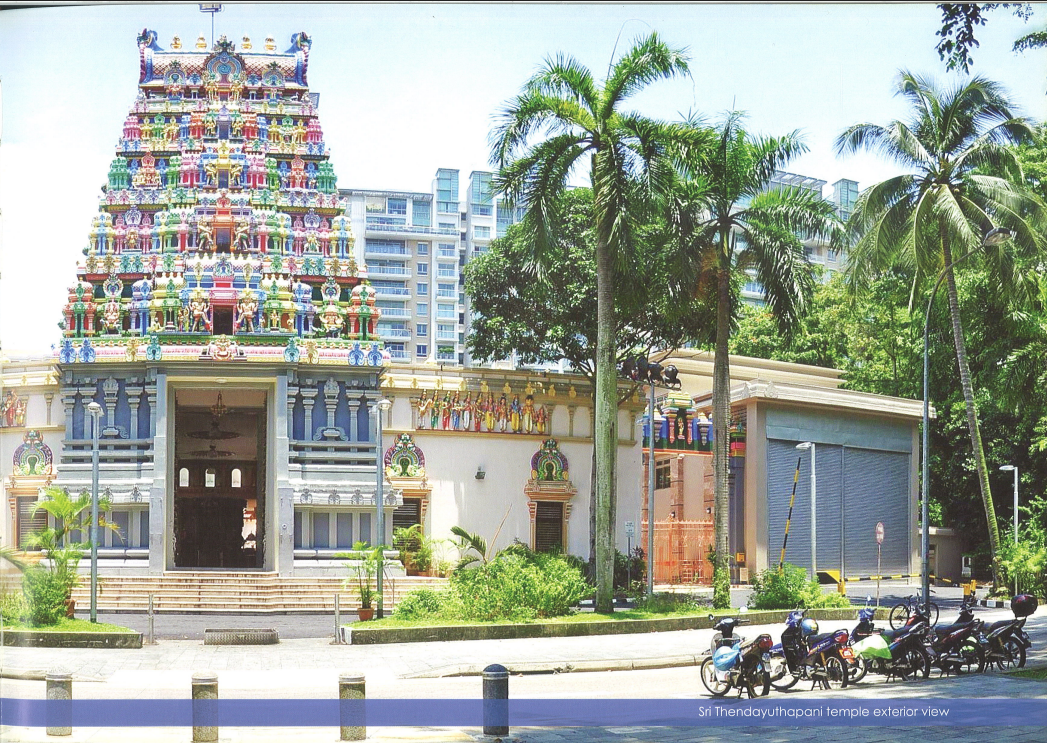
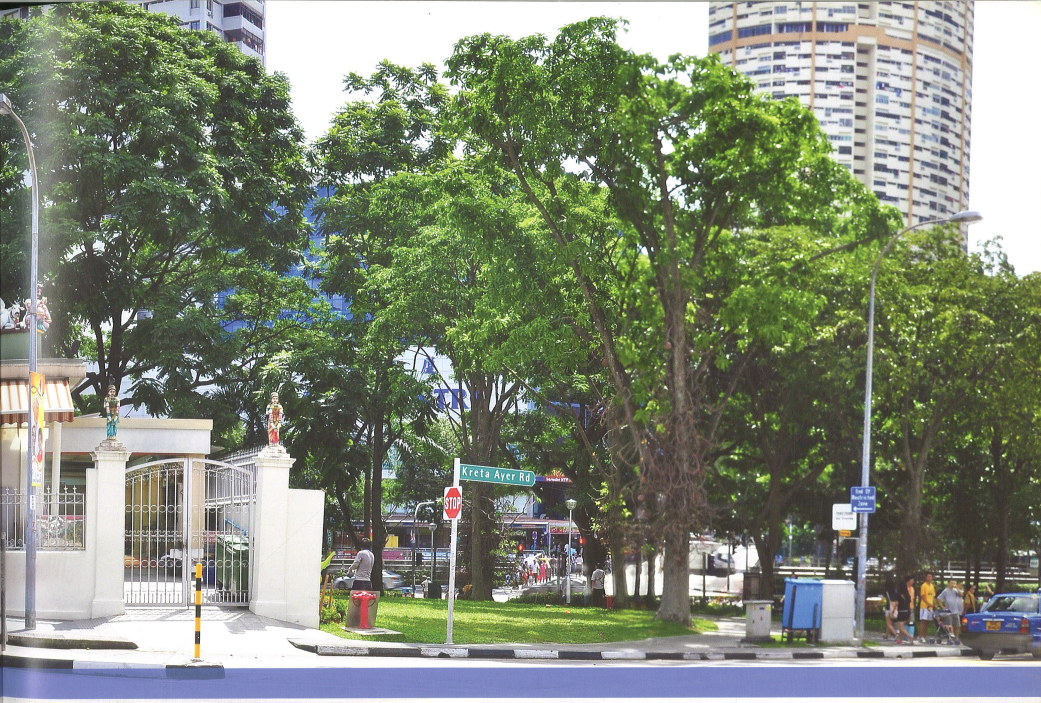
Singapore's China Town is a heritage site. It was recorded in the 1822 city planning map.
This triangular area is flanked by Telok Ayer Road, Anson-Circus, Outram Road and Singapore
River. It is intriguing that the three Vinayagas in a row found themselves in triangular
shaped China Town.
The Chinese refer to the South Bridge Road area as Toa Por (in 'Hokkein' the Kreta Ayer
region as 'Go Chia Chui', which means a vehicle carrying water.) In Malay, the equivalent is
'Kreta Ayer'. Before the 1980s, water for this area was delivered from the nearby tank in
bullock carts. Hence, is the name 'Kreta Ayer' for this road and the area!
Situated by the Singapore River and Tanjong Pagar harbour the temple throws benevolent beams upon the needy, like a light house. Earlier, this Temple was situated between Manmatha Kruneeswaran Temple, which was then at one the end of Tanjong Pagar Road, and the South Bridge Mariamman Temple. This location also helped distinguish the temple. In addition the Temple is surrounded by a number of mosques, churches and Chinese temples epitomizing multi-religious Singapore. This temple is accessible through SMRT and other public transportation. It was easily accessible to Nagarathars who originally ran their businesses at Market Street.
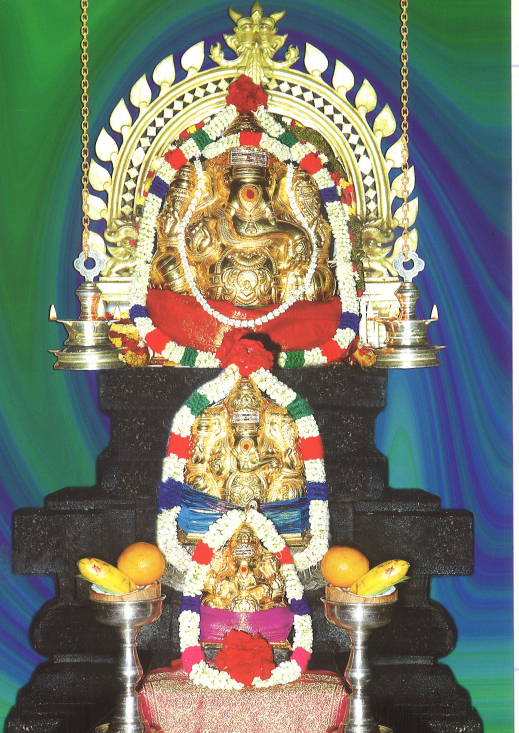
To-day, this temple comprises three Vinayagar idols, a snake statue and a Rama Nama form. A
rat figure, the mount of Lord Vinayagar, and a 'palipeedam' stand in front of the Vinayagar
sanctum.
The bigger stone Vinayagar, placed against the wall and the first in the row, was installed
by Nagarathars while they built this temple. The next in the row, the one in centre, was
brought from the previous temple. The third was brought from kittangi number 38, Market
Street.
The Nagarathars also installed a copper 'Vel' (spear) in the sanctum. Traditionally
Nagarathars who ventured overseas brought with them the Vel which was symbolic of success
and brilliance. This Vel is taken in the chariot to the Tank Road Temple during Thaipusam,
where it receives practically unending milk pourings.
It is customary to keep a snake statue near Vinayagar idols under trees along the street
temples, in Tamil Nadu. Earlier this practice was started out of fear and later as a
symbolic tool to ward off evils. The epics tell us about its various significances.
Rama Namam is a religious mark, typically seen on the forehead of Vaishnavites. Both the
Rama Namam and snake forms are made of stone, and are believed to have been there since the
formative years of the Temple. It is to be noted that, though this Temple is Saivite, it has
Vaishnavite patronage as well.
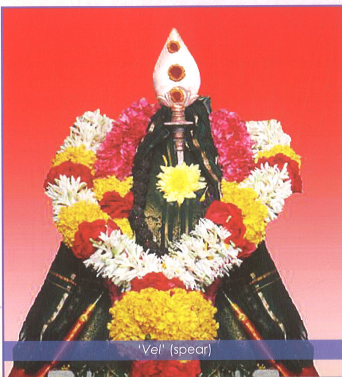
The image of the Rat signifies the killing of Gajamugasuran by Vinayagar and making him his
vehicle. Palipeedam symbolises the fact that one has to shed his ego in the presence of Lord
Vinayagar. The vinayagar statue is made up of aimbon meaning of five metals. It is also here
since 2008. From its inception, it has been carried as in procession with a silver vehicle
of a mouse itself on special days.
In 1920, the Nagarathars bought land near Keong Saik Road and constructed a temple there.
Earlier, the Temple sanctum had halls enclosed by walls on the four sides. There was space
outside for circumambulation. Temple had two-tier towers. The sanctum had a vimanam and an
entrance opposite the sanctum. The renovation was done by architectural exponents from
India.
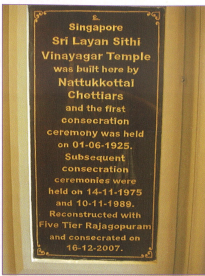
In 2007, the temple site was expanded into the neighbouring lane which belongs to the temple and the two tier tower was replaced by a five tier tower. The temple was built with an open space concept with rooms only for the Temple staff and a 3-storied hall. A glass topped walkway connects the Temple to the building. The Nagarathars contributed a hefty sum for the construction of the Temple.
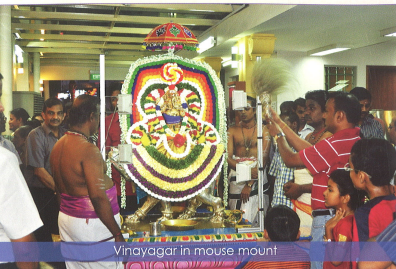
The main festival, celebrated in this Temple is the Vinayagar Chathurthi in September.
Devotees throng the Temple on that day.
At the Thaipusam celebrations, Lord Muruga is taken in a silver chariot from Tank Road to
Sri Layan Sithi Vinayagar Temple, during the early hours of the previous morning. In the
evening, after the poojas for the Nagaratharkavadi, the vel in the Temple is taken to Tank
Road, in the silver chariot, by the Temple's pandaram. Devotees flock to watch and to
support the Nagaratharkavadis. This is a major festival in this Temple.
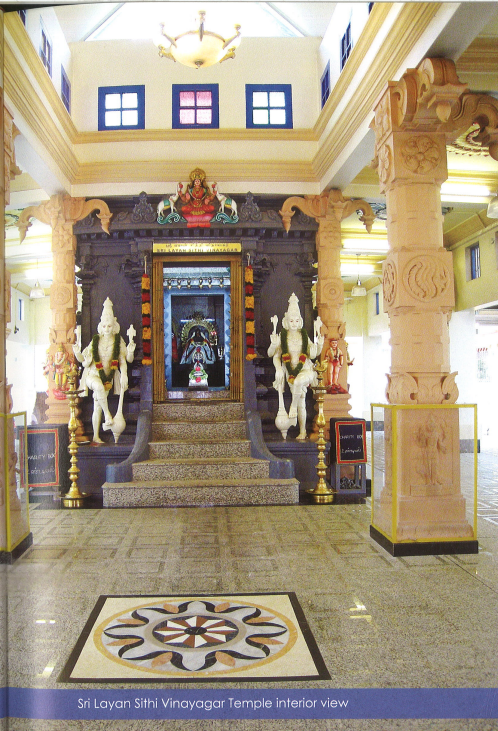
It is common practice among Nagarathars to first offer prayers to Vinayagar, before embarking on anything. They pen the alphabet 'ou', called the Pillayarsuzhi in Tamil, a humble acknowledgment of Lord Vinayagar as their guide, before they start to write on a sheet of paper. A clan Temple called 'Pillayarpatti Temple' is one of the nine Nagarathar Temples. Singapore Nagarathar's fondness for Layan Sithi Vinayagar can well be gauged from the very first line in the accounts sheets 'Layan Sithi Vinayagar Varavu' followed by the family deity. It is common practice for Nagarathars to first credit in God's Name, while starting any business and on festival days.
Since the formation of the Nagarathar's Association, Singapore, in 1980, the Pillayar Nonbu
festival took place in this Temple for many years. Moreover, a weekly prayer took place on
Sundays.
Any religious observation in Sri Thendayuthapani Temple begins only after prayers in Sri
Layan Sithi Vinayagar Temple. On Tamil New Year's Day, deepavalii, pongal, karthigai and
sivanrathri, the first prayers are dedicated to Layan Sithi Vinayagar. The Temple is
patronised and worshipped by other community including Chinese devotees. It is jam packed on
Thursdays, Fridays and Sundays.
Theemithi Festival in October is celebrated in a grand manner in South Bridge Mariamman Temple, the oldest Temple in Singapore. On the eve of the festival the devotees first pray at the Vinayagar Temple, asking for successful completion of their vows. For many years now, during the above festival, the silver chariot carrying Thraupathiamman is first honoured in this Temple. The Ramar in the Vadapathrakaliamman Temple, Serangoon Road has also been brought to this Temple during the Rama Navami Festival, for the past few years.
Nagarathars in Singapore are small in number. Yet, their contribution to the development of modern Singapore in almost all fields like Politics, Banking and Accounts, Business, Religion, Education, Tamil language, Law, Medicine, Engineering and Technology, Information Technology, Media, Arts, Community/Social Service and Civil Service is significantly large.
Usually Nagarathars never involve in active politics. They are quiet people who primarily concentrate only on business. Two Nagarathars have entered politics and both have been successful. The first one to enter politics was Mr Sellappa Ramaswamy of People's Action Party, who was a Member of Parliament around 1959. The other is Mr K. Shanmugam, of People's Action Party, the current Minister for Law and Minister for Home Affairs. He has been involved in active politics since 1988.
Mr Sellappa Ramaswamy, born on 27th January 1927, was a Member of Parliament from the
People's Action Party from 1958 to 1972. Educated in India and securing a Bachelor of Arts
Degree in English, he worked as a chief clerk at Lee and Lee Law Firm under Mrs Lee Kuan Yew.
Mr Lee Kuan Yew encouraged him to become a Member of the People's Action Party (PAP). He
became a Member of Parliament in 1958 and served until 1972.
He first contested in the 1959 General Elections and won in the Bukit Merah Constituency.
In 1966, he became MP for Crawford Constituency, and after the 1968 General Elections,
became MP for Potong Pasir Constituency until 1972. He took special interest in the welfare
of low income workers, recommended jobs for many and devoted his life to community service.
He served as an advisor to the Indian Cultural Society, Indian Activity Groups and the
Chettiars Temple. He passed away in April 1976 at the age of 49.
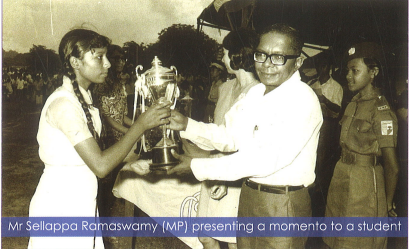
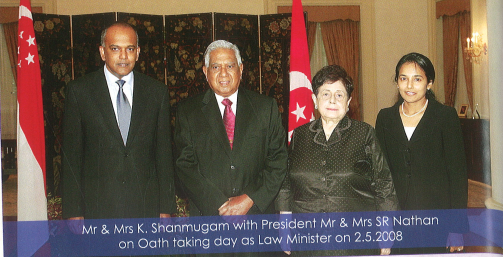
Mr K. Shanmugam was educated at Raffles Institution from 1972 to 1977. He then read law at the National University of Singapore (NUS), where he graduated at the top of his class with First Class Honours in 1984. He was admitted to the Singapore Bar as an Advocate & Solicitor in 1985. Mr Shanmugam became a Member of Parliament (MP) in September 1988 for Sembawang GRC. On 1 May 2008, he was appointed Minister for Law and Second Minister for Home Affairs. On 1 November 2010, he was also appointed as the Minister for Home Affairs.
Nagarathars, the founders of Indian Bank and Indian Overseas Bank, opened branches in
Singapore near the Market Street around the period 1937-41. Both banks tapped a number of
Nagarathars. They were attached to another Indian based UCO Bank too. Nagarathars with their
innate ability were of valuable service to the development of these banks. Their sincerity
elevated a few to managerial levels.
Now both men and women are working as officers, clerks in various banks and many are
attached to foreign banks such as City Bank, Standard Chartered Bank, HSBC, JP Morgan,
French Bank and others.
Mr AN. Sekkappan, Mr N. Chockalingam @ Singaram, Mr SP. Kannan and Mr RM. Karuppiah are
among the first few who worked for a long period in the Indian based banks. Mr Mu.Mu.
Muthaiah of Indian Bank was involved in the activities of the associations of Bank
employees.
Nagarathars are renowned for their accounting skills. Few Nagarathars came to Singapore to
work as Chartered accountants. Mr N. Somasundaram is a pioneer Auditor. Today, there are
many auditors and accountants working for famous and renowned firms as finance controllers,
senior accountants and professors. Mr Ramasamy Chockalingam, is one of the renowned Auditors
and Mr M. Swaminathan is a famous lecturer in the field of accounts.
Nagarathars are primarily a business people. Apart from money lending business, Nagarathars
were also into other types of businesses such as Saw mills and limited companies such as
Kannappa Company and Thenappa company in Market Street around 1938. After Independence they
ventured into the businesses of selling electronic goods, jewellery and restaurants.
Nachiappa Brothers, a famous retail store selling electronic goods was a landmark in
Serangoon Road during 1970s and 1980s.
Mr Rama Chidambaram (a) Palaniappan
Abiraame Jewellers, formerly known as Dickson Goldsmith, is a famous jewellery shop along
Serangoon Road, Singapore. Mr Rama Chidambaram (a) Palaniappan, its owner, rose up from
scratch. Customers throng his shop for unique designs, competitive prices and quality. The
shop is also known for precious stones and diamonds.
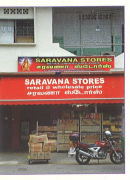
Mr VR. Alagappan, owner of Taste of India restaurant and Saravana Stores retail store, is a well known business man. His integrity in business is evident in the quality of his goods and their reasonable prices. He has helped many Nagarathars make their way to Singapore and accommodated them in his business, giving them a footing in all possible ways.
Mr AL. Chidambaram ran a successful factory, 'Alambon Tools Pte Ltd'. Many Nagarathars have
successfully ventured into Seven Eleven Stores. Others are engaged in man power, job
placement, trade and IT related businesses.
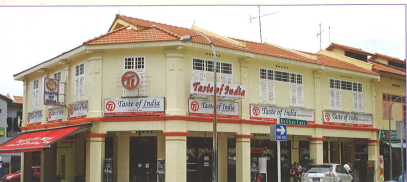
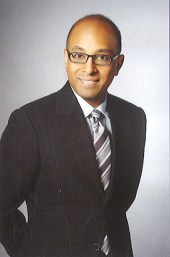
Ashwin Chidambaram Muthiah
Ashwin C Muthiah, who holds a MBA Degree from the University of Philadelphia, runs the
global operations of the M.A. Chidambaram group from Singapore. He is the grandson of the
late M.A. Chidambaram, a well-known business man and a philanthropist. His family business
has interests in Petrochemicals, Fertilisers, Logistics and Engineering Services. His Sical
Logistics and Singapore's PSA International jointly operate the Tuticorin container terminal.
A keen polo player, he also donates generously to the Hindu Temples of Singapore.
The Nagarathars are very religious people. Their contributions to the religion as temple
builders and other charitable activities are well known. The Nagarathars have a good rapport
with the Hindu Endowment Board. Mr Veerappan was the first Nagarathar member in the
Endowment Board (HEB), and Mr VE. Shanmugam Chettiar was the first Nagarathar member of the
Hindu Advisory Board (HAB) in the 1950s.
Mr S. Dheivanayagam (1978-81), Dr. RM. Karunanithy, and Mr K. Kannappan have served as the
members of the HEB and HAB. Mr S. Dheivanayagam served as the member and then the secretary
of the HAB (1976-78) and was the Chairman of the Sivan Temple of HEB (1980). Mr Saa. Ganesan,
a Nagarathar from Karaikudi and an expert in Silpa-sasthra, was brought to Singapore to
solve the dispute regarding the Draupadi idol issue raised in the Sri Mariyamman Temple in
1968.
Mr K. Kannappan served as Chairman of Sri Vairavaimada Kaliamman Temple for four years, Sri
Sivan Temple for two years and as Karbar (Chairman) of Sri Thendayuthapani Temple for two
terms. He was a member of HEB from 1996 to 2005 and Vice Chairman of the Hindu Advisory
Board for about 3 terms. Dr K Vellayappan was a Member of HEB from 2007 onwards and has
been appointed as a chairman of Sri Mariamman Temple since July 2010. He was also the
Chairman of Chettiars' Temple Society from 2007 to 2008.
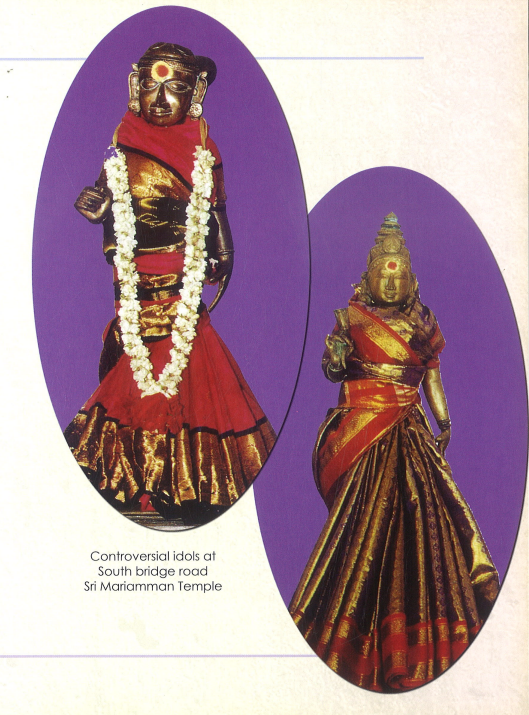
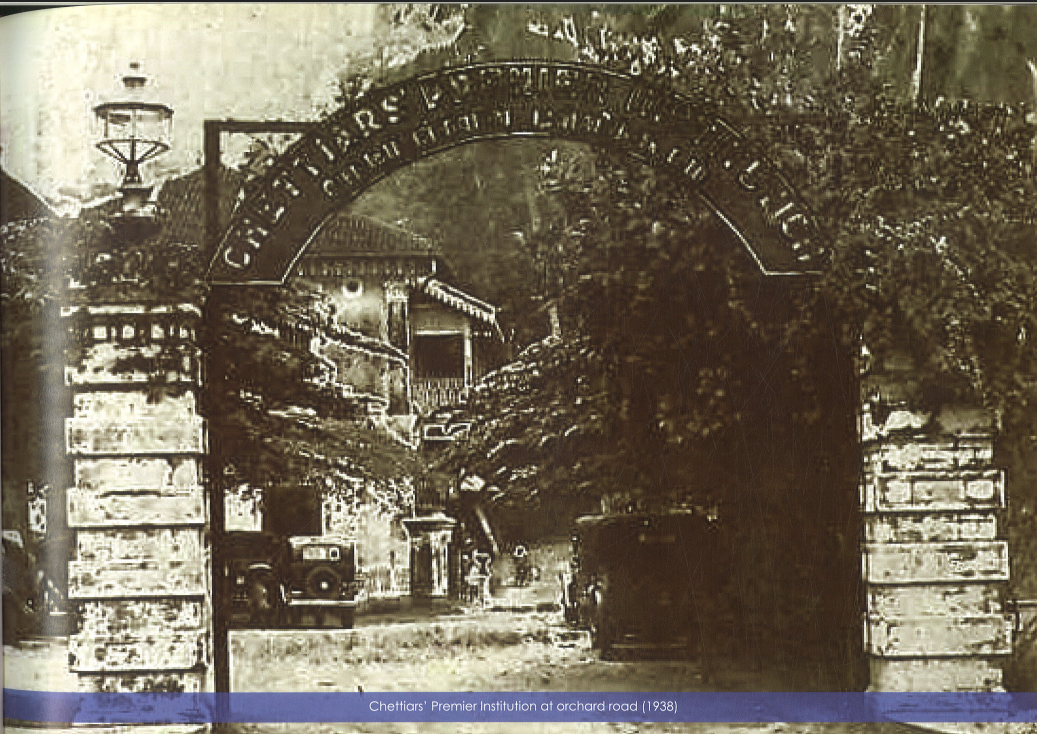
Since the British period, the Nagarathars have been contributing to the field of education.
Rajah Sir Annamalai Chettiar of Chettinad, a pioneer, founded the Annamalai University at
Chidambaram in South India. Dr. RM. Alagappa Chettiar and Mr Karu Muthu Thiyagarajah
Chettiar followed in his footsteps and founded educational institutions in Karaikudi and
Madurai respectively.
In Singapore too, Nagarathars attempted to establish a school called 'Chettiar School'. Later,
Nagarathars bought a school called 'Chettiars Premier Institution School' at Orchard Road
from an individual and ran it through their financial assistance. Now, many Nagarathars are
working as teachers in almost all spheres of education — from Kindergarten to University
Professors.
Mr K. Kannappan was appointed chairman of Saraswathy Kindergarten (the first Kindergarten in Singapore that provided instruction in Tamil as well) in 1990 and spearheaded its development for 10 years. When SINDA was set up, Mr Kannappan was drafted into its Education Wing to develop plans for Tamil/English Kindergartens. He worked with the Khalsa Association & the Ramakrishna Mission, resulting in the Saradha Kindergarten and the introduction of Tamil in PCF in over 40 Community Centres.
Mr S. Thiagarajah was a principal of a Secondary School. He came to Singapore in 1950,
attended Teachers Training College and qualified as a Primary School Teacher in 1952. He
passed the H.S.C. Exam in 1954 and was posted to a Secondary School to teach Mathematics.
He then obtained a B.Sc degree and then an Honours degree in Mathematics in 1960.
In 1964, he was appointed Lecturer in Mathematics at the Teachers Training College (T.T.C)
Singapore. From 1964-1986, he held positions of Specialist Inspector (Statistics), Specialist
Inspector (Mathematics), Head of Maths Department MOE, and Principal of Gan Eng Seng
Secondary and Yusof Ishak Secondary School.
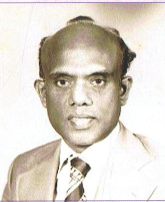
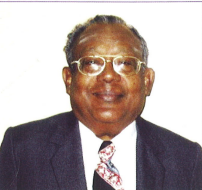
He came to Kuala Lumpur, Malaya, in 1948. He qualified in B.Sc Chemistry (First Class) from
St Joseph's College, University of Madras and started his career as a Chemist with M/S Lever
Brothers (M) Ltd, Malaya, in 1957. He obtained B Pharm (Chalmers Medal) with Distinctions in
1962 and B Pharm Hons (First Class) in 1963 from the University of Singapore. He obtained
his Master of Science and Doctor of Philosophy in Food Science and Technology from the
University of Leeds (UK) in 1970 and 1973 respectively.
He is also a Chartered Chemist, Fellow of the Royal Society of Chemistry, London, Fellow of
the Institute of Food Science & Technology (UK) and a Registered Pharmacist. He started his
career in academia in 1963 & rose up to Associate Professorship in Pharmacy, playing a key
role in the training of thousands of pharmacists & post-graduates in Singapore & overseas.
The Nagarathars have played an integral part in promoting Tamil and its progenies in
Singapore.
Mr RM. Periakaruppan and Mr VE. Shanmugam Chettiar (1913–87)
The late Mr VE. Shanmugam Chettiar and the late Mr RM. Periyakaruppan Chettiar, who had
merchant banking as their prime business, are two important people who have played an
immense role in the growth of the Tamil language. Mr VE. Shanmugam Chettiar entertained
almost all Tamil scholars visiting Singapore. Whenever there was a threat to the Tamil
language in Singapore, he came to its rescue along with K. Sarangapani, the founder of the
Tamil Newspaper, Tamil Murasu.
Thiru Rama Periakaruppan Chettiar, founder of Ramasamy Tamil College, Karaikudi is
remembered for his hospitality towards visiting Tamil scholars. Hence, they are fondly
referred to by Soma Lay, a Tamil scholar as 'twin brothers' in their service to Tamil
society. They served the community through the Singapore Tamil Writer's Association,
Singapore Tamil Reform Association, and Singapore Tamil Association.
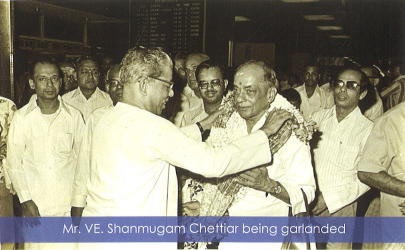
VE. Shanmugam Chettiar (1913–1987)
Mr VE. Shanmugam Chettiar came to Singapore in the 1920s to join his father's business. He
was a renowned social worker. The most notable of his awards is the 'Justice of Peace' award
conferred in 1950 — the first Nagarathar in Singapore to receive this prestigious award from
the British Colonial Government.
He was the Trustee of the Tamils Reform Association and President of Tamils Representative
Council. He was one among the many who worked hard towards making Tamil as one of the
official languages of Singapore. During the Japanese occupation, when there was a scarcity
of rice, he provided food for the needy at his own expense. He was conferred the title
'Arulneri Chezhvar' by Kunrakudi Adigalar.
Mr P. Arunachalam (1923–1999)
Mr P. Arunachalam donated the initial fund of S$5,000, for the continuous running of the
Thirumurai Conference. He was working as a secretary in the Department of Tamil founded in
the University of Singapore for many years. He was one of the people who initiated Tamil
Archanai in Temples.
Mr N. Karuppaiah (1924)
The late Mr Karuppiah is a distinguished personality in the Singapore Tamil community. He
was attached to the Ministry of Education from 1957 to 1980 as officer-in-charge of the
growth of the Tamil Language as well as a Supervisor of Tamil schools. Thanks to his
recommendations Tamil teachers are paid on par with other teachers.
Mr M. Sankaralingam (1926)
Other notable Nagarathar, late Mr Sankaralingam was
attached with St.Joseph's Institution as a teacher and retired.
He also helped to develop the instructional materials in Tamil.
He began as a teacher at Raffles Institution. Later he joined
the Singapore Broadcasting Corporation as an editor and
then became head of the Tamil News Section. He presented
many noteworthy programs over the Radio. He had taught
tamil to Prof S Jayakumar.
Mr Sellappa Ramaswamy (1927-1976)
The late Mr Ramaswamy Sellappa, Parliament Secretary
and a Member of Parliament delivered his parliamentary
speech in Tamil. In his capacity as MP of Potong Pasir he
spearheaded talks between the Tamil Teachers Association
and the Ministry of Education in regard to salary scale and
status of Tamil teachers in Singapore. Consequently, the salary
scale was revised. From 1964 to 1965, in order to draw on
the newly revised salary scheme, Mr M. Sankaralingam and
Mr Thiagarajah, trained teachers for the 'O' level examinations
conducted by the Ministry of Education. Around 1964,
Mr Ramaswamy, as an Advisor to the Tamil Teachers'
Association, worked hard for the benefit of Tamil teachers.
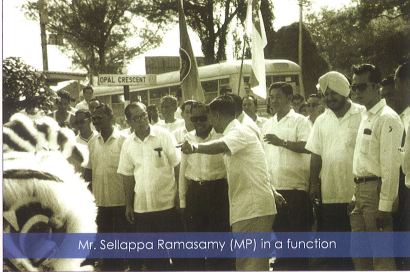
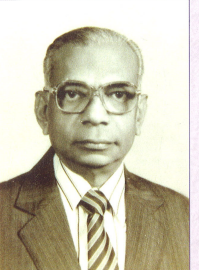
Mr S. Dheivanayagam (1927)
Mr S. Dheivanayagam was the head of the Tamil Section of the Institute of Education and has
the credit of training many Tamil teachers on the island for more than 20 years, since 1964.
In 1971, he organized a seminar on teaching and learning of Tamil language in collaboration
with the Ministry of Education. He was conferred the Efficiency medal at the 1982 National
Day Awards and the Long Service Award by the Ministry of Education.
Dr. SP. Thinnappan (1935)
Professor Thinnappan is a man of prominence in the areas related to Singapore's education history, Tamil education, and the development of Tamil Literature since 1982. He has taught Tamil to Tamil and non-Tamil students at Nanyang Technological University (NTU) and National University of Singapore (NUS). He has been attached to many organizations and associated with the Language Department in Singapore's Ministry of Education. In that capacity, for over 28 years, he has been directly and indirectly involved in deciding the curriculum and management development right from Primary One to Doctorate programmes. He has also been a consultant for projects for the production of instructional materials for teaching the Tamil language in both Primary and Secondary schools undertaken by the Ministry of Education from 1982 to date.
Academic Qualifications:
- MA in Tamil Language and Literature (University of Madras, 1959)
- M.Litt and Ph.D. in Linguistics (Annamalai University, 1968, 1978)
- Diploma in Linguistics (Annamalai University, 1963)
- Advanced Certificate in Evaluation of Language Programme Effectiveness (RELC, Singapore, 1984)
He knows Tamil, English, Malay, Hindi, and Sanskrit. He has 51 years of experience teaching Tamil language, literature, and linguistics in the Universities of Madras and Annamalai in India, University of Malaya in Kuala Lumpur, Institute of Education, Nanyang Technological University, National University of Singapore, and SIM University, Singapore. He has also worked as a visiting professor-scholar at the University of California, Berkeley, Tamil University, Thanjavur, and the School of Oriental and African Studies, London.
He has published many books, research papers, and articles on Tamil Language, Literature, Linguistics, Culture, Religion, and Teaching Methodology. Under his supervision, there have been four doctorate awardees, two M.Ed. awardees in Singapore, and more than twenty MA graduates in India. He has created a platform from which one can do their theses in Tamil and get their doctorate in Singapore.
He has written critical essays on Singapore's pioneer literatures such as Singai Nagar Anthathi and Kuthirai Panthaiya Lavani. He collaborated with Dr. Helen Fraser at the School of Oriental and African Studies, London, in submitting himself at the Middlesex Hospital to fibre-optics laryngography in 1990 for linguistic research.
He is an expert advisor in the development of teaching materials for Tamil as a Second Language in a Community Service Project used in Tamil schools in more than 13 countries including Canada, USA, UK, France, Norway, Sweden, Italy, Denmark, Germany, Australia, and New Zealand.
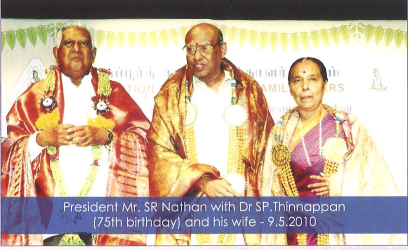
He has served on prestigious committees including the National Library Board, National Arts Council, and the Tamil Language Council. He taught the Tamil Language to Singapore's President S.R. Nathan for 11 years. He was awarded the prestigious TamizhaveL award by the Association of Singapore Tamil Writers in 2010 to commemorate his 75th birthday and Golden Jubilee of service.
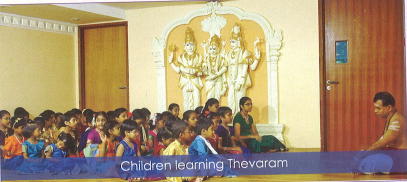
Tamil related activities of the Temple
Sri Thendyuthapani Temple is a patron of Tamil and Saivam. It has rendered numerous
services to the Tamil language. The Temple extends invitations to Tamil scholars visiting
the island. Since 1983, archanais at Tank Road Temple have been performed in Tamil.
The Nagarathars have made rich contributions to the transition of chanting Thirumuraigal by
sponsoring othuvars reciting Thirumuraigal hymns to the Lord every evening for more than an
hour for over eighty years. The Chettiars' Temple Management provides the wedding hall as
the venue for the three day event free of cost.
Mr S. Narayanan was an interpreter with the Parliament of Singapore for many years. Mr N. Subramaniam has the credit of interpreting the Prime Minister's National Day speech for many years. The Nagarathars serve in various committees formed for the development of Tamil literature in Singapore. Dr. SP Thinnappan serves as the advisor of ASTW and was the founder of a Literary Circle that conducts literary discourses every month.
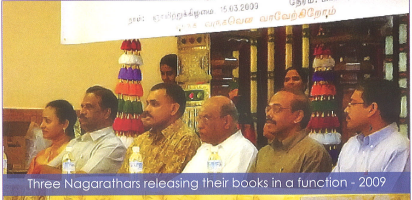
Mr CT. Periakaruppan is the earliest local Nagarathar law graduate who had his own legal
practice for many years. Mr K. Shanmugam, a Law graduate with First Class Honours at NUS,
was admitted to the Singapore Bar as an advocate and Solicitor in 1985. Now, he is the
Minister for Law and Home Affairs. Mr Shanmugam went into private practice and became one
of the Senior Partners and head of Litigation & Dispute Resolution at Allen & Gledhill LLP,
the largest law firm in Singapore.
Mr Shanmugam has been described as one of the "twin titans" of litigation in Singapore and a
"star litigator" (The Asia Pacific Legal 500, 2001-2007); "one of the finest all-round legal
talents in the country" (Who's Who Legal, Singapore, 2008). In 1998, he was appointed a
Senior Counsel of the Supreme Court of Singapore at the age of 38, one of the youngest
lawyers to be so appointed.
Some Nagarathar women who are qualified Singapore lawyers are lecturers or are in the Civil
Service. Mr P. Sundarraju and Mr V. Subramaninan are other young promising lawyers. Mr Ravi
Chandran LLB (Singapore) LLM (Cambridge) is an Associate Professor, NUS Business School and
has received an excellent teacher award in the Business School.
There are many Nagarathars in the field of medicine working as specialists in various areas.
Dr. S. Vairavan is a pioneer general practitioner since the year 1970. Dr. K. Vellayappan
is a famous paediatrician and Dr. Ilancheran, a gynaecologist, is a well recognized doctor
in Singapore not only medically but also academically.
Dr. S. Vairavan (1941)
Dr. S. Vairavan came to Singapore in 1949 and was educated at Raffles Institution. After
passing his Senior Cambridge in 1958, he went to India to do his M.B.B.S. He has the credit
of being the first Nagarathar doctor in Singapore. His clinic, 'Starlight Clinic', situated
in Serangoon Road is a landmark to many Indians. He served as the Chairman of the Management
Committee of Sri Layan Sithi Vinayagar Temple and Sri Thendayuthapani Temple in 1998 and in
2006.
Dr. K. Vellayappan, a renowned Paediatrician in Singapore and S.E. Asia came to Singapore in 1954. He won a Colombo Plan Scholarship and did his MBBS in Sydney. He has served as President of Singapore Paediatric Society from 1981 to 1982. He donated the pettagam and kaipetti to the Asian Civilization Museum for display. He was made 'Patron of the Asian Civilization Museum' on 23.4.2010.
Dr. A. Ilancheran is a renowned Obstetrics & Gynaecology Specialist in Singapore and the whole of South East Asia. He graduated from the University of Singapore with MBBS (Distinction in Obstetrics & Gynaecology) in 1974. He has the credit of being the first Singapore Nagarathar to graduate as a medical doctor from the local university (NUS). He is currently with the National University Hospital as an Associate Professor & Senior Consultant in Obstetrics & Gynaecology. He donates generously to education and charities to help underprivileged children.
Singapore is a highly Industrial country and it is not surprising that the Nagarathars form
a sizeable part of engineering and technology sectors, whether civil, mechanical, electrical
and electronics or other branches.
Mr K. Kannappan (1939)
An Electrical Engineering graduate from UK, he joined Mobil in 1967 and retired in 1999
after working with the company for 32 years. Whilst in Mobil, he was seconded to Australia,
Saudi Arabia and USA. In 2006, Mr Kannappan was awarded as Friend of Ministry of Community
Development Youth & Sports (MCYS).
Mr Regupathy Subramaniam graduated in 1964 as a top student in Electrical Engineering from Alagappa College, Karaikudi. He arrived in Singapore in 1984 as an Associate Professor with NTU. Many Ministers including Senior Minister Mr Lee Kuan Yew visited the Centre. He is a Fellow of IES and a Professional Engineer in Canada.
Mr Narayanan started his career as a Structural Design Engineer with PWD, Singapore, from 1970-80. He rose to the position of Chief Engineer with Road Management, Land Transport Authority. He was instrumental in setting up the quality control laboratory for Phase 1 of MRT construction. He received the PPA (Excellence in Public Administration) title from the President of Singapore in 1991.
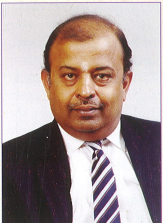
Mr Ramanathan @ Subramanian
(1944-1996)
In 1971, right after he graduated
as a Mechanical Engineer from
Alagappa University (Karaikudi),
Mr Ramanathan set out to
Singapore to seek a career.
Over a span of 25 years, he grew
from a supervisory to a senior
management role in Jurong
Engineering Ltd. (JEL) through
diligence, team work, and loyalty.
During this period, MrRamanathan
devoted himself religiously to the
growth of JEL and he became
an inseparable entity of JEL He
was regarded for his technical expertise, remarkable people
management, instantaneous decision making and humility.
Above all, for him, integrity was an important virtue. He was loyal to the company and always sought to elicit the best
from his workers and to achieve the most optimum outcomes.
In the eighties, prior to the explosive growth of Information
Technology, he guided many aspiring and deserving
Nagarathar career seekers from India into engineering jobs
in Singapore. Recalling deserving candidates from his regular
trips to India, he guided and introduced them to relevant
vacancies. When their expertise was in non-engineering fields,
he would recommend them to other suitable employers. He
took immense pleasure in learning about one's personal needs
and career aspirations to guide them in their endeavours.
Dr. K. Iynkaran (1946)
Dr. lynkaran, a
recipient of Dr. Hiew
Siew Nam Distinguished
Academic Award,
retired as a Senior
Lecturer with Ngee Ann
Polytechnic Singapore
in 2008, where he
began teaching in
1985. A BE, M.Sc, PhD
graduate, Dr. lynkaran
started his career as a
Dr. Iynkaran (Right)
Lecturer with Annamalai University in 1969 where he continued
on till 1979. From 1980 to 1985, he was a Research Fellow with
the University of Waterloo, Canada. He has authored and co-authored several books viz.
Elements of Thermofluids, Applied Thermodynamics and
Pollution Control, Basic Thermodynamics, Basic Applied Fluid
Mechanisms, Mechanics of Materials and Machines, Analysis
Mechanics of Materials and Machines, and Engineering
Mechanics of Materials and Machines.
of
Tests,
the
of
end
a
First in the Polytechnic to introduce Core Competency
he proposed a new assessment system so as to scrap
supplementary examinations. Previously, at the
each semester, unsuccessful candidates were given
chance to retake the examination. This deprived the students
of their full vacation.
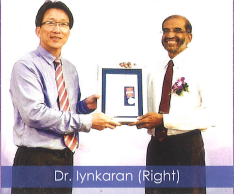
Mr SethuNarayanan (1948) Mr Sethunarayanan was Project Engineer and Project Manager in many Infrastructure projects, such as Oil and Chemical Terminal Jetties for ESSO, Mobil, GATX, SRC, CAFHI, etc., which contributed to the development of Singapore. He was also chief Resident Engineer for the prestigious Marina Barrage Project. He is also involved in development projects Hindu Endowment Board Temples, Sri Veeramaakali Amman Temple, Sri Thendayuthapani Temple etc,
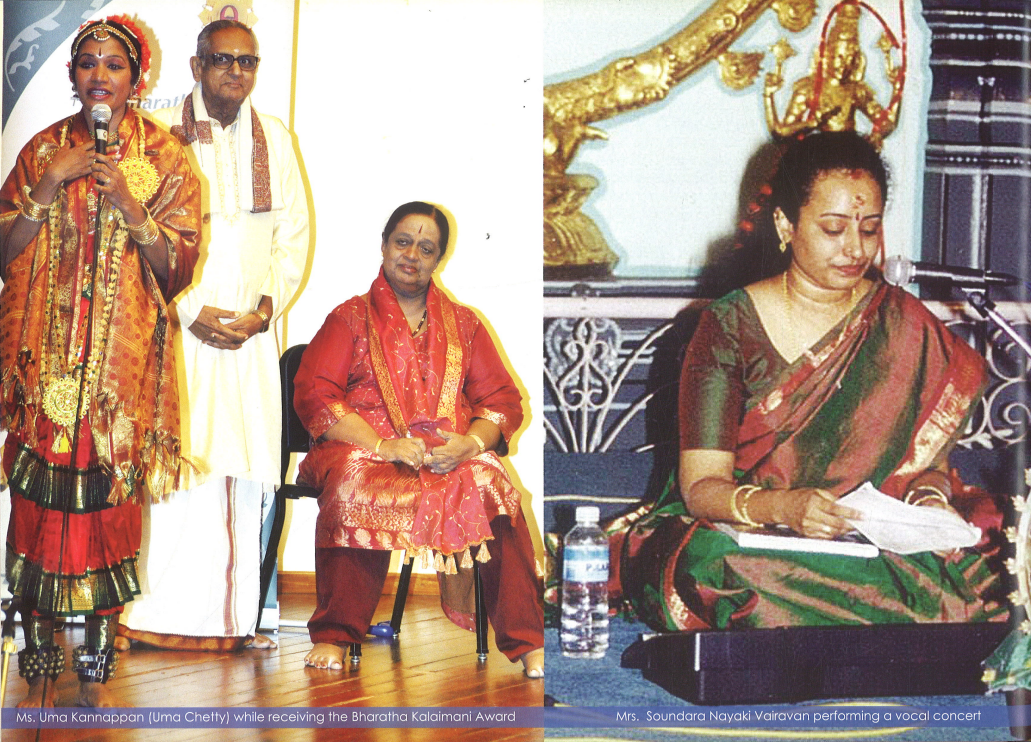
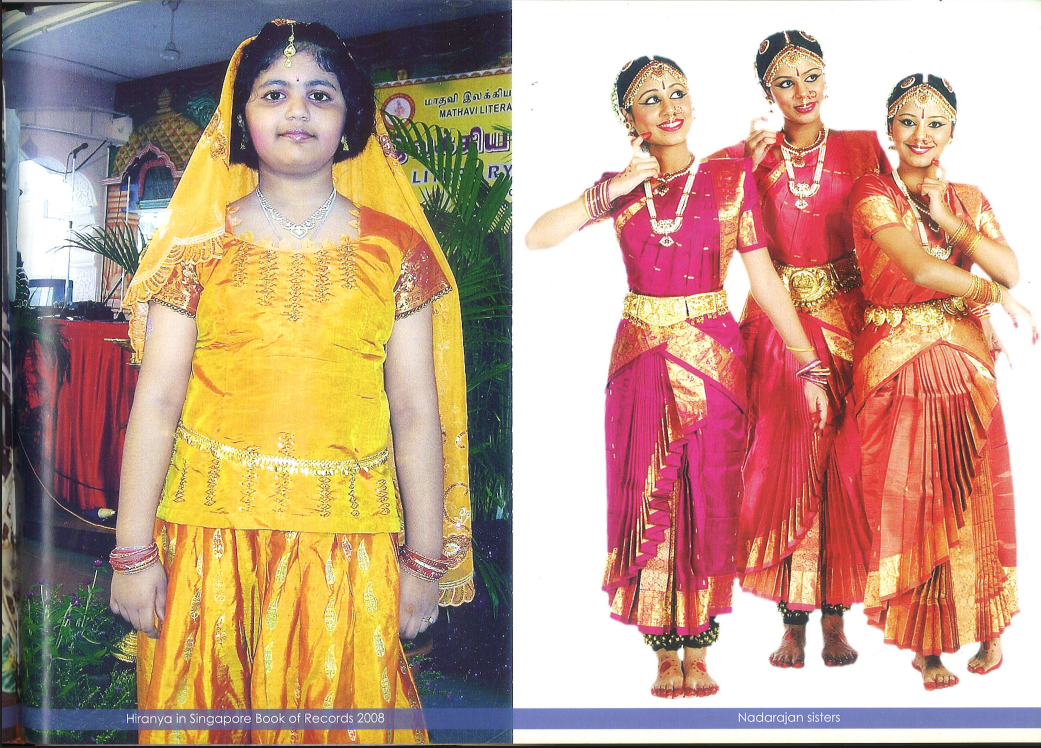
A majority of the Nagarathar population that migrated to Singapore in the 1990's are in Information and Technology. Almost all the Multi National Companies have Nagarathars in their employ. Many Nagarathar women too are working in Information and Technology. Some run their own companies. Others work for IBM, Hewlett Packard, CapGemini, Motorola, and Price Waterhouse.
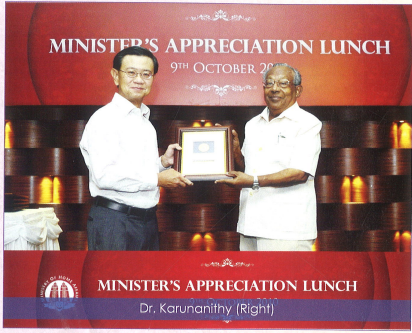
Television and Radio
Singapore Television and Radio have notable Nagarathar contribution. Mr M. Sankaralingam
was head of the Radio News section; Mr M. Kannappan worked in the current affairs section;
Mrs Meena was a script writer. Mr Saba Muthunadarajan is now head of Radio Tamil News,
MediaCorp, and Mrs. Meyyammai Lakshmanan is a broadcast journalist for the same.
Mr M.T. Arasu (1923)
Late Mr M. Thiru Arasu was a pioneer in broadcasting. He originated the
'A-Thirukural-a-day' broadcast and has written numerous articles for Tamil Nesan explaining
couplets from the Thirukural. He has broadcasted many literary dramas and researched
Singapore short stories.
Mdm. Nachiyammai Arunachalam (1927)
Mdm. Nachiyammai Arun was the pioneer Nagarathar lady to work as a Radio announcer for
seven years. Since her arrival in Singapore in 1953, she has been offering social services
for the down trodden. From 1960 to 1966 she had a part-time job as a radio announcer. Her
skill as an orator brought her opportunities to speak to local Indian audiences in the
1950s and 60s regarding the importance of Singapore citizenship.
Mr Subbiah Lakshmanan (1964)
Subbiah Lakshmanan has an MBA from UC Berkeley and works as a Financial Controller, Asia for
a British MNC. In 2005/06, he made permanent exhibitions in the ACM and NHM to safeguard the
legacy of the Nagarathars in Singapore's progress. He trains the museum guides twice a year
on the museum displays and Nagarathar history in Singapore.
The Newspaper
The late Mr M. Chidambaranar, who worked as an assistant editor with Tamil Murasu, was a
skilful researcher and translator who created many new Tamil words. Mr Murugu Subramaniam
was with Tamil Murasu as sub-editor from 1954 to 1962. He is accredited with a unique style
of writing and mentored many writers.
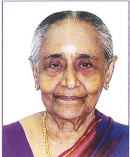
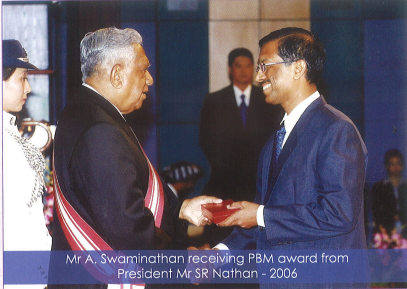
Many Nagarathars are proponents of the arts. Ms. Uma Kannappan (Uma Chetty), who learnt
dance in Apsaras, is the first Nagarathar girl in Singapore who did her arangetram in 1981.
She is an eminent Barathanatyam dancer who runs a Barathanatyam school in the US and was
recently awarded the 'Baratha Kalaimani' for her efforts.
The Nadarajan sisters, Ms. Nallalagi Asha, Ms. Nagammai Radha and Ms. Latha under the
tutelage of Guru V Balakrishnan, are accomplished Bharathanatya dancers. They performed
their arangetram on 4th April 2008 at Singapore Chinese Girls School, Khoo Auditorium.
Mrs. Thenamai Thiyagarajan, a Barathanatyam dancer, and her husband, Mr N. Thiyagarajan, a
vocalist, teach students in the US. Mr Arun Swaminathan, a mirudangist, accompanies many
artists in concerts. Miss. Janaki Shanmugam, a vocalist, has released two CDs of her
rendering of thevaram and thirupugazh.
There are innumerable Nagarathars serving the community through their respective Community
centres, Residential Committees, IAEC (Indian Activity Executive Committee) and Neighbourhood
committees. Mr N. Nachiappan served as president for Sorkalam 2010, a debate program that
has overwhelming audience response. Mrs. Lakshmi Alagappan, Director of Social Work
Services with Salvation Army, is a well known local personality.
Dr. RM. Karunanithy
Dr. Karunanithy actively participates in various public and community services. His past
contributions include being a member of the Food Advisory Committee, Ministry of the
Environment (24 years), and Member of the Hindu Endowments/Advisory Boards. He also
provided services to Singapore Anti-Narcotic Association (SANA) over a span of 14 years.
He was awarded the National Award, Public Service Medal PBM in 2004. Consumer Association
of Singapore (CASE)'s Distinguished Service Awards in 2005 & 2010. The Singapore Tamil
Youths' Club conferred on him the 'Distinguished Public Service Award' in 1998.
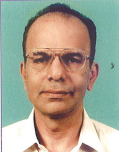
Mr Narayanan, RM (1941–2002)
Mr RM. Narayanan retired as Finance Director of Castrol, Singapore. His hard work and effort
gained him the Castrol Club Top Performance Award in 1989 and 1991. He relentlessly served
the community through Kallang Community Centre, Singapore Association of the Visually
Handicapped and Bendemeer School, for which he was awarded the PBM and Public Service Medal
(BBM) in 1985. He also organized various tours to Vietnam, Burma and Malaysia for Singapore
Nagarathar Association Members.
Mr A. Swaminathan (1956)
Mr A. Swaminathan is an MBA graduate from USIC, USA and also has an LLB from UOL, UK, and
FCMA (UK), CPA (Singapore). He has worked for some of the top companies in the world such
as Price Waterhouse Coopers, IBM and Whatman. He was awarded the Pingat Bakti Masyarakat
(PBM) award in 2006 by the President of Singapore. He has chaired the Scholarship and
Bursary Awards Committee at Sri Siva Durga Temple since 2004 and they have to-date given
awards to about 1,000 students totalling about $200,000.
Meyyappan s/o Ray Ramasamy (1946)
Mr Meyyappan, who came to Singapore in 1971 and joined the Board of Film Censors, was
promoted as a full chairman of the Board in 1982. Since then, he has represented Singapore
in a number of ASEAN Film Conferences. He has also represented Singapore in European Film
Conferences held in Berlin, Germany.
He cites his responsibility for the introduction and implementation of Film Classification
in Singapore in 1991 as his greatest achievement. He has been awarded the Long Service Award
from the Ministry of Information, Communication & Arts and the Public Administration Service
Medal (Bronze) in 1995 from the then President, Mr Ong Teng Cheong.
NOTE
Many more Nagarathars have contributed to the development of modern Singapore in various
fields. We, as the authors of the book, wanted to collect and publish their contributions as
much as we could. But unfortunately, we were unable to get the necessary authentic
information from them in spite of our attempts. Some were not willing to be published.
Hence, we have only provided the information we are well aware of.
11.1 STREETS NAMED AFTER NAGARATHARS
In the earlier period, the Nagarathars had heavily invested in landed property. To mark this endeavor, some of the roads in Singapore are named after Nagarathars: Arnasalam Chetty Road, Narayanan Chetty Road, (River Valley Road) Muthuraman Chetty Road and Meyyappa Chettiar Road (Potong Pasir).
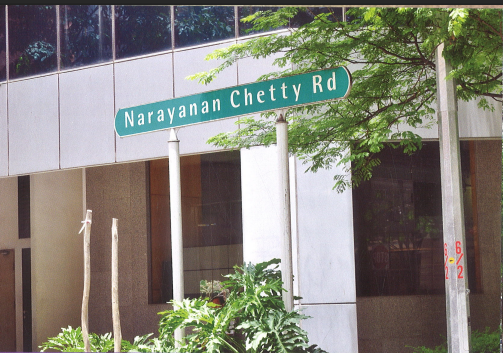
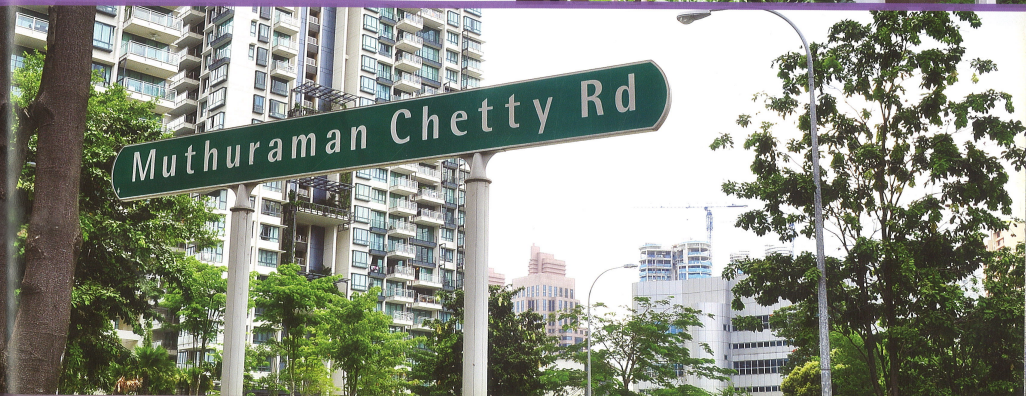
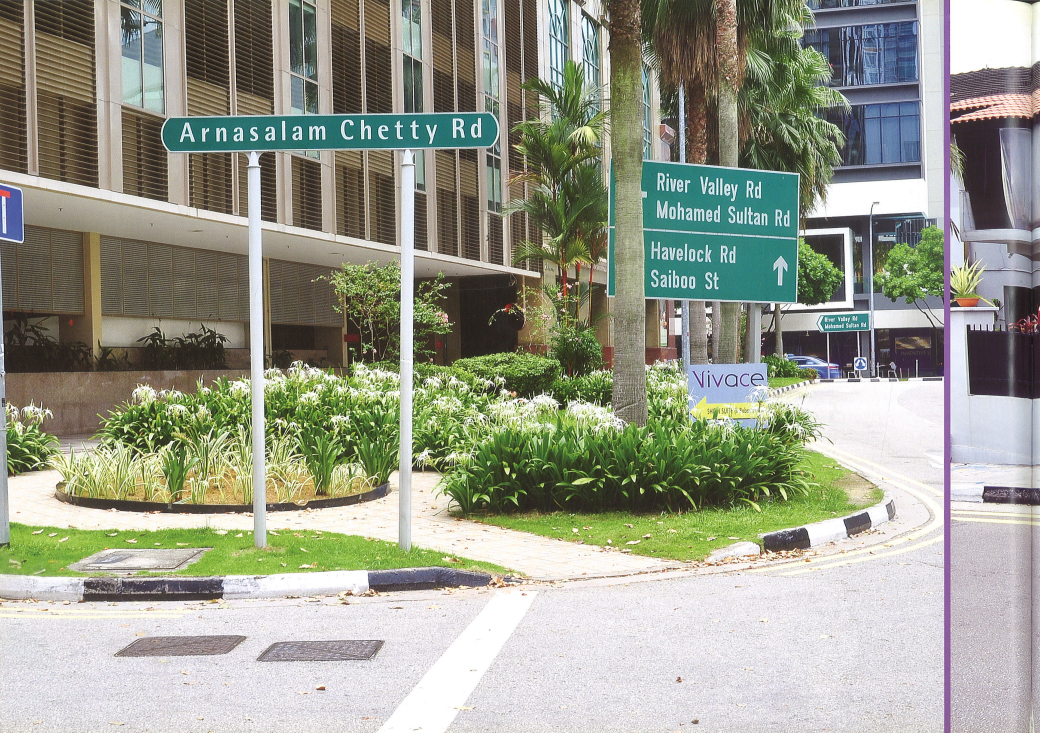
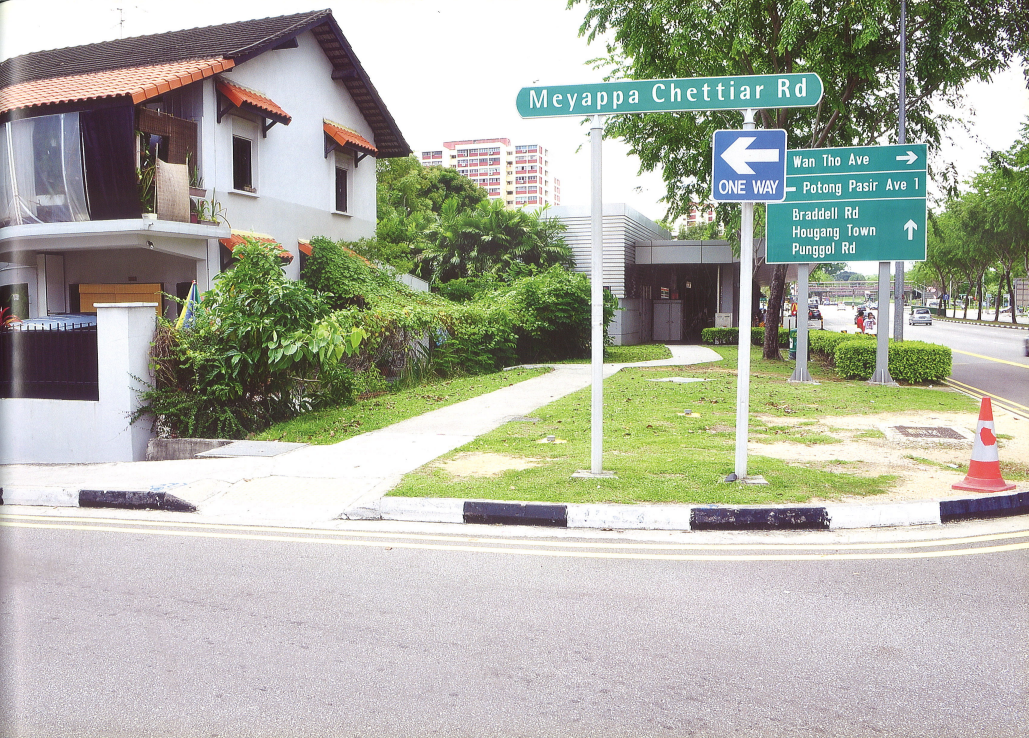
11.2 NAGARATHAR STATUE
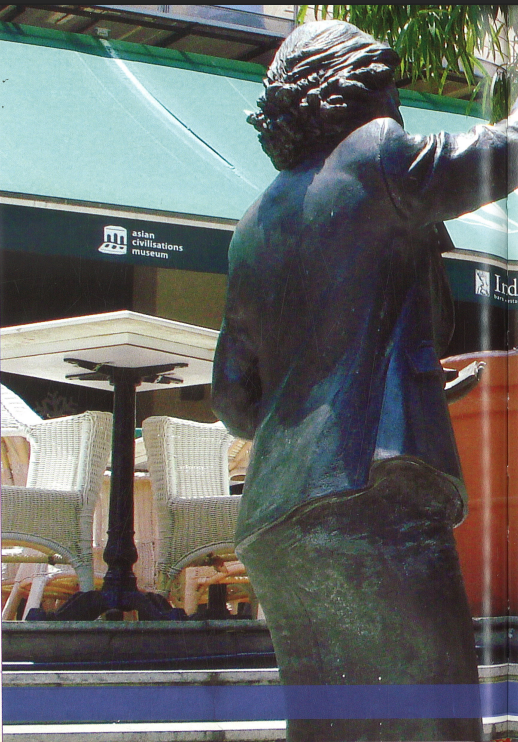
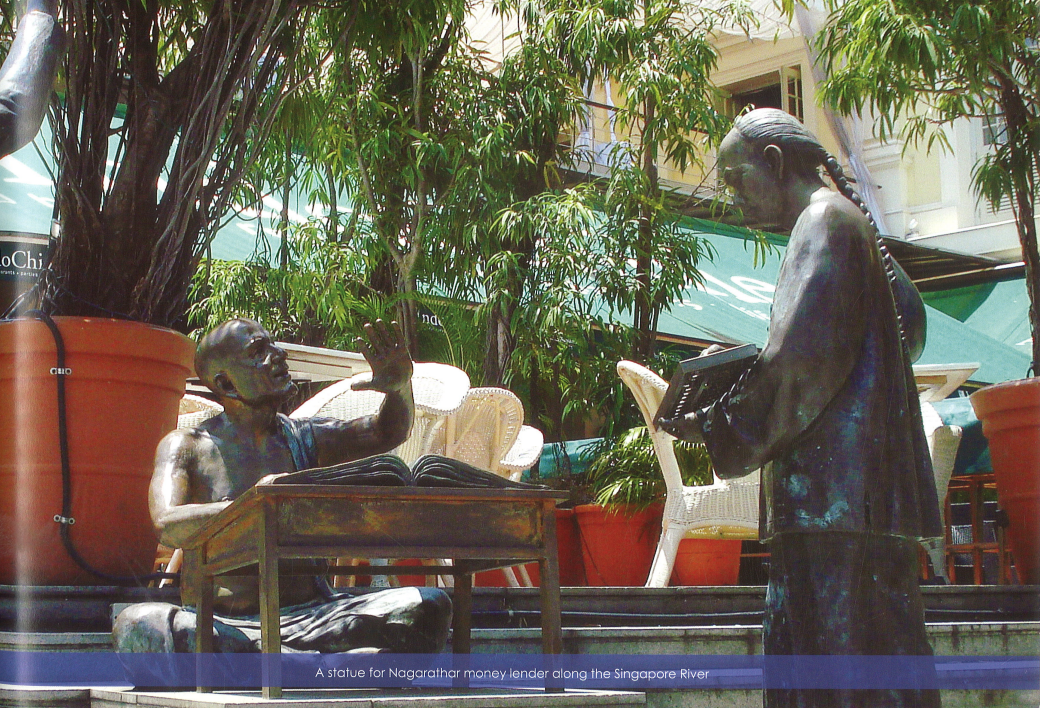
This is the text on the sculpture on the steps leading from the Singapore River to the Asian Civilisations Museum.
Title: From Chettiars to Financiers
Sculptor: Chern Lian Shan
"Singapore's position as a center for entrepot trade led to the proliferation of financial
institutions. The settlement's first bank was the Bank of Calcutta, established in 1840.
Financial businesses set up their offices near the Singapore River to be close to the area's
many trading businesses.
Early services were divided along ethnic lines. The moneylending business in the early days was
primarily run by the Chettiars who came from South India. The Chettiars congregated at Market
and Chulia Streets, and their offices were easy to spot. These usually comprised a clerk and a
manager who sat behind a small low desk on a woven mat, as shown here. Clearing houses were the
domain of the Chinese. Capitalizing on abundant trade between Singapore and China, these
companies thrived."
Sponsored by: Exxon Mobil
In Collaboration with: Singapore Tourist Board, National Heritage Board, Singapore Land Authority.
11.3 NAGARATHAR EXHIBITS IN THE MUSEUMS
Asian Civilisations Museum
1 Empress Place, Singapore 179555 | www.acm.org.sg
The Asian Civilisations Museum (ACM) is the region's only museum devoted to the civilisations,
art and culture of Asia. With a collection spanning Southeast Asia, China, South Asia, and the
Islamic world of West Asia, the museum traces the diverse cultural roots of Singapore.
The museum's South Asia Gallery portrays several aspects of Chettiar life in Tamil Nadu, India,
such as their architecture and traditional wedding celebrations. On display is a typical
Chettiar courtyard house, with four elaborately carved teak pillars, Tanjore paintings and a
door intricately carved with birds and floral motifs. A video projection through the teak
doorway shows a traditional Chettiar wedding, one of the grandest celebrations in a Chettiar
family. This is complemented by a display of the traditional wedding necklace (kaluthuru) and
other jewellery used by the Chettiar community.
Closer to home, the Singapore River Gallery offers us a glimpse into the life of a Chettiar
money-lender in 1920s' Singapore. The Chettiar banking community often led austere lifestyles
here whilst sending most of their income back home to Chettinad. The men lived collectively in
shophouses known as kittangis, and a few artefacts contextualising a kittangi are
displayed in the gallery's showcase.
National Museum of Singapore
93 Stamford Road, Singapore 178897 | www.nationalmuseum.sg
With a history dating back to its inception in 1887, the National Museum of Singapore is the
nation's oldest museum with a young soul. Designed to be the people's museum, the National
Museum of Singapore is the custodian of 11 National Treasures, and its Singapore History and
Living Galleries adopt cutting-edge and varied ways of presenting history and culture to
redefine the conventional museum experience.
In the inter-war period, the Chettiars were one of the most important groups of financiers in
Singapore. Their story, told through the perspective of a fourth-generation Chettiar, Lakshmanan
Subbiah, is presented in the National Museum of Singapore's History Gallery as he recounts the
world of his grandfather, a leader of the community who first came to Singapore in the late
1920s. The story is also accompanied with a display of artefacts and material relating to the
Chettiar's money-lending business and which would be present in a Chettiar kittangi
(shophouse).
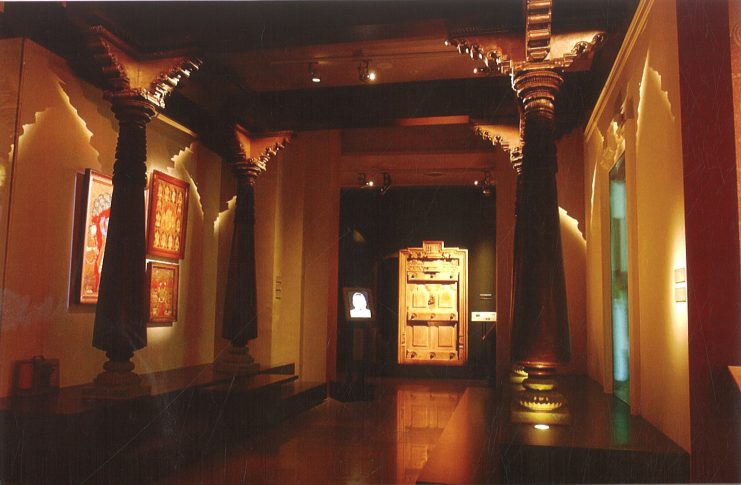
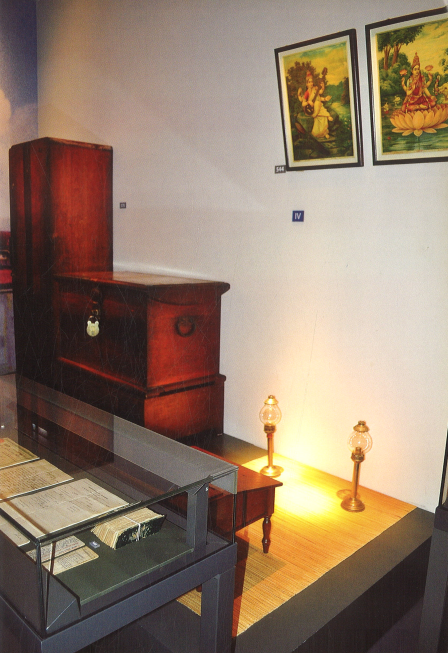
The Nagarathar Community in Singapore has remarkably evolved since 1824, very positively still
immensely contributing to the growth of Singapore. As Moneylenders, they have played an
important role in changing the subsistence-based economy of Singapore into one that is
export-oriented. Immeasurably, they have been a backbone to the growth of the Singapore economy.
When the money lending business declined, they fine-tuned themselves and kept pace with the
changing trends of the island, working as professionals in various sectors such as modern
banking, business, education, law, medicine, engineering technology, information technology,
media, and civil service.
In the earlier days, the Nagarathar men who came alone to Singapore and lived collectively in
kittangis of Market Street gradually brought their families to Singapore. Nagarathar
Aachis did not cross the sea in the earlier days; since 1933, women started to travel overseas.
As a result, Nagarathars live with their families in different parts of Singapore. Aachis were
formerly housewives. Only since 1950 have ladies been exposed to secondary and tertiary
education. Now there is a growing trend in most families where both husband and wife are
employed. Currently, most are Singaporeans and Permanent Residents. There is a surge in the
Nagarathar population. They educate their children here; they conduct their functions here. As
many are affluent, they own their houses. Hence, nuclear families have replaced the joint family
system.
Nagarathars have always been pious and religious. They are the main reason for building Murugan
Temples and introducing Saivite festivals in Southeast Asia. Accordingly, they have constructed
two temples, namely Sri Thendayuthapani Temple in Tank Road first and then Sri Layan Sithi
Vinayagar Temple in Chinatown. They introduced Thaipusam as a major festival along with others.
They are efficient administrators of temple management and have donated generously for worthy
causes to Singapore society.
As a result, they have found a strong foothold in all spheres. Culturally, they have been
maintaining their identity too. Still, many being Singaporeans, they maintain strong ties with
their motherland. Thus, in this multi-racial country, Nagarathars uniquely identify themselves
as 'Singapore Nagarathars'. Though there is a surge in marriage breakups and inter-caste
weddings, the community is striving to preserve its purity and to uphold its culture and
traditions. Nevertheless, 'Nagarathars in Singapore' are genuine to the country they have
inhabited, while maintaining their identity.
Even though the Nagarathars are small in number, their contribution to the development of modern
Singapore is imminent in the fields of Politics, Banking and Accounts, Business, Religion,
Education, Tamil language, Law, Medicine, Engineering and Technology, Information Technology,
Media, Arts, Community Services, and Civil Service.
Arasarathnam, S. Indians in Singapore and Malaysia, Kuala Lumpur: Department of Indian
Studies, University of Malaya, 1966.
Arunajeet Kaur, The Sikhs in Singapore, Singapore: Institute of Southeast Asian Studies,
2010.
Chandhrasekar, S. The Nagarathars of South India, Madras: The Macmillan Co. of India
Ltd., 1980.
Cooper, C.L. Moneylenders and the Economic Development of Lower Burma—an Exemplary Historical
Study of the Role of the Indian Chettiars, Unpublished Ph.D. thesis, The American
University, Washington, D.C., 1959.
Koh Seow Chuan Collection, "Cash, Credit and Collateral: Moneylending in Singapore,
1820s-1830s," a handout.
Hans-Dieter Evers and Jeyarani Pavadarayan, "Religious Fervour And Economic Success: The
Chettiars of Singapore" in Sandhu K.S. & Mani A (eds), Indian Communities in Southeast
Asia, Singapore: Institute of Southeast Asian Studies, 1993, reprint 2006, pp.
847-865.
Hans-Dieter Evers, Jayarani Pavadarayan and Heiko Schrader, "The Chettiar moneylenders in
Singapore" in Hans-Dieter Evers, Jayarani Pavadarayan and Heiko Schrader (Eds), The Moral
Economy of Trade: Ethnicity and Developing Markets, London: Routledge, 1994, pp.
199-207.
Hans-Dieter Evers and Jayarani Pavadarayan, "Asceticism and Ecstasy: The Chettiars of
Singapore," in Working Paper 79, Sociology of Development Research Centre, University of
Bielefeld, 1987.
Jayarani Pavadarayan, The Chettiars of Singapore: A study of an Indian Minority Community in
Southeast Asia, Unpublished Ph.D. Dissertation, University of Bielefeld, 1986.
Kassim, Ismail, "The Chettiars," New Nation (Singapore), 24th November 1975.
Kassim, Ismail, "The Chettiars: Is he a Vanishing Breed?", New Nation (Singapore), 25th
November 1975.
Lavanya Balachandran, "Challenge of Wealth: Religious and Economic Ethics of Chettiars of
Singapore," assignment for the module SC5208, National University of Singapore, 2009.
Mani A, "Caste among Singapore Hindus," Commentary Singapore, Quarterly Journal of the
University of Singapore, November 1975.
Muthusamy, Damayanthi, Sri Thandayuthapani Temple, Singapore, Singapore: University of
Singapore, Unpublished academic exercise, 1958.
Palaniappan A, "Arulmigu Thendayuthapani Temple," In Sri Thendayuthapani Kumbabishega
Souvenir, 1996, pp. 23-33.
P.N.M. Muthupalanaiappa Chettiar, Happy Malaya, Penang: Mercantile Publications,
1938.
Ramanathan Chettiar, History of Nattukottai Chettiars, Chennai: Meyyappan Pathipakam,
1953.
Sandhu, K.S. & Mani A (eds), Indian Communities in Southeast Asia, Singapore: Institute
of Southeast Asian Studies, 1993, reprint 2006.
Sandhu, K.S., "Indian immigration and settlement in Singapore" in Sandhu K.S. & Mani A (eds),
Indian Communities in Southeast Asia, Singapore: Institute of Southeast Asian Studies,
1993, reprint 2006, pp. 714-783.
Singapore Government Gazette, 1966; 1981.
Soma Lay, Chettinadum Senthamizhum, Chennai: Vanathi Publishers, 1984.
Shanmugam E., Sri Mariamman Temple: A Glorious Monument, Singapore: HEB, 1996.
Singapore Sri Thendayuthapani Temple (Chettiars' Temple) Consecration Ceremony,
2009.
Thinnappan, SP. "Nattukottai Chettiars of Singapore," in Singapore: The Encyclopaedia,
Singapore: Editions Didier Millet, 2006.
Muthiah KR., Nagarathar Vazhviyal, Madurai: Aachi Vanthachu, 2009.
Yuko Nishimura, Gender, Kinship, and Property Rights: Nagarattar Womanhood in South
India, Delhi: Oxford University Press, 1998.
Courtesy:
(http://www.cabinet.gov.sg/CabinetAppointments/Mr+K+Shanmugam.htm)
can தைப்பூசத் திருவிழா
சிங்கை நேசன் 6.2.1888
சிங்கப்பூரின் கண்ணே சிறப்புற்றோங்கும் எழுநகர வணிகரென்றும் நகரத்தார்களென்றும் வழங்கப்பட்டு வரும் செட்டிப்பிள்ளைகளின் சுப்பிரமணியப் பெருமானுடைய திருவாலயத்திலே நடத்திய தைப்பூசத் திருநாளைக் கண்டவர்கள் யார்தான் மதிக்கார். அவற்றின் சிறப்பை நம்மால் விரித்தெழுத இயலாதாயினும் சிலவற்றை மாத்திரம் இங்ஙனம் வெளிப்படுத்த வெழுதுகின்றோம்..
அகண்டபரிபூரண சச்சிதானந்த சின்மய அனாதிமுக்த நின்மலஸ்வருபியாகிய சண்முகப் பெருமான் தம்முடைய அடியார்கள் யாவரும் ஆனந்த அருவிபாயப் பக்கங்களிலிருந்து தோத்திரஞ் செய்யவும், வெண்டாமரை குடைகொடி விருதுகளைக் கரங்களிலே யேந்தவும், தூப தீபங்களைச் சந்நிதானத்திலே காட்டவும், தேவாலயத்தினின்றும், நாளது தை மாதம் யரு-ந் திகதி வெள்ளிக்கிழமை சாயரட்சை ரு-மணியளவிலே, வெளியே யெழுந்தருளி வந்து இடபரூடராகத் திவ்விய சந்நிதான ரதத்தின்மீது வந்தருளி, சிப்பாய் லயின் சென்று ஸ்ரீ கணேசப் பெருமானுடைய திவ்விய சந்நிதானம் வந்தருளி அங்ஙனம் மகாபிஷேக சோட சோபார மகர நைவேத்தியமாகிய பின்னர், பரிபூரண சக்தியாகிய வேலாயுத சமேதராய் அடியார் புடைசூழ, அலங்கார ஆபரணாதிகள்| பூண்டு தீபங்கள், வர்ணங்கள், மத்தாபுகள் வீதியெங்கணும் பிரபை ஜொலிக்க, இந்துகள் வாயில்கடோறும் வாழை கமுகள் நாட்டித் தோரணங்கள் தூக்கி நிறைகுடங்கள் வைத்திருப்பதையெல்லாம் திருக்கண்சாத்தி, யவர் அவர்கட்குத் தகுந்த அனுக்கிரகஞ் செய்துகொண்டு, தம்மைத் தரிசிப்பிக்கும் பொருட்டு அடியார்கள் செட்டிப் பிள்ளைகவிருக்கும் வீதிகளெல்லாம் கண்டு, அவரவர்கள் செய்யும் உபசாரங்களையும், காணிக்கைகளையும் ஏற்றருளித் தமது திவ்விய ஆலயத்திற்கு அன்று யஉ மணியளவிற் சென்று விசித்திர விநோதமாக அலங்கரிக்கப்பட்ட சபாமண்டபத்திலே ஆரோகணிக்கப்பட்டிருந்த திருவூஞ்சலிலே வீற்றிருந்து க- மணியளவில் ஏகஸ்தானஞ் சேர்ந்தனர்.
மறுநாள் சனிக்கிழமை காலமே க.மணியளவிலே மகாபிஷேகம் ஆரம்பஞ்செய்து சாயங்காலம் ச மணி வரையில் இந்நகரவாசிகளாகிய இந்துக்களிற் பலவித சமயங்களில் அன்புடனே நேர்த்திக்கடன் பண்ணியபடி செடில் குத்தியும் பால் செம்புகளை அலக்குகுகளினாலே குத்தி தோலிலே தொங்கும்படி தூக்கியும் இன்னும் அனேக அன்பர்கள் பாற்காவடி- முதலியனவற்றைச் சுமந்து பாதத்திலே முள்மிதியடி போட்டு மிக அன்புடனே கடந்துவந்து| அபிஷேகஞ் செய்வித்தார்கள். சிலர் LATHE CHETLY S COMUNT சீக்காயிருந்த மாடு குதிரைகளுக்கு வேண்டுதல் செய்தபடி அவற்றின் முதுகுகளின் மீது செவ்விளநீர் முதலிய அபிஷேக வஸ்துகளை யெடுப்பித்துவந்து அபிஷேகம் செய்தார்கள். ரதக் காவடிகளையன்புடனெடுத்து ஆனந்தக் கூத்தாடி வந்தார் சிலரும்.
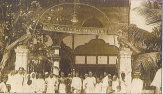
பக்கங்களிலே சுப்பிரமணியப் பெருமான்மீது ஆசிரிய விருத்தங்களும் பதங்களும் கலித்துறைகளும் கண்ணிகளும் தோத்திர ரூபங்களாகக் கண்ணீர் தாரைத்தாரையாக வடியப் பாடிவந்தவர்கள் சிலரும், தங்கள் இடைஞ்சல்களை மனசிலே வைத்து மிகத் துயரத்துடனே யிவ்விடைஞ்சல்களை நிவிர்த்தி செய்யும்படி கேட்பார் சிலரும். ஆக அடியார் குழாங்கள் அன்பு மீதூர சாயங்காலம் ரு- மணியளவிலே, கோடி சூரியப்பிரகாசம்பொருந்திய திருமேனியில் nவரத்தினங்களிழைக்கப்பெற்ற ஆபரணாதிகளை யடியார் மகிழும்படி கிருபையுடன் அணிந்து, கொடி குடை மேளதாளம் தீப தூபம் முதலிய பரிசுத்த விருதுகளுடனே, சாயங்காலம் எ-மணியளவிலே, எழுந்தருளி வெளியேவந்து அடியார் கரகோஷ்டஞ்செய்து கைகூப்பி நிற்க, ரதத்தின் மீதேறி, முக்கோணஞ் சுற்றிவந்து இவ்வருஷம் கவமாகவும் விசித்திரவினோத அலங்காரமாகவும் இயற்றப்பட்ட திவ்விய மண்டபமத்தியில் உ-மணி பரியந்தம் எழுந்தருளியிருந்து சங்கீத வாத்தியங்களால் மனப்பூரணமடைந்து பின்னர் திருவூஞ்சலிலே வீற்றிருந்து அடியார்க்கு பிரசாத முதலியன அளித்து எகஸ்தானம் சென்றருளினர்.
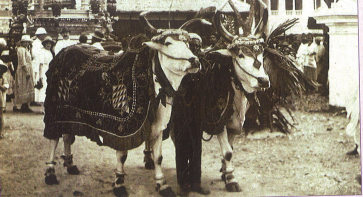
பின்னர் ஞாயிற்றுக்கிழமை காலமே சு-மணிதொடங்கி, சுயரட்சை சு-மணி வரைவிலும், சுப்பிரமணியப் பெருமான் மகா அபிஷேகசோட சோபசாரங்கள் செய்யப்பெற்று விசித்திர வினோத நீராழி மண்டபத்திவே அ-மணியளவில் எழுந்தருளி வீற்றிருக்கும்பொழுது, அடியார்பuடைசூழ, அன்புடையார் நெஞ்சாரச்சகலவித கீதவாத்தியங்களும் செய்யப்பட்டன. இவற்றுள் இந்தியாவிலே ராஜாக்களால் மகிமைதங்கிய விருதுகள் பெற்றுப்புதுக்கோட்டை சமஸ்தானந்து ராஜாவாகிய ஹிஸ் ஹைநெஸ், மகராஜ பஹதூர் ஸ்ரீலஸ்ரீ இராமச்சந்திர தொண்டைமானவர்களுடைய சந்நிதானத்தில் கொலுமண்டபத்திலே சங்கீத வித்வானாயிருந்த ம- - - ஸ்ரீ சாஹேப் நன்னுமியா அவர்களால் அற்புத விசேஷ உச்சித மகத்துவ சங்கீத சாஹித்திய வினோதங்களால் சபையாரனைவரையும் மனங்களிக்கச் செய்தனர்.
பின்னர் யஅ- ந் உ திங்கட்கிழமை காலமே அ-மணிதொடங்கிச் சுப்பிரமணியப் பெருமான் மீது வேண்டுதல் பண்ணியிருந்த அடியார்களாகிய செட்டிப்பிள்ளைகள் தங்கள் பிரார்த்தனைக் காவடிகளைத் தோள்மீது வைத்து ஆனந்தக் கூத்தாடி அன்பான தோத்திரங்களைப்பாடி, கோயில் பிரதஷணம் வந்து, யஉ மணி தொடங்கிக் க- மணிவரைக்கும் காவடி பஞ்சாமிர்த அபிஷேகஞ்செய்து, திரும்பவும் இப்பிரார்த்தனைக்காரர்களாலே சாயரட்சை ரு மணிதொடங்கி பூசை நைவேத்தியம் முதலியனவும் மணிமுதல் யஉ மணி பரியந்தம் நடந்து திருக்கோயிலினுள்ளே வலம் வந்து, அடியார்க் கருள்பuரிந்து இருப்பிடஸ் தானம் போயருளினார்.
அ மறுபடி யஉ - ந்உ. செவ்வாய்க்கிழமை காலமே கிரமப்படி அபிஷேகமாயின பின்னர், சாயரட்சை ருமணி தொடங்கி சண்முகபிரான் மீதன்புள்ள செட்டிப் பிள்ளைகள் யாவரும் மிக ஒழுங்கு மரியாதையுடனே ஒருங்கு கூடி மகிமையென்கிற காணிக்கையை அவரவர்களாலியன்றபடி முழுமனத் திருப்தியுடனே சிவசுப்பிரமணியப் பெருமானுடைய திருவடியில் வைத்து நம:ஸ்கரித்து இந்த வருஷத்துக்காகப் புதிய காரியதரிசியையும் குமாரக்கடவுளுடைய கிருபாகடாசத்தினாலே நியமித்து சுவாமி தரிசனஞ்செய்து விடைபெற்றுக்கொண்டு மிகக்களிப்புடனே தங்கள் தங்கள் இருப்பிடம் போய்ச் சேர்ந்தார்கள். இந்த ஐந்து நாளும் அன்னதானம் யாதொரு குறைவுமில்லாமல் யாவர் மனதும் களிக்கவும் திருப்தியடையவும் செய்யப்பட்டது. மறு வருஷம் இதிலிருந்து மிக அதிகமாகவும் சிறப்பாகவும் நடந்தே குமாரக்கடவுளே கிருபைசெய்வாராக.
சிங்கப்பூரில் வெளிவந்த சிங்கை நேசன் என்னும் வாரப்பத்திரிகையின் 1888 பிப்ரவரி 6 இதழில் வெளியிடப்பெற்ற கட்டுரை.
ABOUT THE AUTHORS
DR. SP. THINNAPPAN
Professor Dr. SP. Thinnappan has more than fifty years of experience in teaching Tamil Language, Literature, Linguistics and Culture at the University of Madras, Annamalai University (India), University of Malaya (Kualalumpur), Nanyang Technological University, National University of Singapore and SIM University (Singapore).
He was the Founder Secretary of Nagarathar Students Association Madras(1960), South Arcot Nagarathar Association (1968), Assistant Secretary, Malaysian Thanvaisya Sangam(1980), and President, Nagarathar Association Singapore (2000). He worked as the Secretary of the Nagarathar Research Project, undertaken by Professor Dr S Chandrasekhar, former Vice-Chancellor of Annamalai University (1977). Then he has visited all the Nagarathar villages of Chettinad to collect information for this project. Further he has written many research papers and articles on Nagarathar and published in Nagarthar related journals and magazines even from his student days.
MRS. SOUNDARA NAYAKI VAIRAVAN
Mrs. Soundara Nayaki Vairavan, one of the directors of Navaso Pte Ltd, holds a Masters Degree in Communication Management, University of South Australia. She is working as a Part-Time Tutor with the Communications and New Media Program, National University of Singapore. She also works part-time for Singapore's Tamil Daily 'Tamil Murasu'.
She initiated and was the first editor of the magazine 'Singai Nagarathar Malar' in 2003. She is the editor of the E-Magazine 'Online Voice' at http://www.onlinevoice.info and is the author of the book 'Singapore oru mulumaiyana parvai' in Tamil. She is a regular contributor to various magazines in Tamil and English in Singapore and India.
ABOUT THIS BOOK
Nagarathars (Chettiars) are one of the first merchant communities to arrive in Singapore to do business in 1824 from Chettinad of Tamil nadu, South India. This book deals with the Nagarathar's name and history, earlier economic activities, kittangi life, social life, festivals, ceremonies, costumes and food, ornaments, Associations and groups, Chettiars' Temple Society, their contributions to the development of modern Singapore in the fields of politics, banking and accounts, business, religion, education, Tamil language, law, medicine, Engineering and Technology, Information Technology, media, arts, community/social services, civil service.